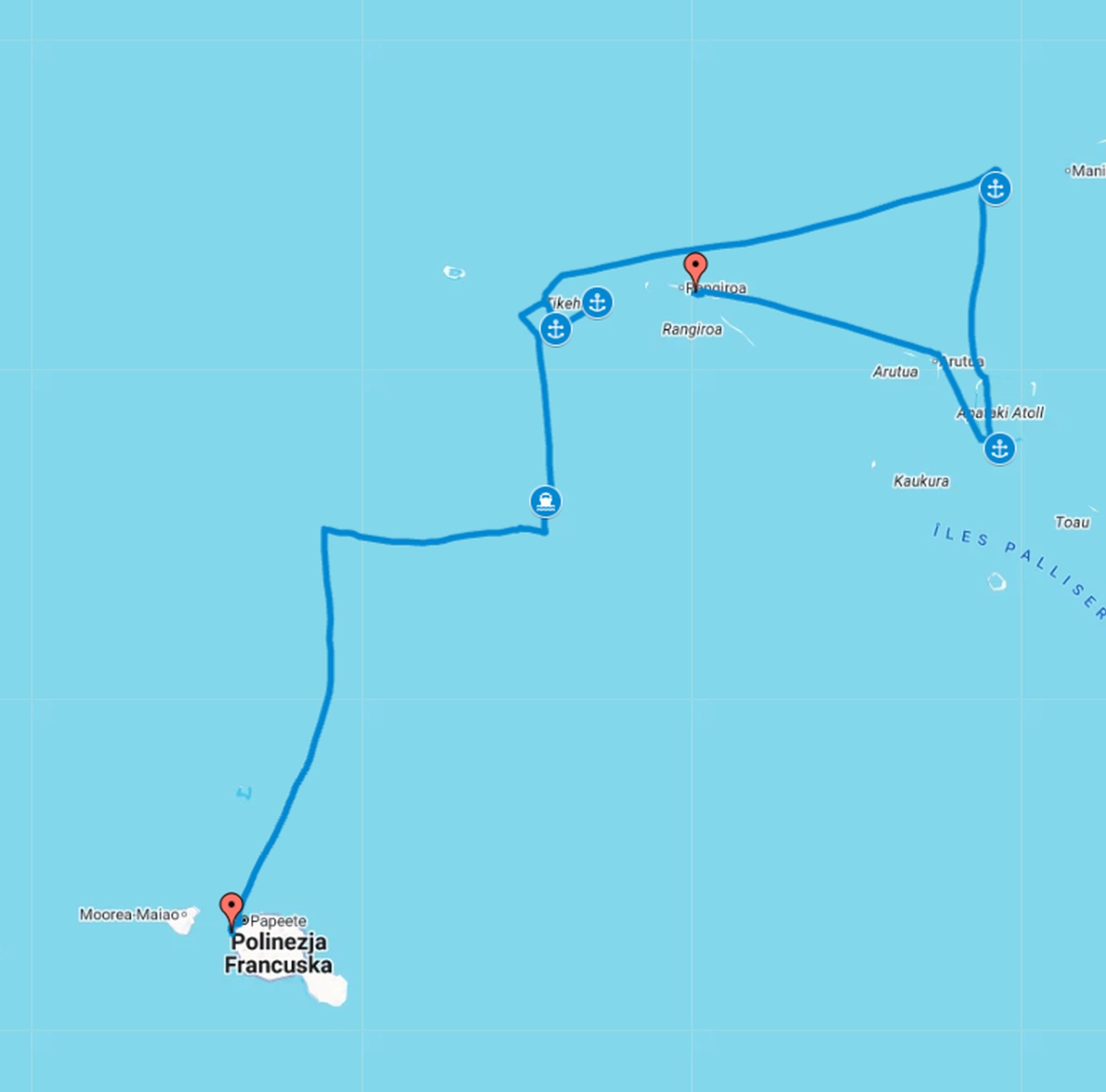
Date: July 9-29, 2026
Route: Papeete – Makatea – Tikehau – Ahe – Apataki – Rangiroa
Miles/Hours: 270h/568nm
Papeete
Refueling
We have a permit to refuel without tax, but unfortunately, as of July 1st, the regulations have changed, and regardless of the permit, the price for diesel is the same, 165XPF (previously 150XPF, and 135XPF without tax). The woman at the gas station claims this will be permanent. There are different prices for fishermen, yachts, and various other types of boats.
Makatea
Buoys and the harbor
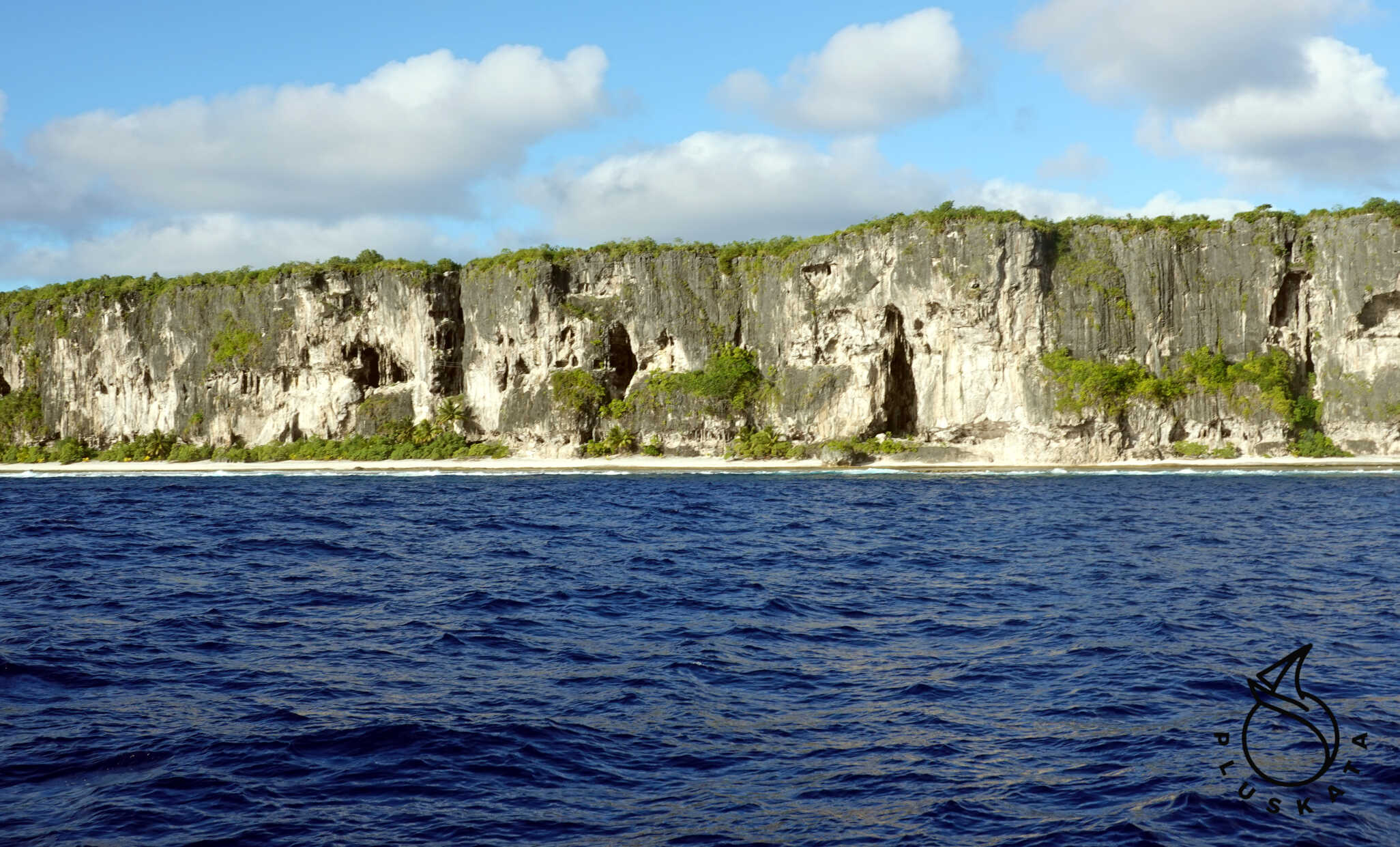
At the entrance to the harbor, there are two buoys, small and difficult to find in heavy swell. We catch the southern buoy. I’ve been corresponding with the harbormaster and his son, Tapu, at +689 87715205. Tapu offers a tour of the island for 5000 XPF/person. Unfortunately, the wind is blowing abnormally from the west and the waves are coming straight into the harbor, so entering the harbor is out of the question.
Tikehau
An atoll with one entrance (Thueiva Pass). Using Guestimora (a program that calculates the currents in the entrances to atolls in the Tuamotu), I calculated the calm water time – 9:30. We approached the pass, but the outgoing current was over 4kn. We waited almost an hour and the current decreased to 3kn, so we decided to enter. There were large counter-swells, but Pluskata managed it. We decided to sail directly to the Garden of Eden on the other side of the atoll. Buoys were only available as far as the first town – Tuherehera, and after that, the c-Map map no longer had bathymetry, and Navionics on my phone only had a very minimal one. So Tomek and I put on our headphones, Tomek stood at the bow, and I held my phone at the helm. The positions of some of the stones were correct, but not all were marked on the map.
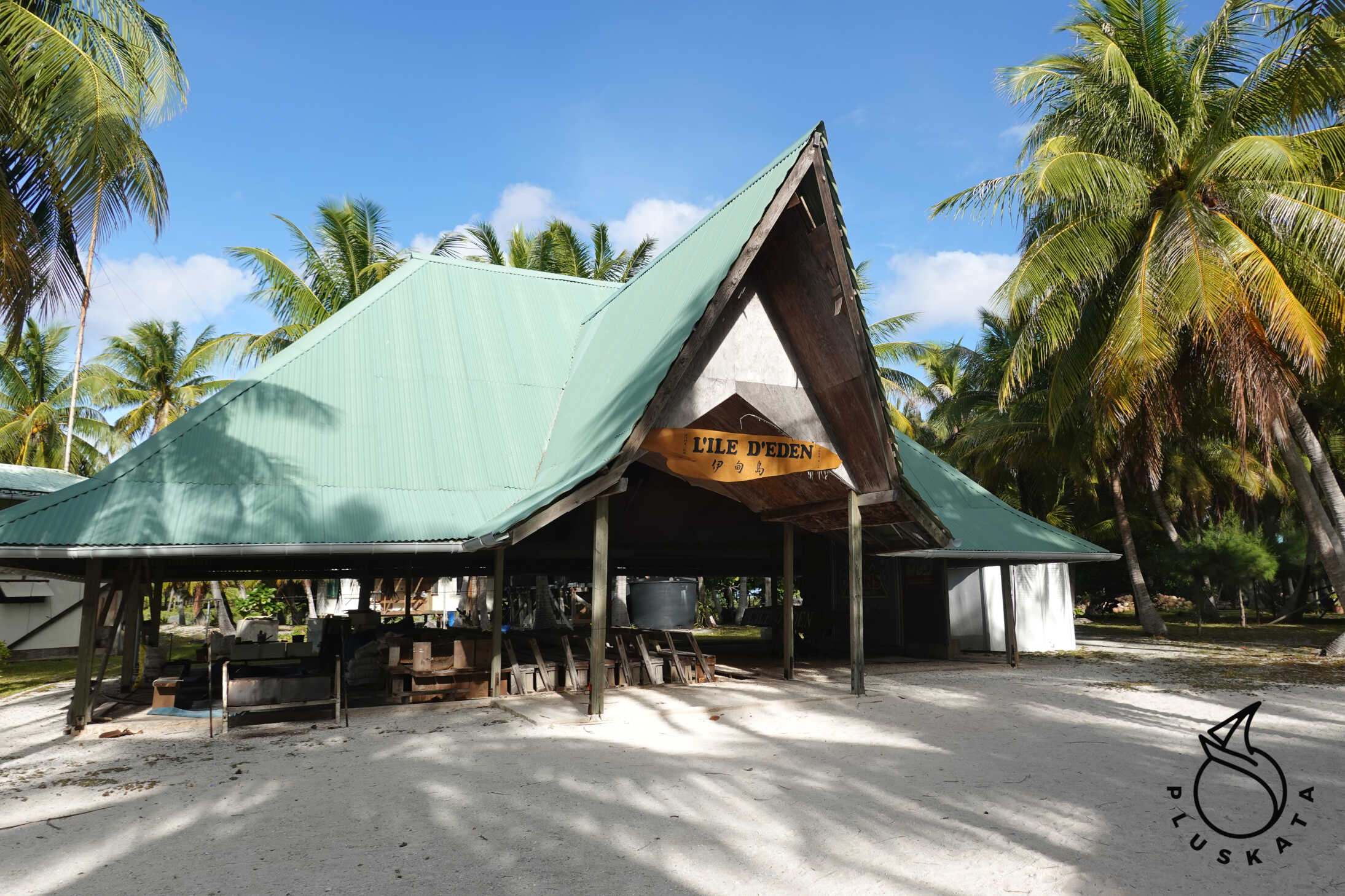
Garden of Eden
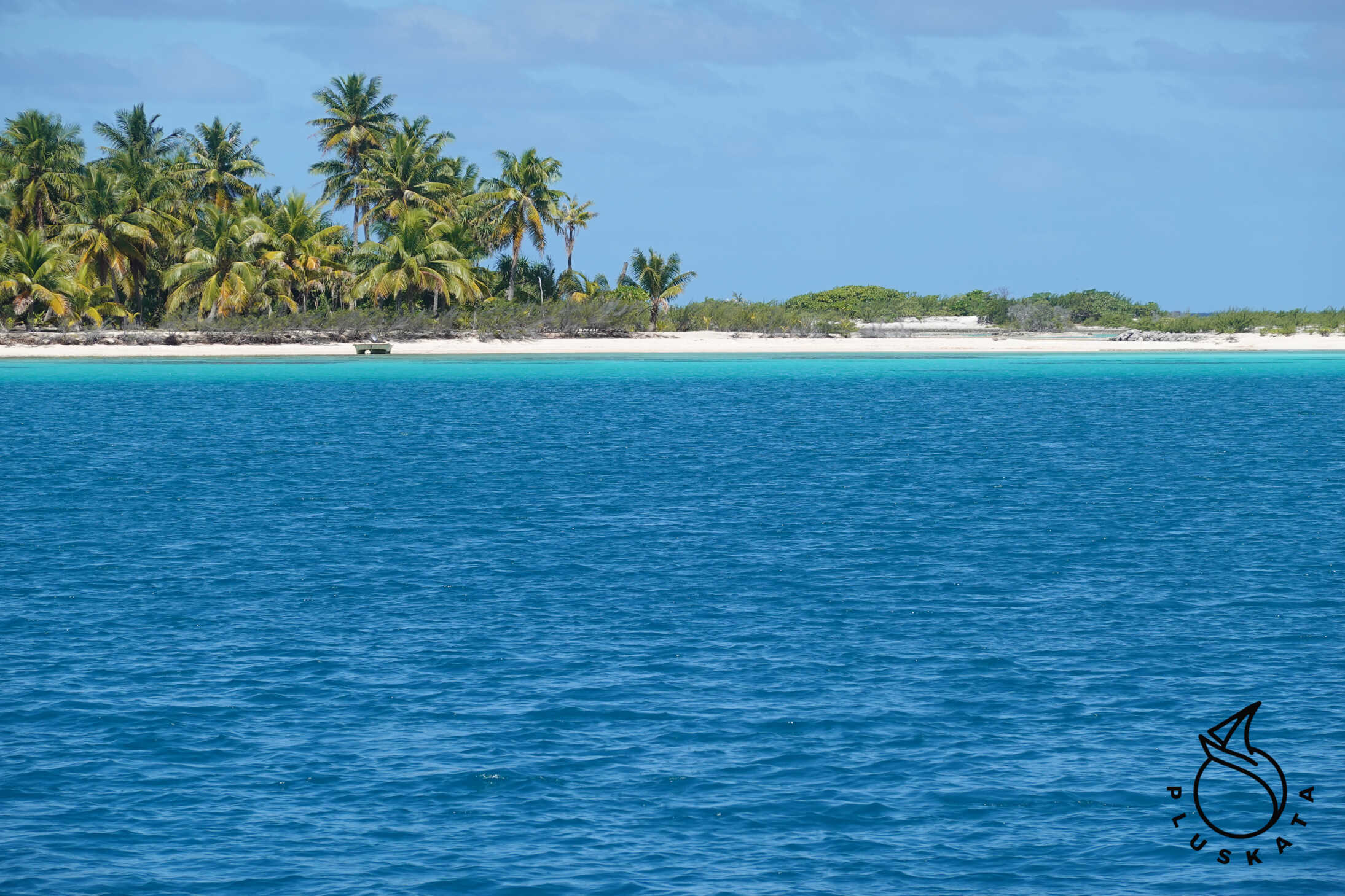
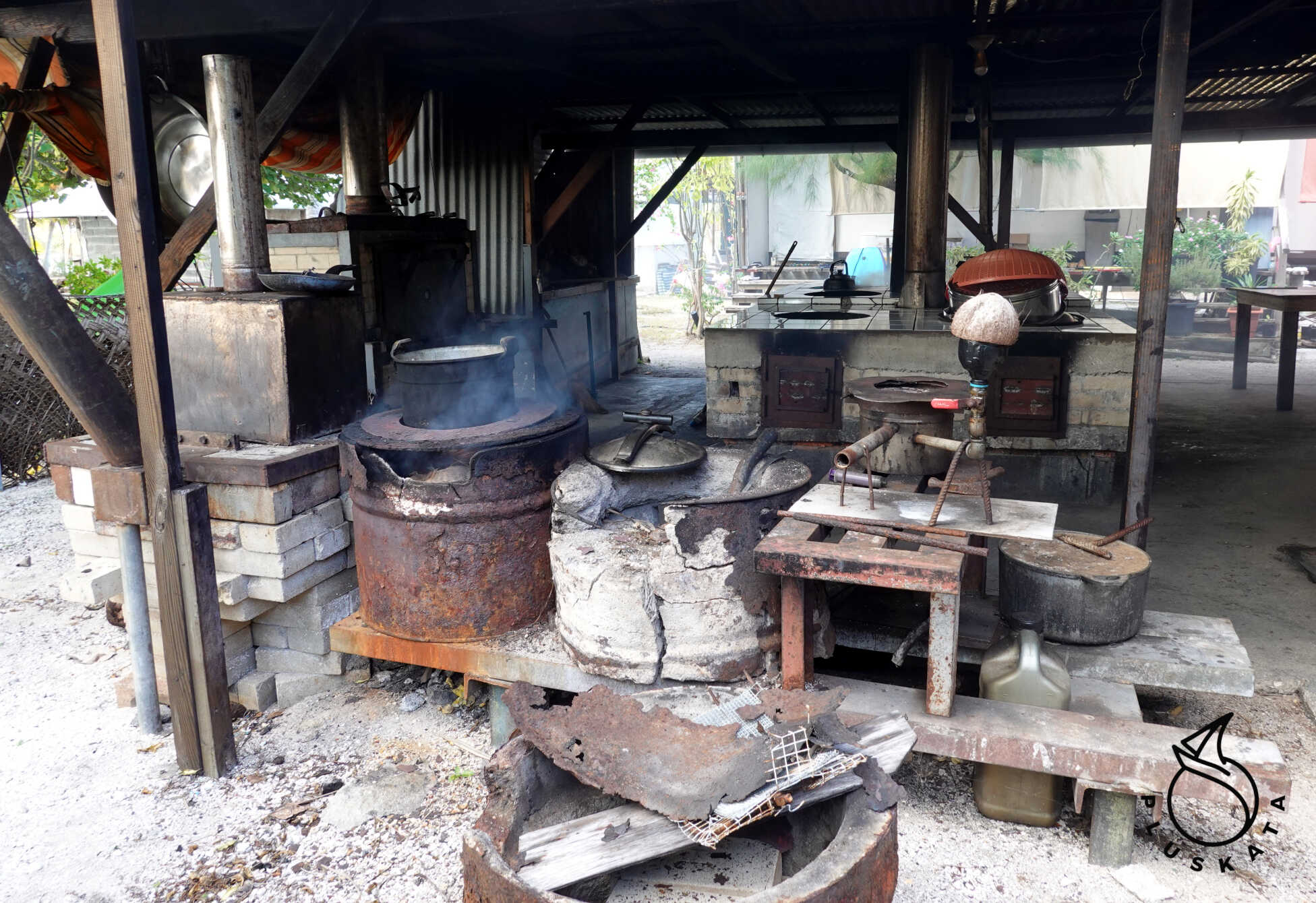
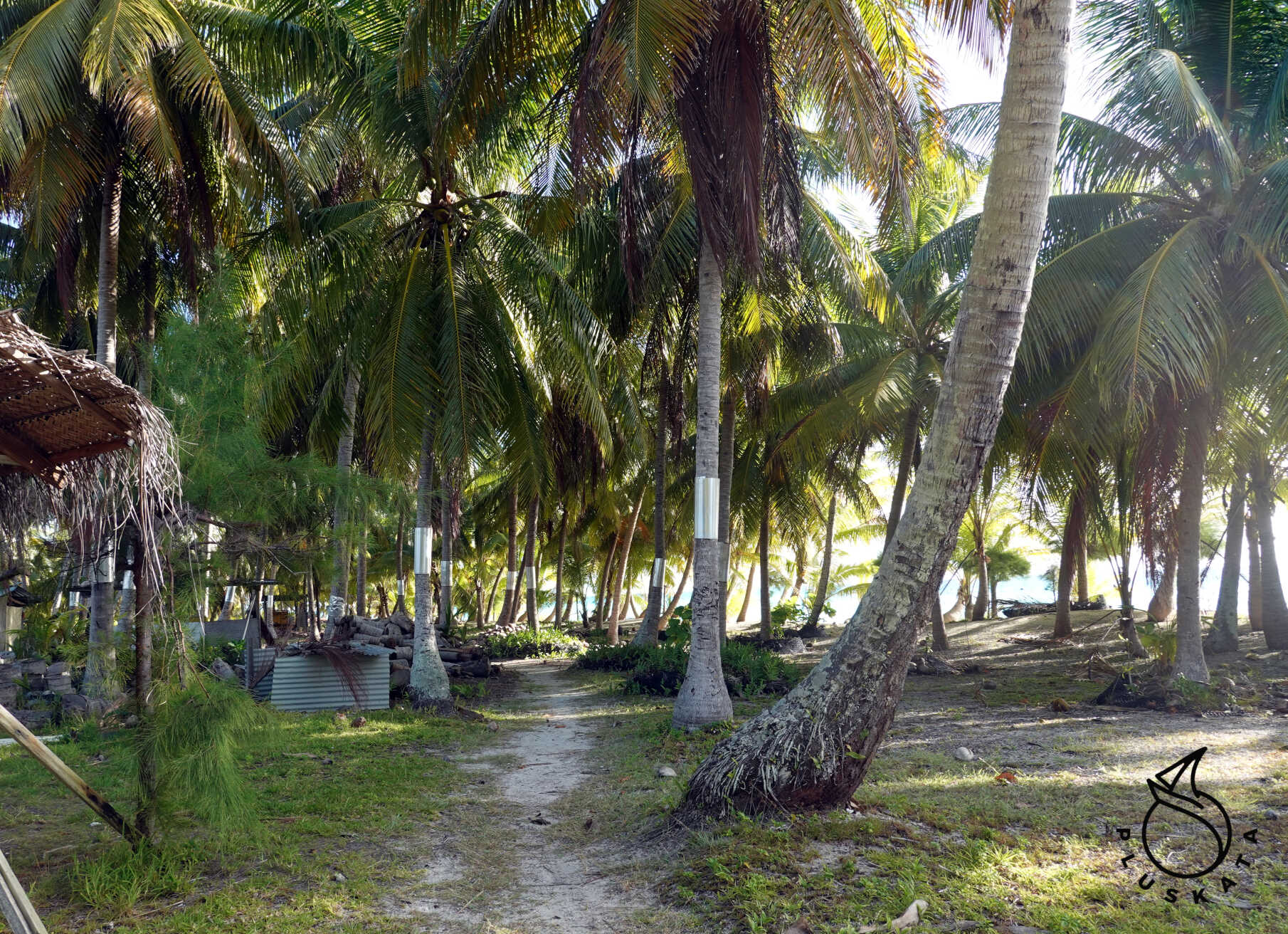
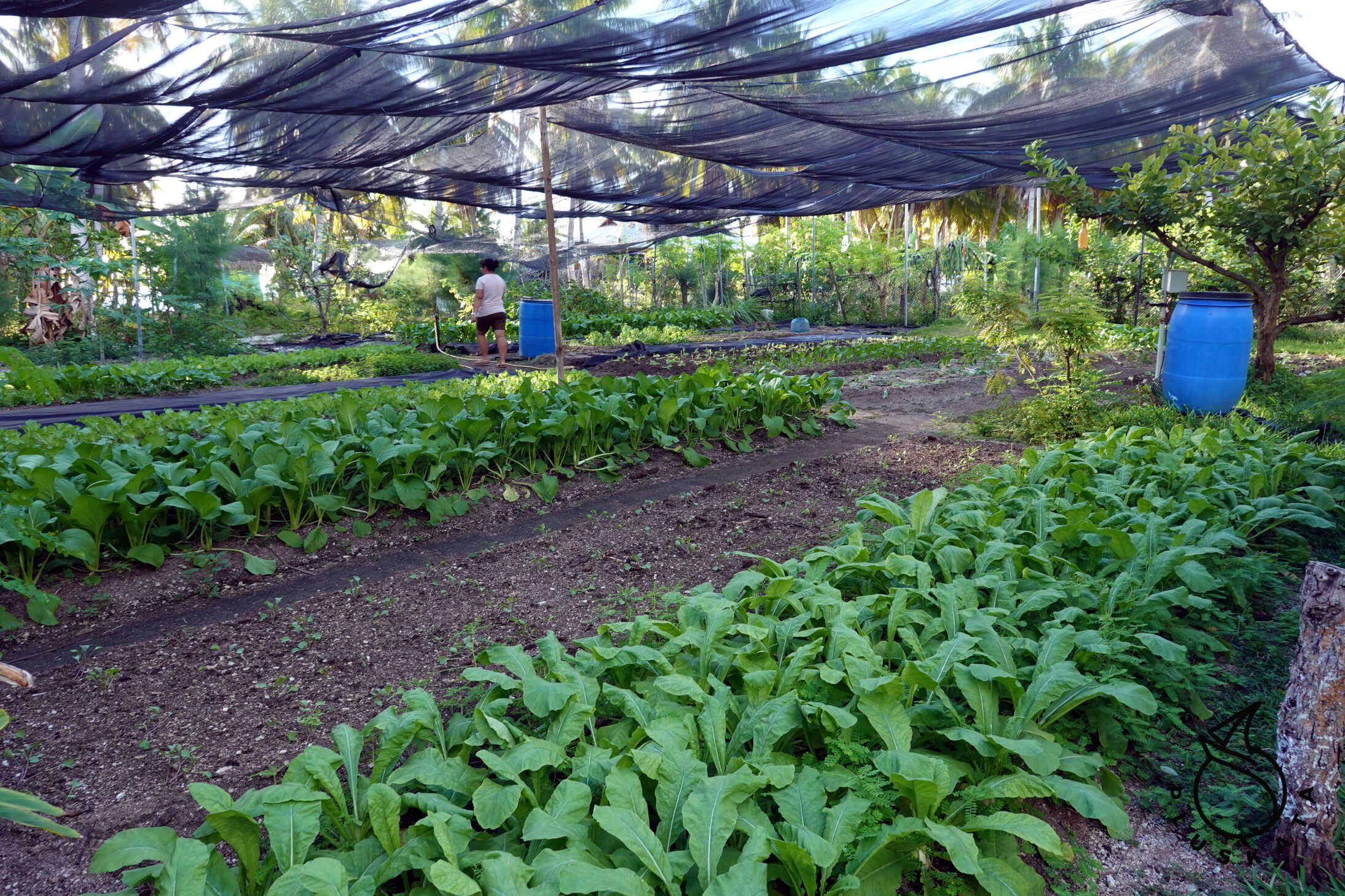
Located on a motu (island) on the Tikehau Atoll, this idyllic garden now allows two families, totaling 13, to live almost completely self-sufficiently. Surplus agricultural produce is sold to passing sailors, atoll residents, and even to Tahitian shops through stores like Araka in Pirae.
After arriving in Tikehau from Taiwan in November 1993, Elie Hong began searching for a secluded place to settle. He found a motu that became his Garden of Eden. He wanted to disconnect from everyday life and escape society, consumerism, and its trappings. His goal was to live a life of self-sufficiency, meeting only the bare necessities. “For him, the use of pesticides, insecticides, or GMOs was out of the question. At the time, it seemed like an impossible challenge for everyone.” The initiative was indeed a real challenge. Access to water on the atolls is limited. Moreover, their substrate consists of coral fragments, shells, or coralline algae. It was difficult to imagine a fertile garden in such a context. However, Elie Hong succeeded.
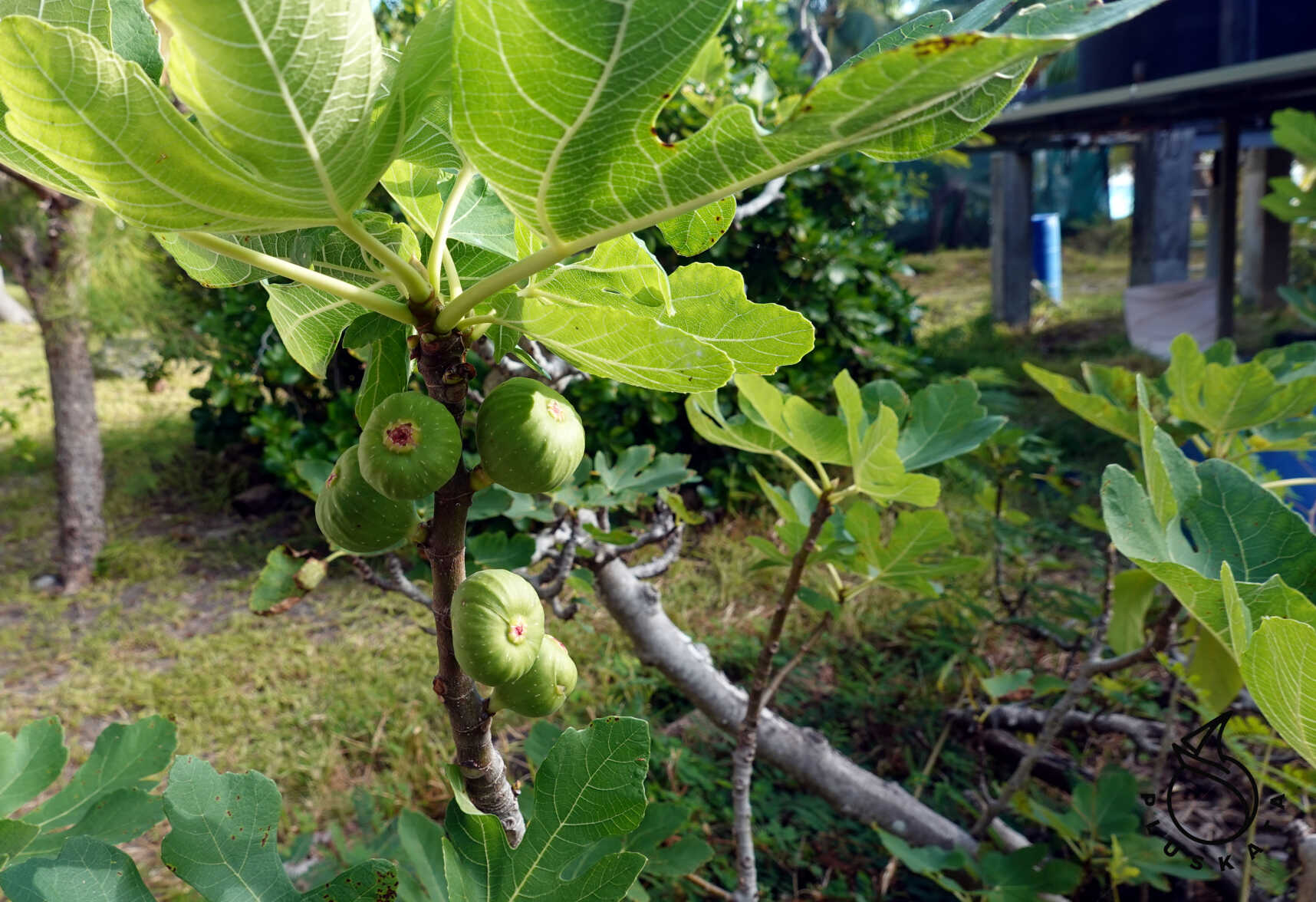
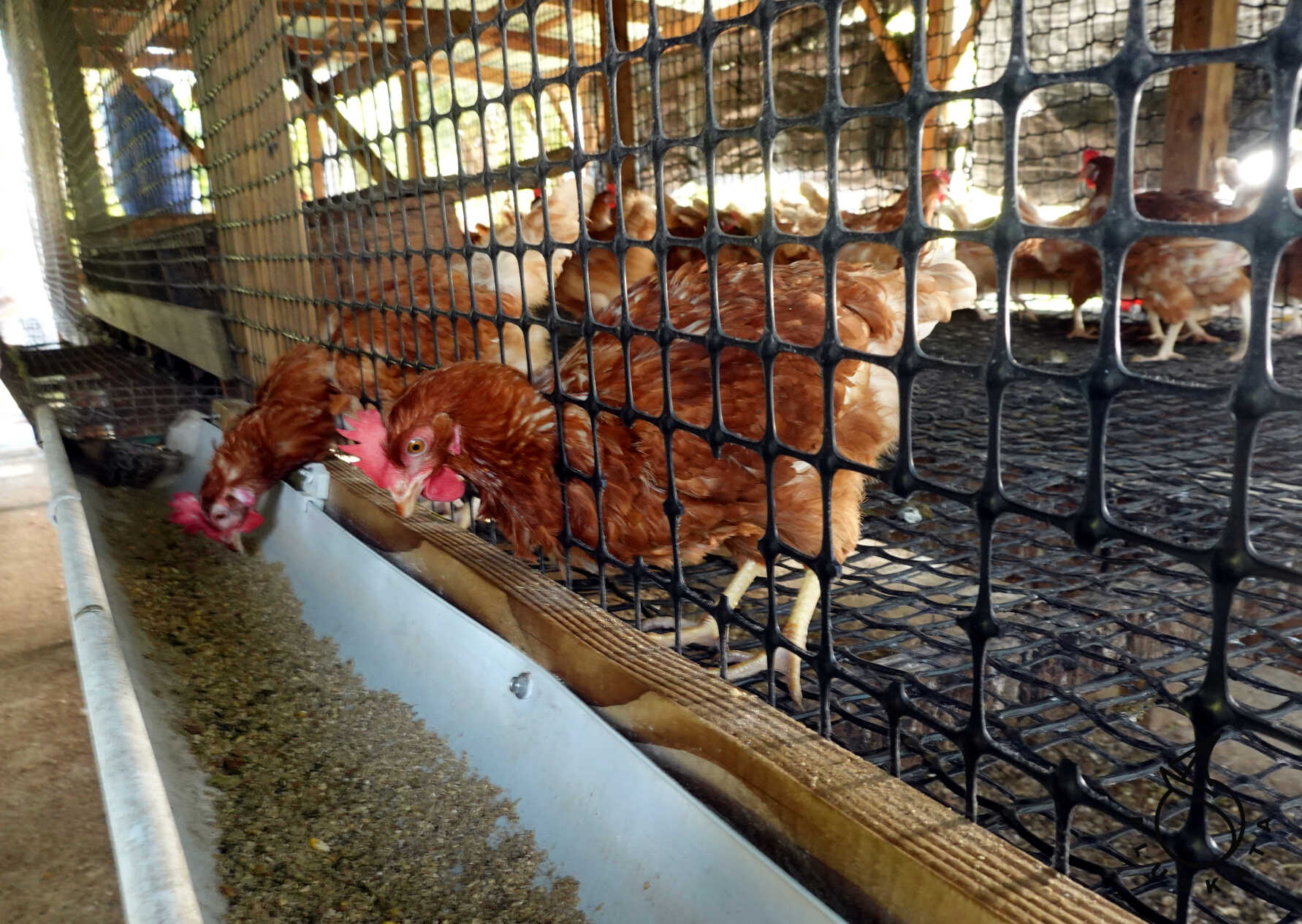
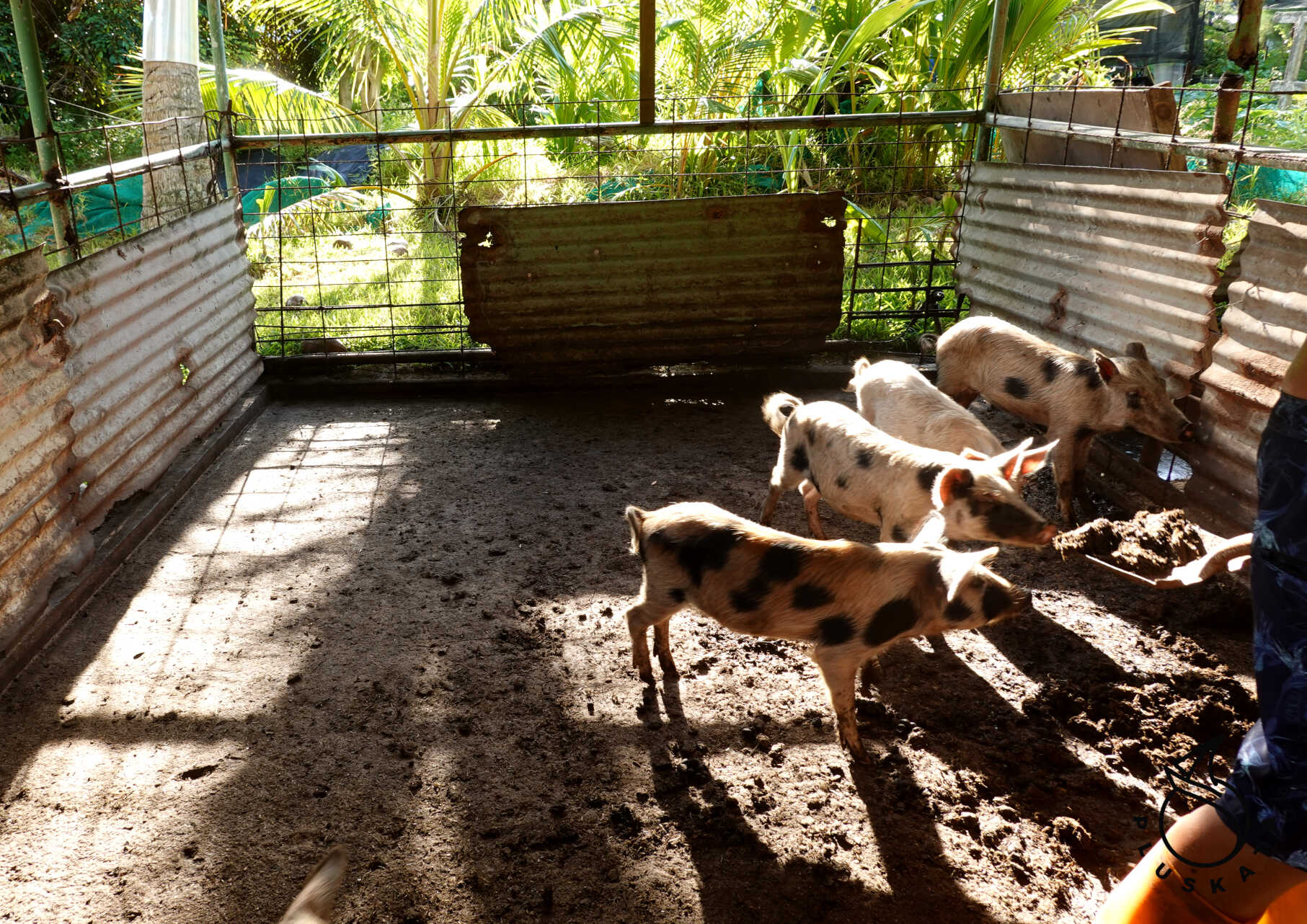
One of the owners, a relative of the founder, gives us a tour of the farm. They grow various fruits and vegetables. They raise pigs, fish, and chickens for eggs. They also produce sea salt, honey (they have beehives), and coconut oil. We buy lettuce, mint, and honey. We pay 2100 ppf for everything, including 1800 ppf for the honey. The next day, we return and buy a modest pendant with a beautiful pearl.
Tuherahera
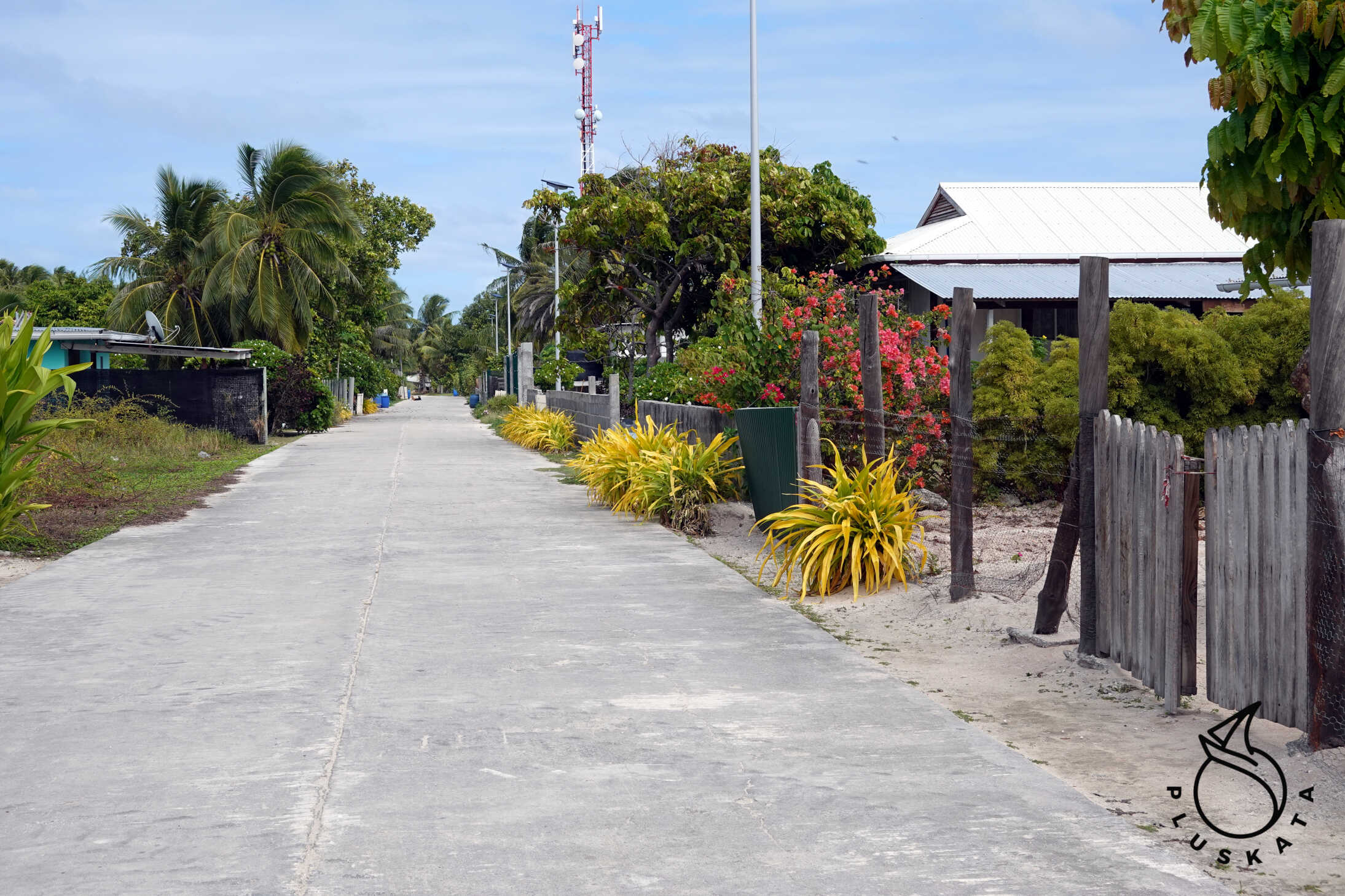
The main town on the island has a small, well-sheltered harbor, two shops, a few bars serving ready-made meals, a health center, a post office, and a few houses. It takes us about an hour to explore the town. Everything is clean and tidy, although there are a few abandoned houses with crumbling roofs, but the inhabited ones are very well-maintained.
Diving near Passa Tuheiava
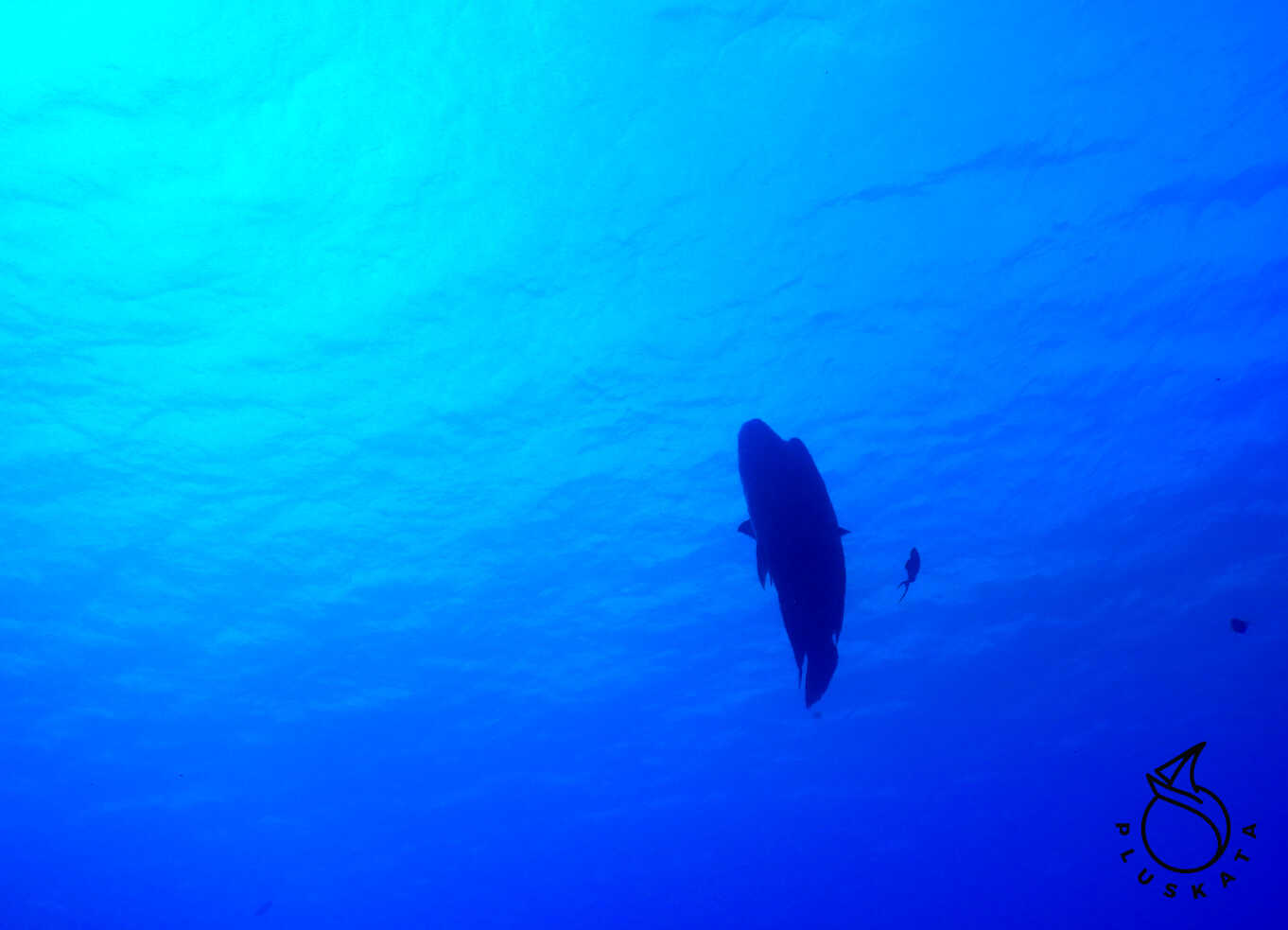
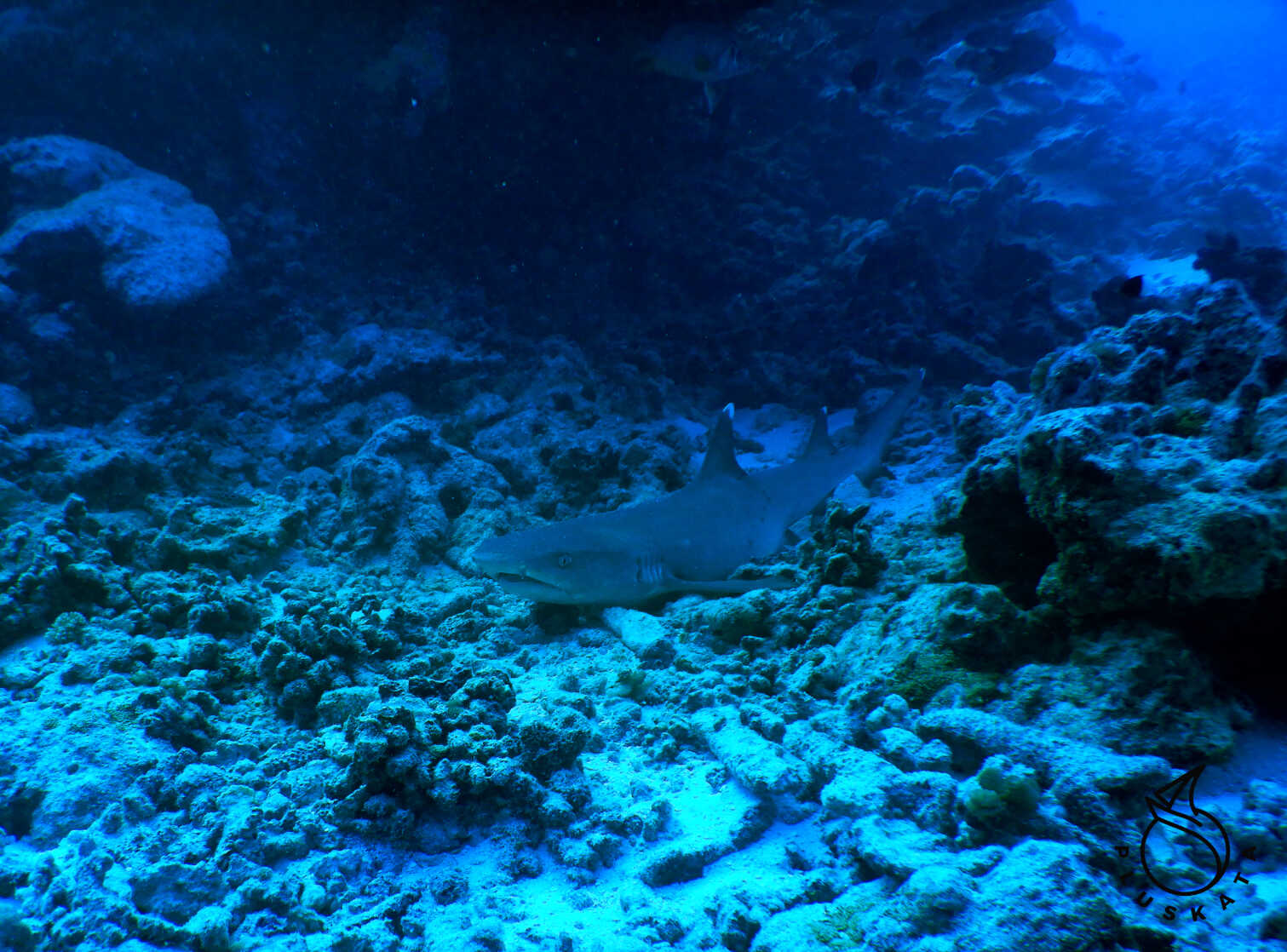
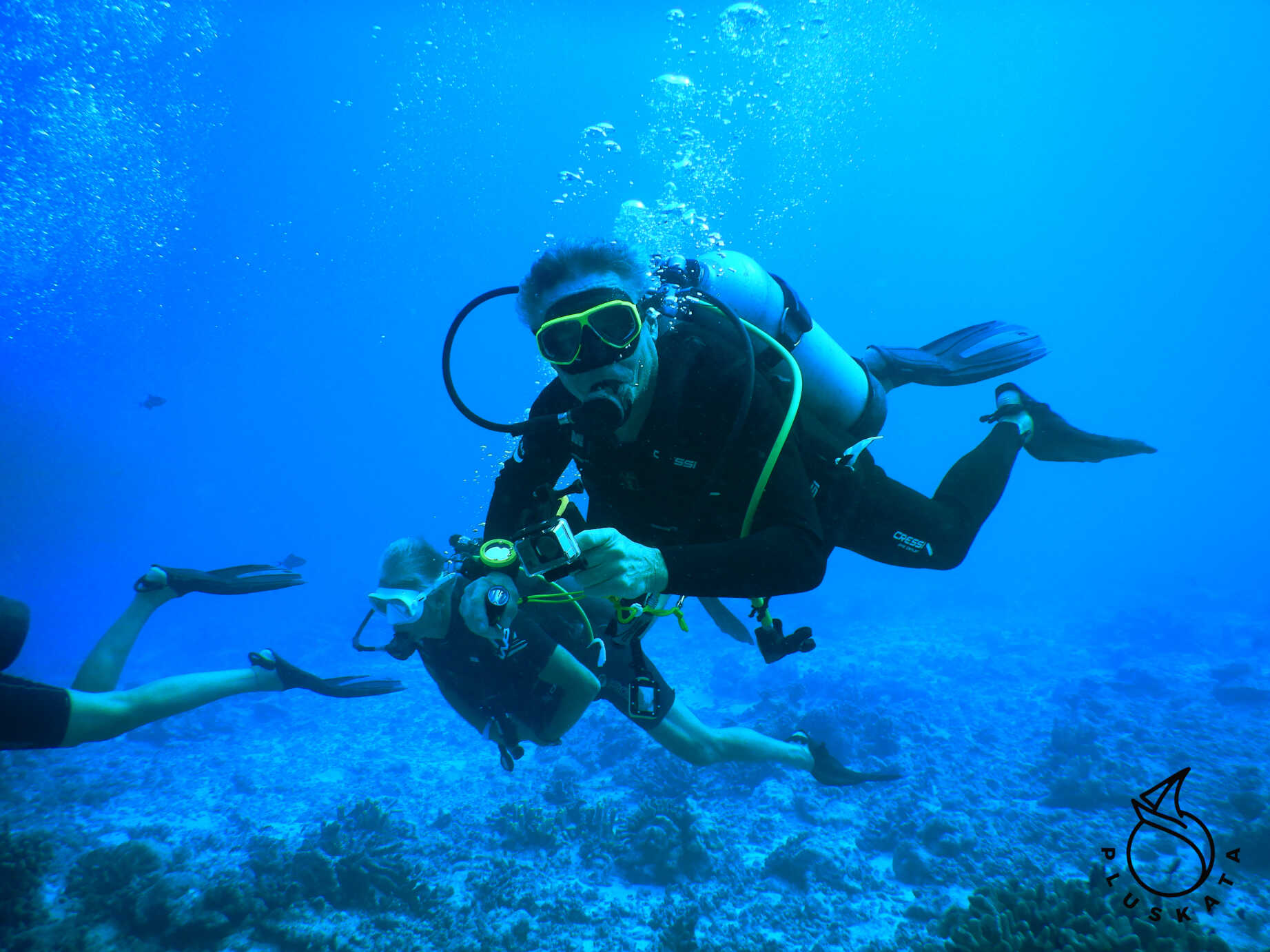
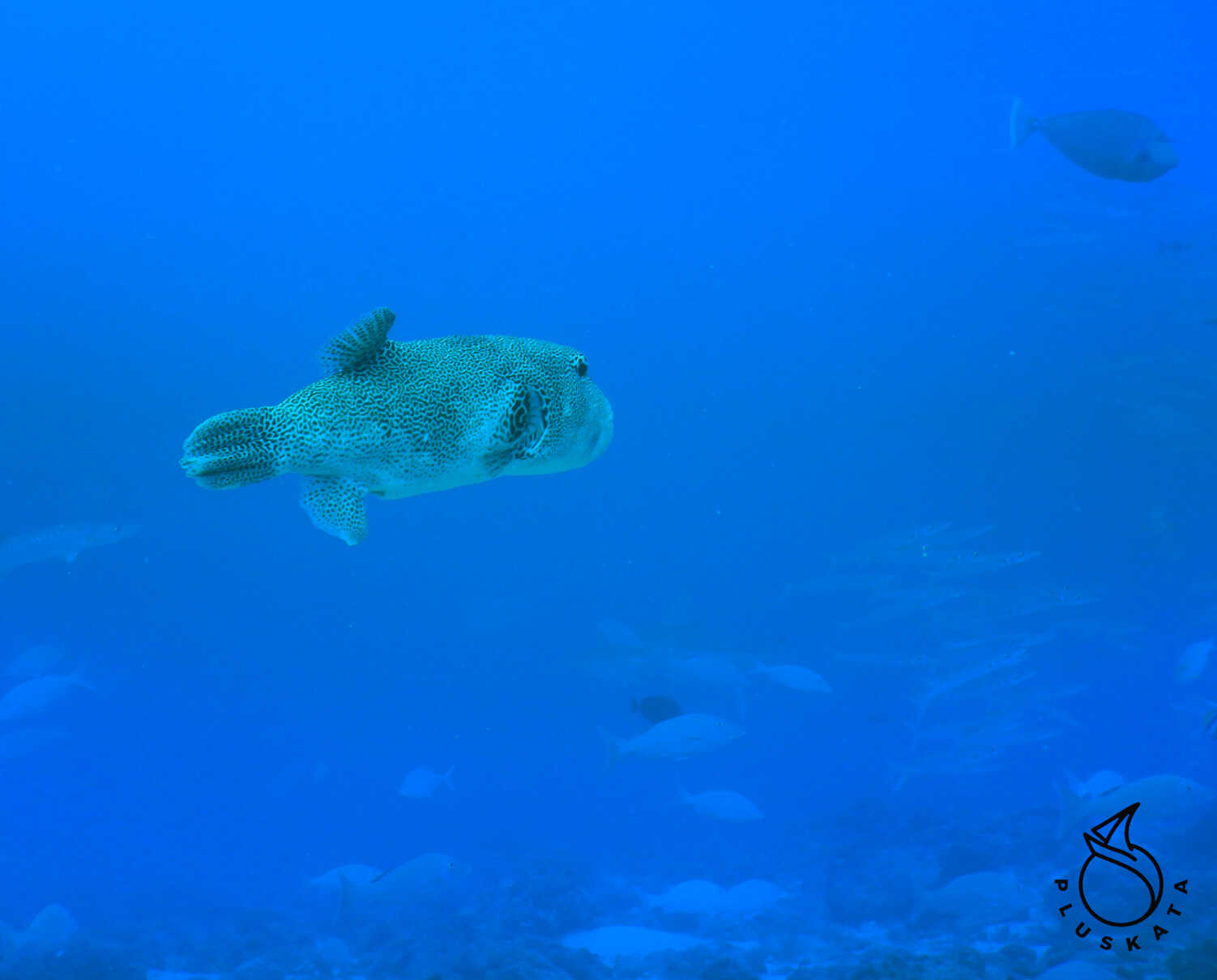
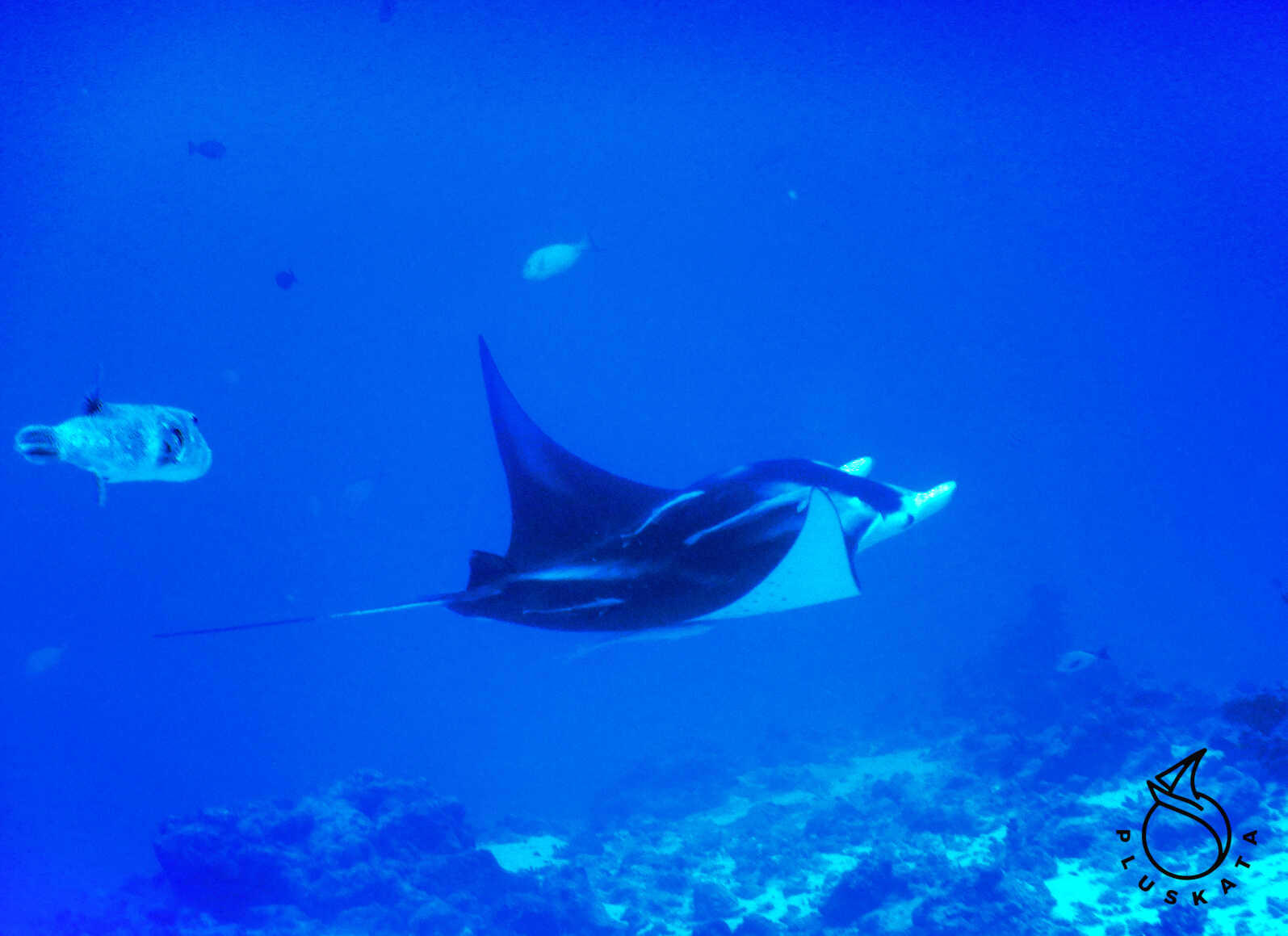
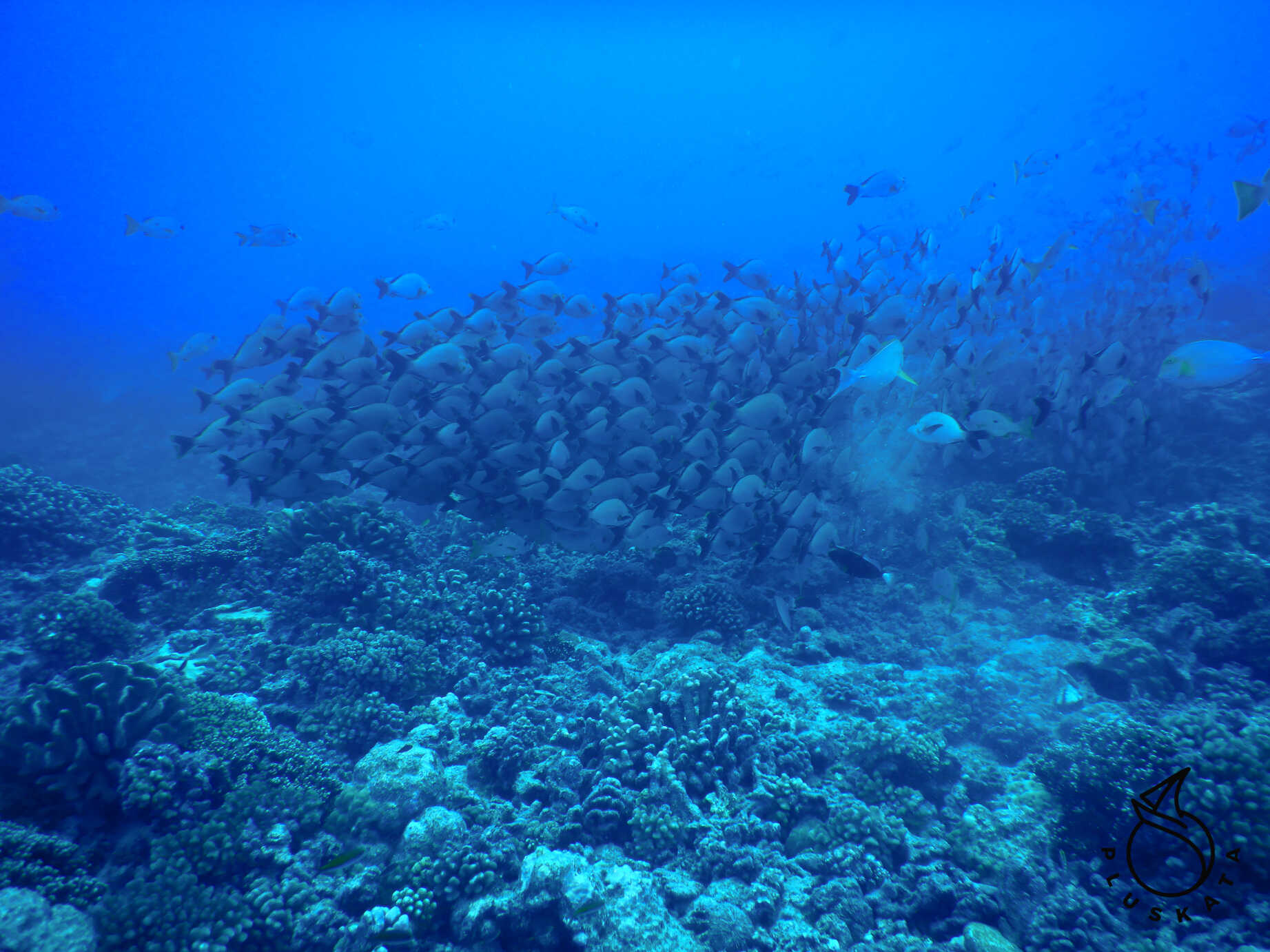
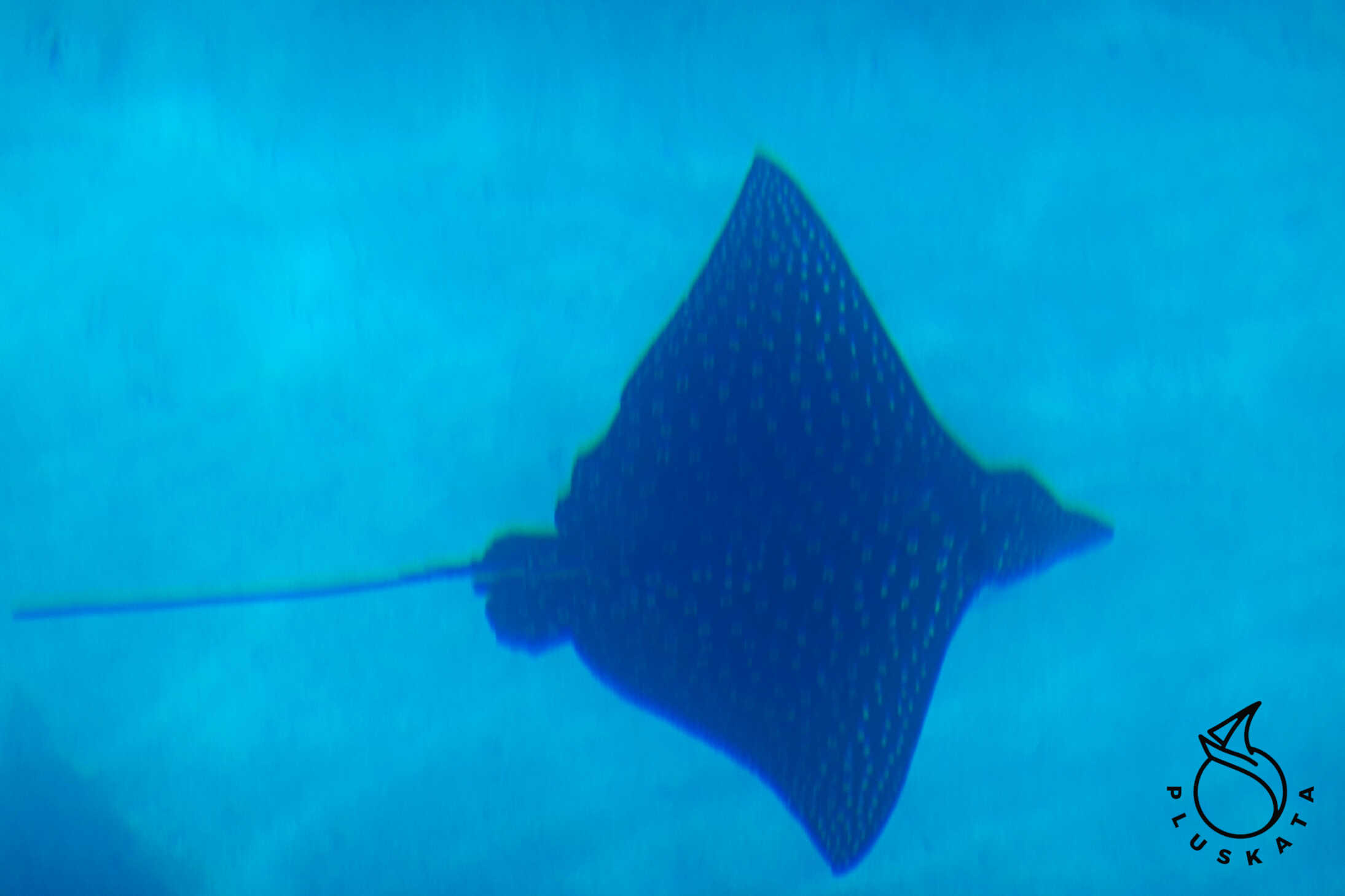
We choose the Tikehau diving agency. We take a motorboat to the other side of the pass. We descend to about 20 meters. There are numerous schools of fish everywhere, as well as a few various sharks, a Napoleon whale, and, of course, a giant manta ray.
Ahe
Another atoll in the Tuamotu archipelago. The entire atoll is full of pearl farms. There’s a marked waterway through the center from the pass to the town. We enter the pass with a 3-3.5-kn countercurrent, but Pluskata manages to hold its own.
Tenukupara
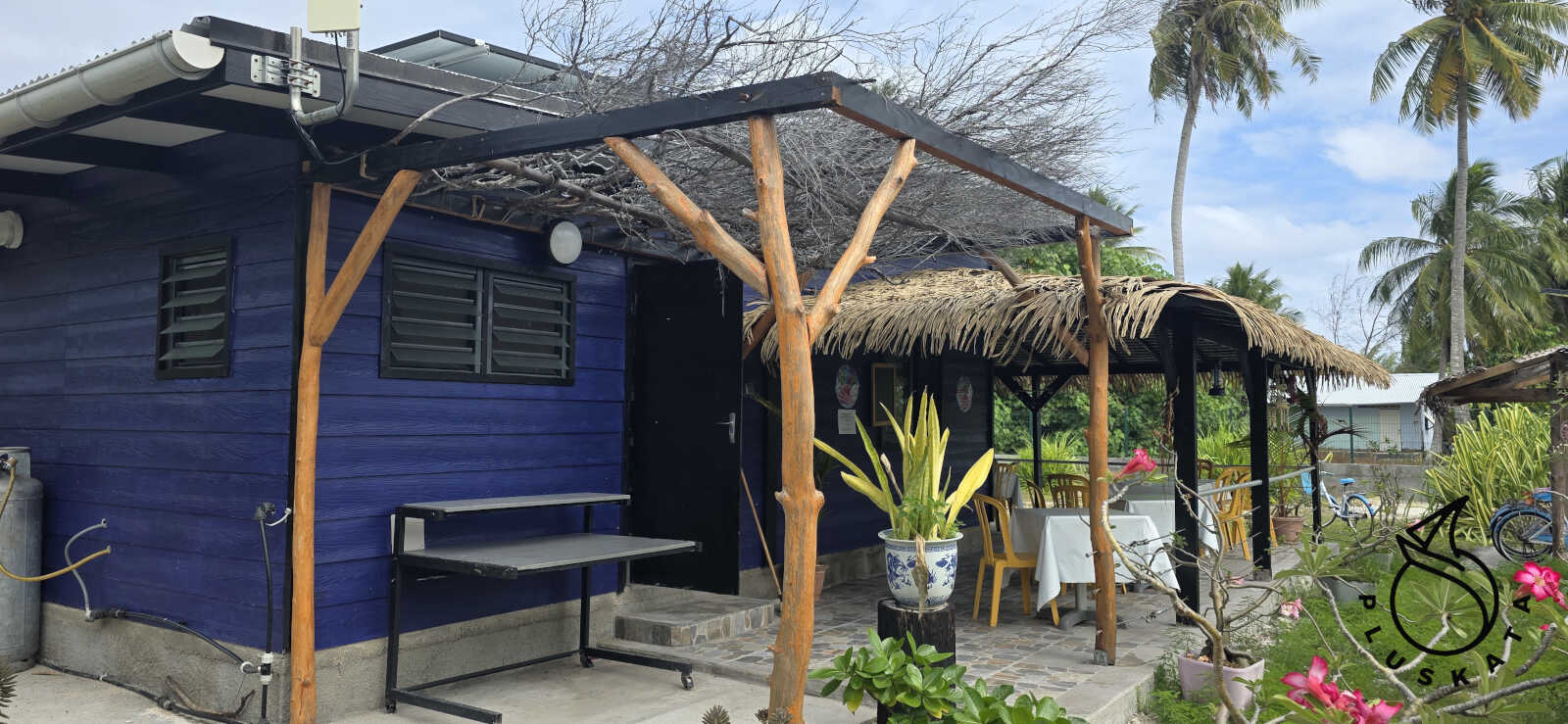
A pretty town – the only one on the island. It has two shops (one closed), a post office, the town hall, and a very good bar, where we have lunch – Tomek chooses the fish in sauce with fries, and I have the poison cru (raw fish with vegetables and lemon). Both are very tasty. The total, including Coca-Cola and beer, costs 3700 XPF.
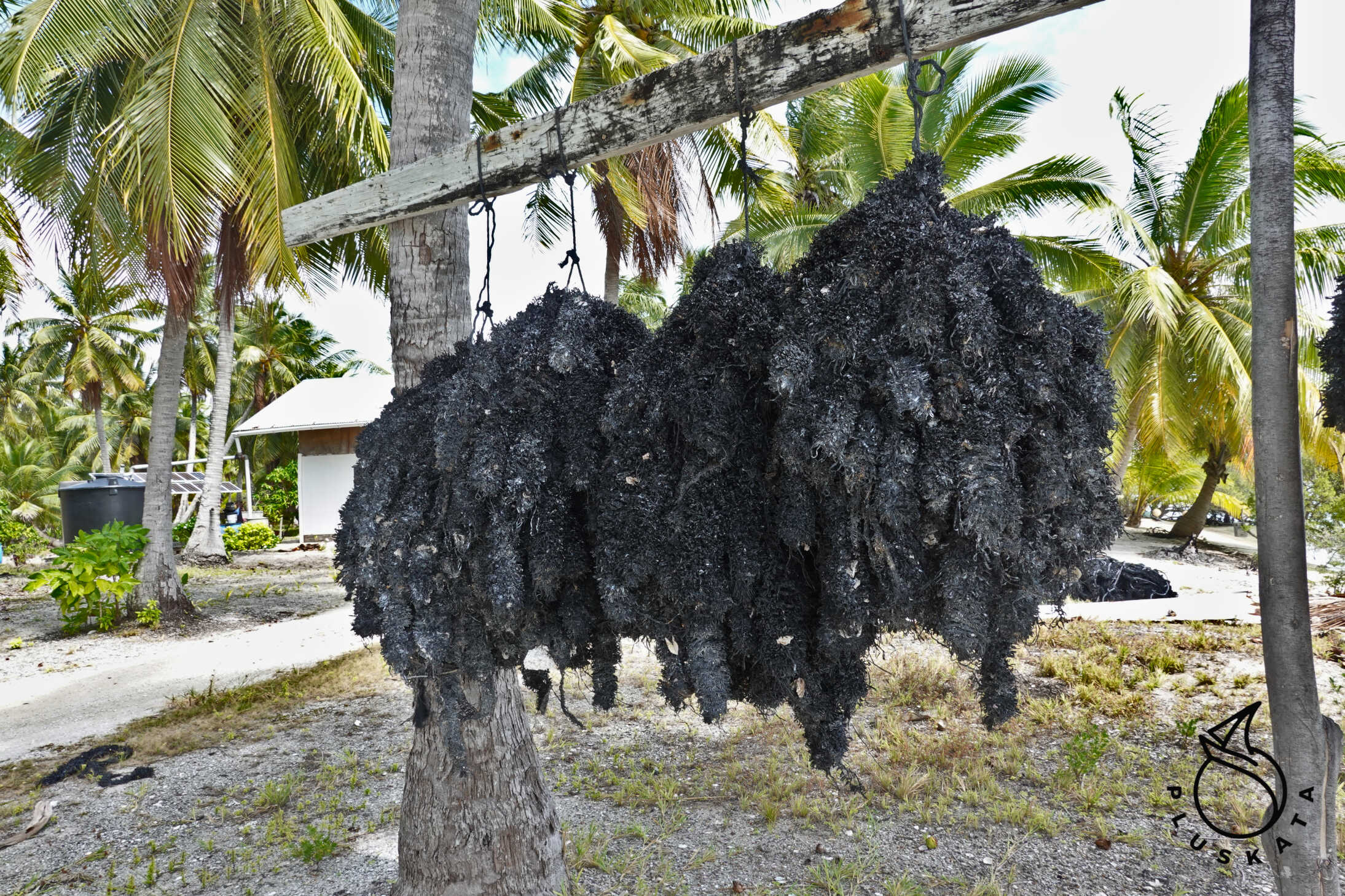
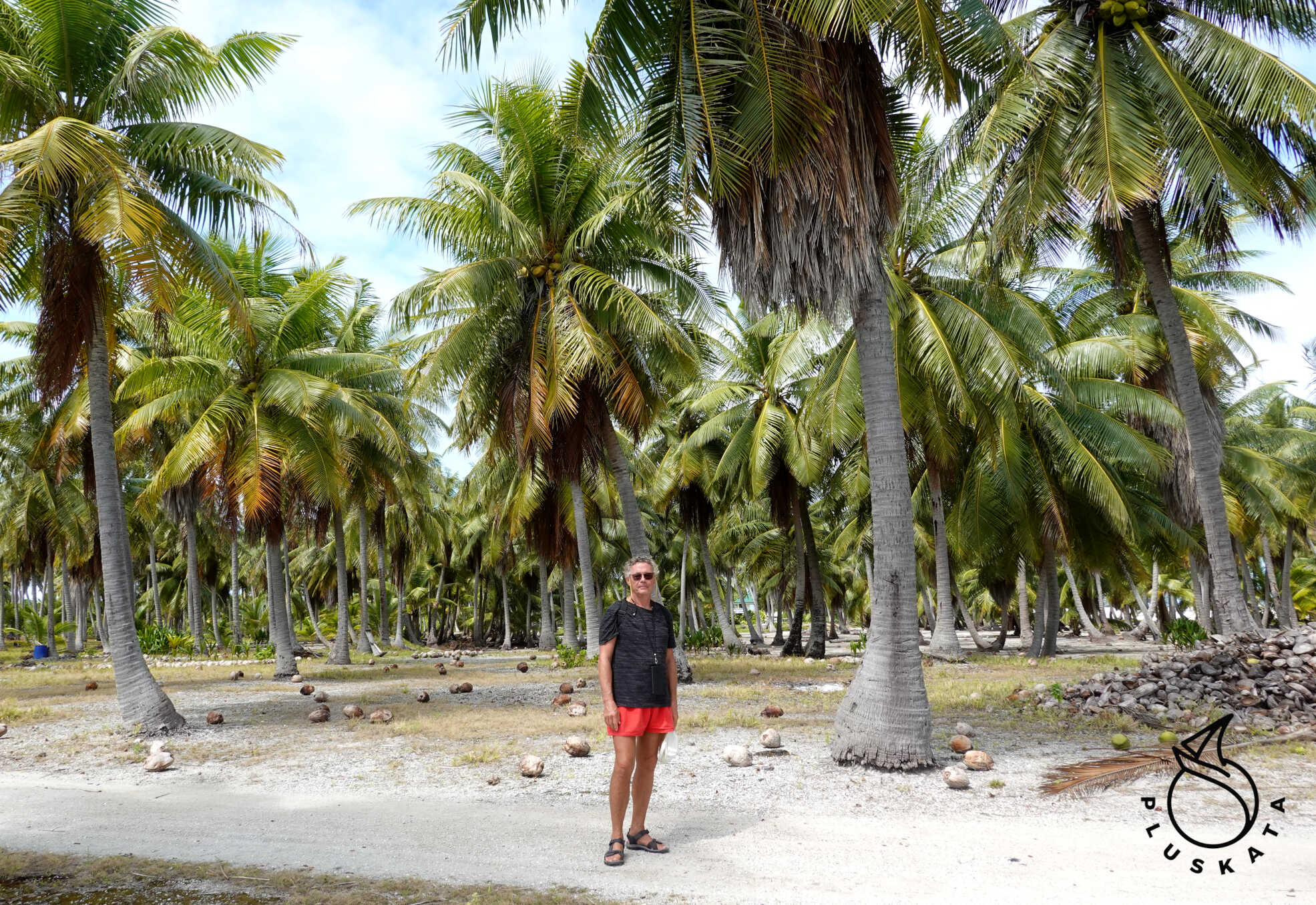
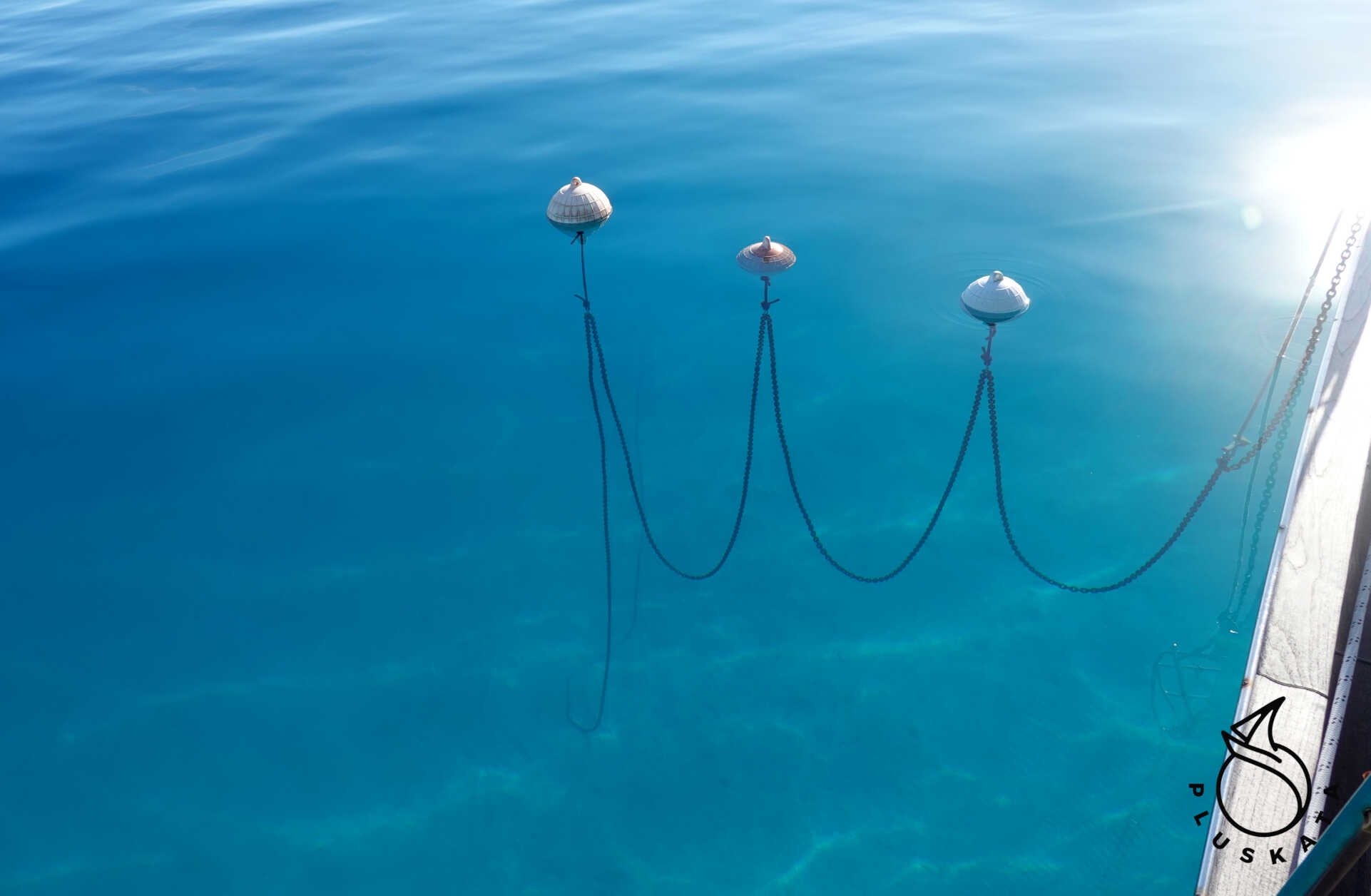
We cross the concrete causeway to the second motu. At the beginning is the power plant – a whole field of solar panels. Further on are the houses with residents who run the pearl farms (Tomek asked for and received two pearl buoys to suspend the chain) and the coconut palm plantations. Everything is well-maintained.
At the pier, there’s a boules competition. Everyone is having a great time, some wearing wreaths or hats made of leaves. There’s also music – not too loud.
Anchoring
We drop anchor at 15 meters. There are coral rocks (called boomis) everywhere, so we decide to suspend the chain on the fenders. The entire operation takes us about three hours. Then Tomek dives to the anchor and discovers that, despite being suspended, the chain is tangled around a rock. In town, we contact a diver who works at a pearl farm.
He claims that diving to 15 meters and untangling the chain without equipment is no problem for him.
The next day, Tomek bravely hangs the chain higher, we fold the boat, and with headphones on, we untangle and retrieve the anchor together (Tomek at the bow operates the winch and fenders, and I at the helm and engine), including all the suspended fenders.
We decide not to risk anchoring in the coral again and leave the atoll – the next island is 55 nautical miles away.
Apataki
After an all-night sail with waves from all sides, we reach the northern strand of Apataki atoll in the morning. Although Guestimator (an app for determining calm water times in the strand) predicts there will be a current entering the atoll by 9:30 AM, we still have a 2kn current leaving. This isn’t a problem for Pluskata, but the current reaches deep into the atoll.
Anchorage near the Rua Vahine Motu
A very nice anchorage. We drop anchor in the sand at a depth of 10 meters, and the “buoys” are far enough away that we don’t need to reattach the chain yet.
Rua Vahine Motu
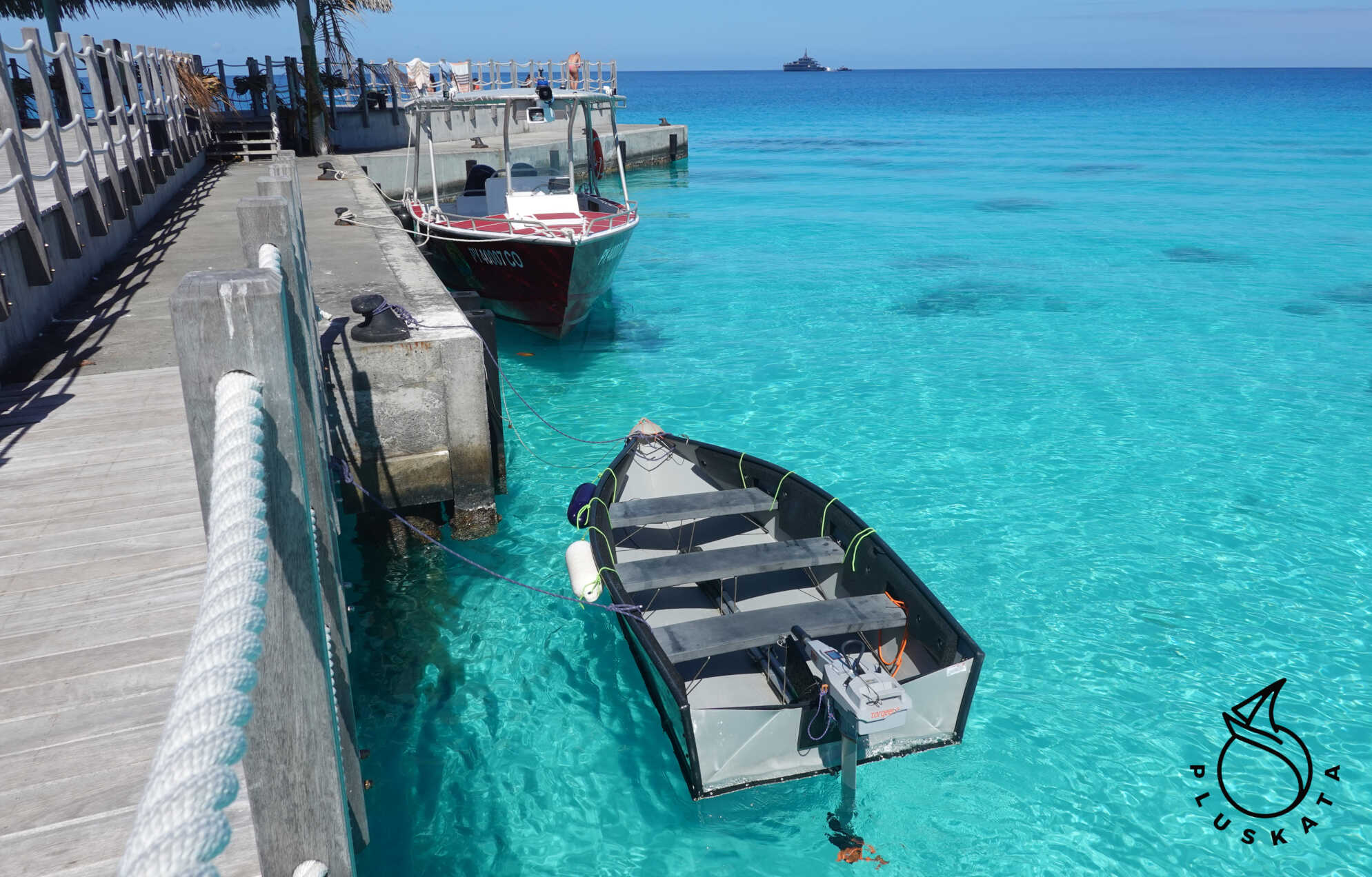
In the morning, we noticed that our anchor buoy had lost its way. Fortunately, the wind was blowing towards the island, and we spotted it on the motu’s shore. We launched a torpedo boat, and Tomek sailed to the island – the buoy was recovered! After breakfast, we reattached the buoy, and on our way back to the yacht, we encountered a small shark, which gave us a real fright. We then set off on a trip to the motu. We circled the islet in about 20 minutes. Along the way, we met some picnicking locals who offered us well-prepared breadfruit. Further on, there were two houses. One of the locals gave us a large pearl buoy. Tomek was delighted :-). We return to the yacht, and Tomek continues to clean the underwater part of the hull, while I seal the whistling holes in the bimini tops.
We spot a beautiful bird with blue wings the color of the water. After some online research, it turns out it’s a white tern with snow-white feathers. As it flies over the blue water, its wings act as a screen onto which the turquoise water is projected – an incredible phenomenon.
Float the chain
We decide to try float the chain in calm water. We already have three pearl buoys, so after almost a full day of calculations, we test it in the afternoon – it turns out perfectly.
Rangiroa
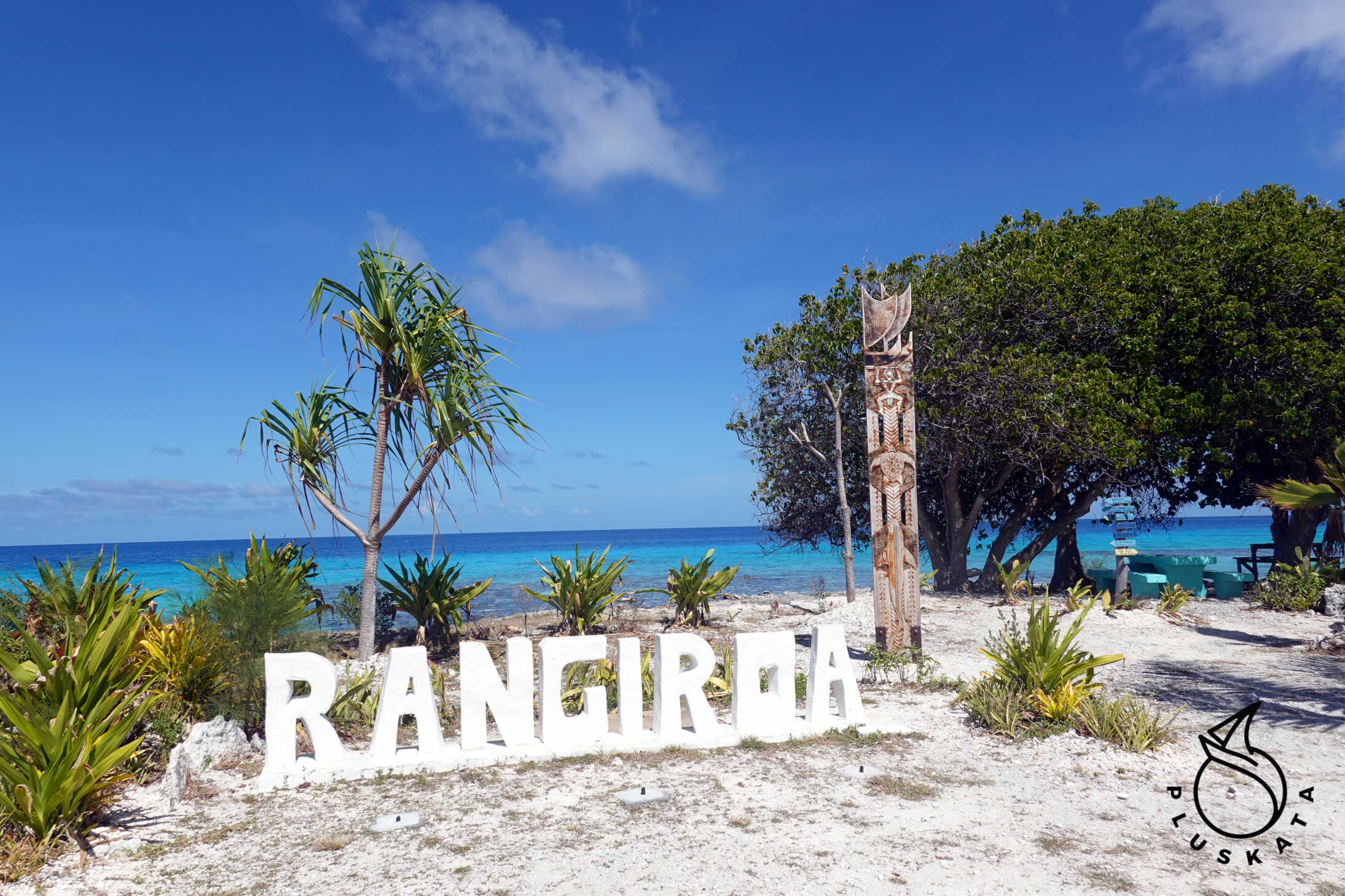
Rangiroa is the largest atoll in the Tuamotu and the third largest in the world. It consists of approximately 250 islands, islets, and sandbars with a total area of approximately 170 km². The lagoon area is approximately 1,020 km². It is 78 km long and 24 km wide. Tiputua Anchorage
The only legal anchorage on Rangiroa. We anchor at 15m and suspend the chain from four buoys. The anchorage is full of yachts. Dinghies can land on two jetties and a small port at the entrance to the pass. We choose the new jetty at the public beach. The jetty is long and you can moor at the fireboat ladder (on the western side of the jetty).
Tour from Tiputua Pass to Avatoru Pass
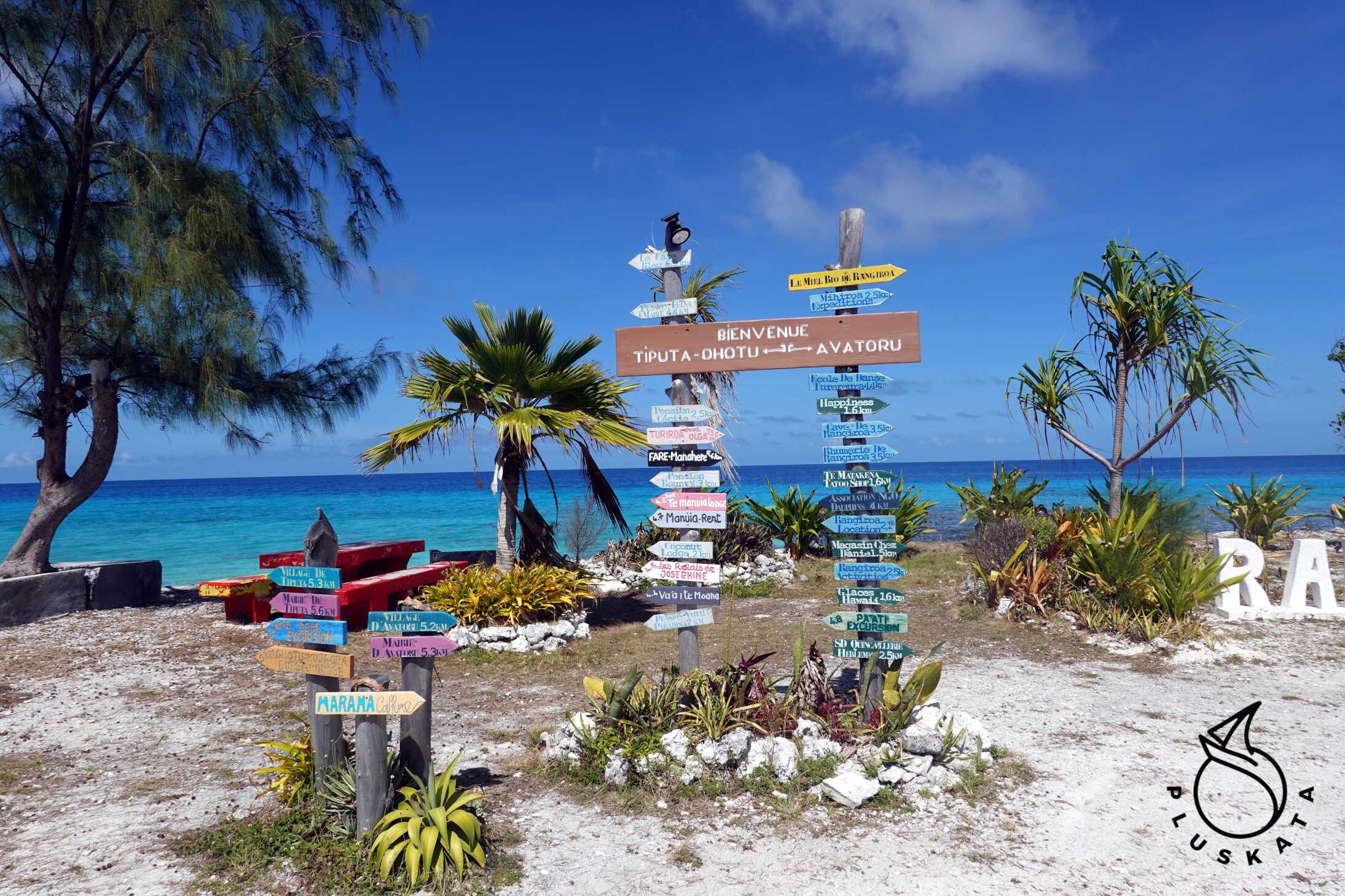
We leave our “torpedo boat” at the jetty at the public beach and set off on a tour. The plan is to walk to the second pass, and along the way, visit a few grocery stores and perhaps some vegetable shopping, visit a pearl farm, and do a wine tasting at the only wine producer in French Polynesia.
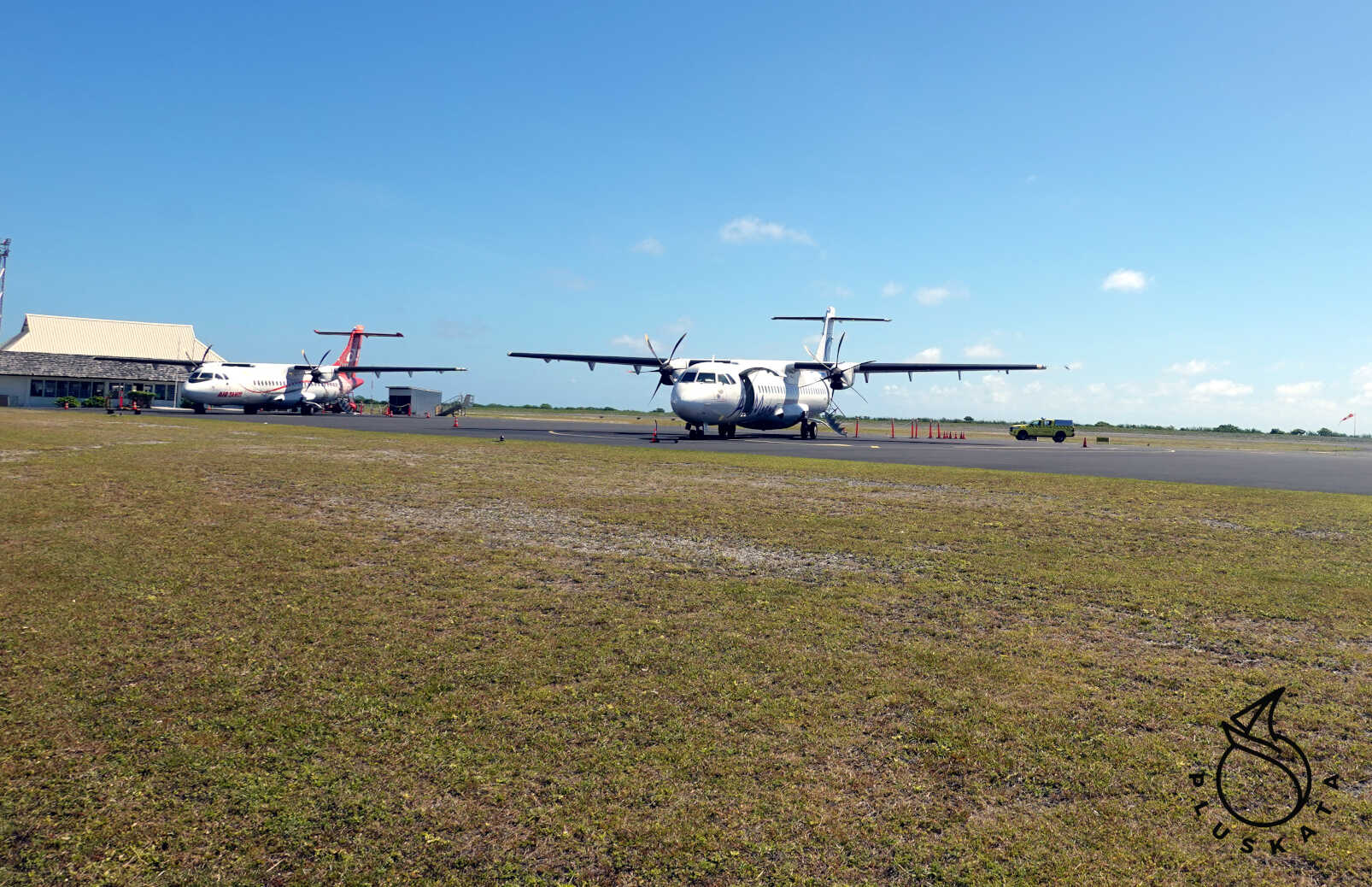
The airport in Rangiroa is quite good, with check-in counters for two airlines that fly here, a large waiting area, and restrooms. There’s a hairdresser near the airport whose prices are more than half those in Pateete, so I make an appointment for a haircut the next day. We visit the Vaimariu grocery store – they have quite a few vegetables at reasonable prices for French Polynesia. Gauguin’s Pearl Farm organizes a guided tour of the farm at 2 PM. The cost is 1000 XPF per person. I also learn that they buy small oysters from Ahe and Manihi and continue to grow them here. At the pearl shop, prices are about five times higher than on Gambier.
We reach the second lane – it’s wider than the one we entered. We’ll be leaving through this one. On our way back, we stop at a few more grocery stores and find something interesting in each one (e.g., fake Nutella at half the price – it turns out to be very tasty).
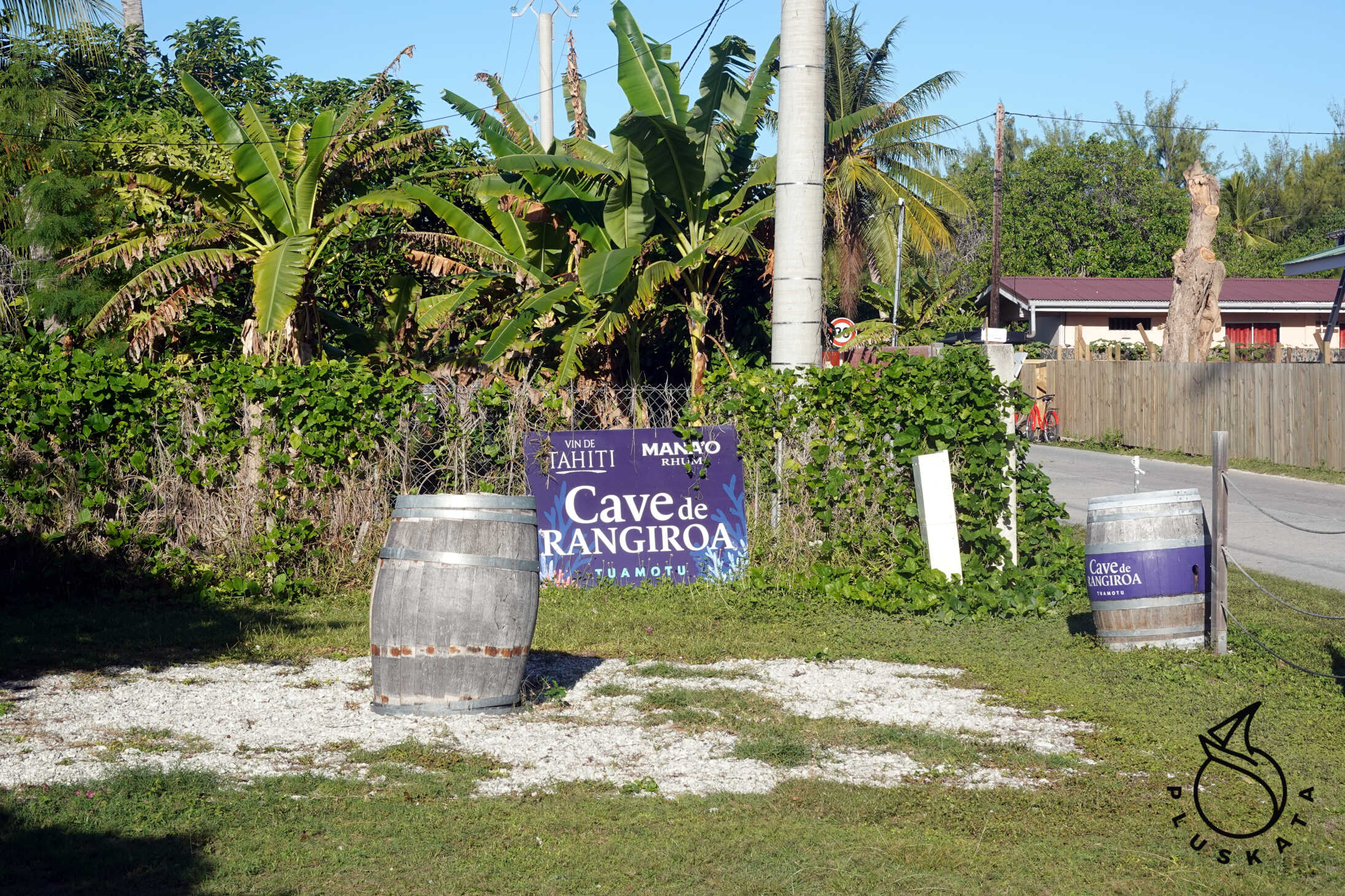
Wine tasting at Cave a vin de Rangiroa
In 1991, Dominique Auroy decided to cultivate grapes on the Tuamotu atoll. And against all odds and after years of hard work, the seemingly bizarre idea became a resounding success.
It all began with a meeting between Dominique Auroy and Bernard Hudelot, a winemaker and biologist from the Haute Côte region and a professor of oenology at the University of Dijon, specializing in the adaptation of grapevines to their climatic environment.
The idea of tropical vineyards took root and flourished over time. The first decade was devoted to planting experiments on five archipelagos, in which Fabrice Baffou, Thierry Chaumas, Bruno Corneau, and Sébastien Thépénier participated. The first symbolic harvest took place in 1999.
Year after year, wine production increases, and they win medals in international wine competitions.
At the winery, you can participate in a tasting of four varieties for 2,500XPF/person.
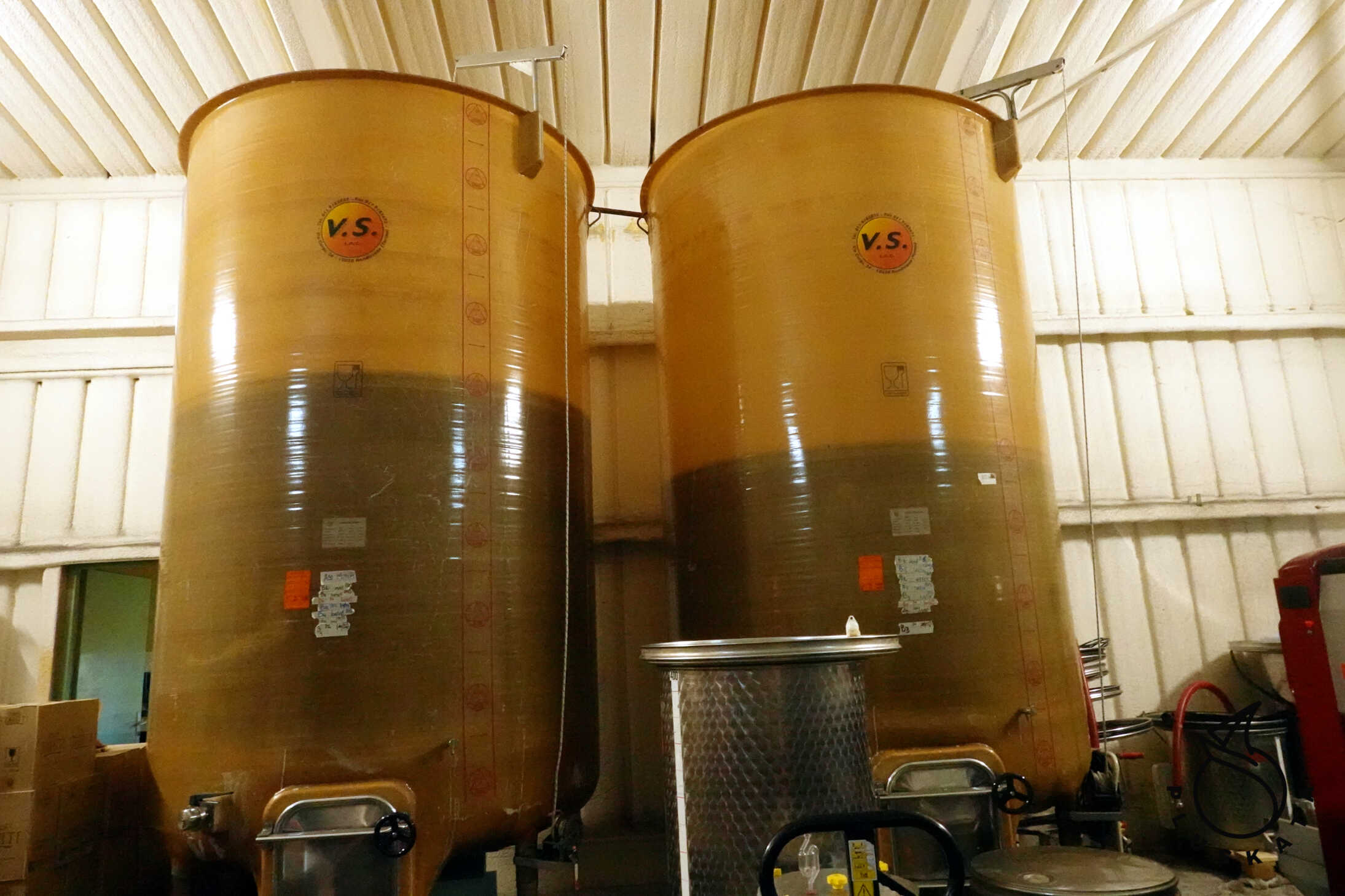
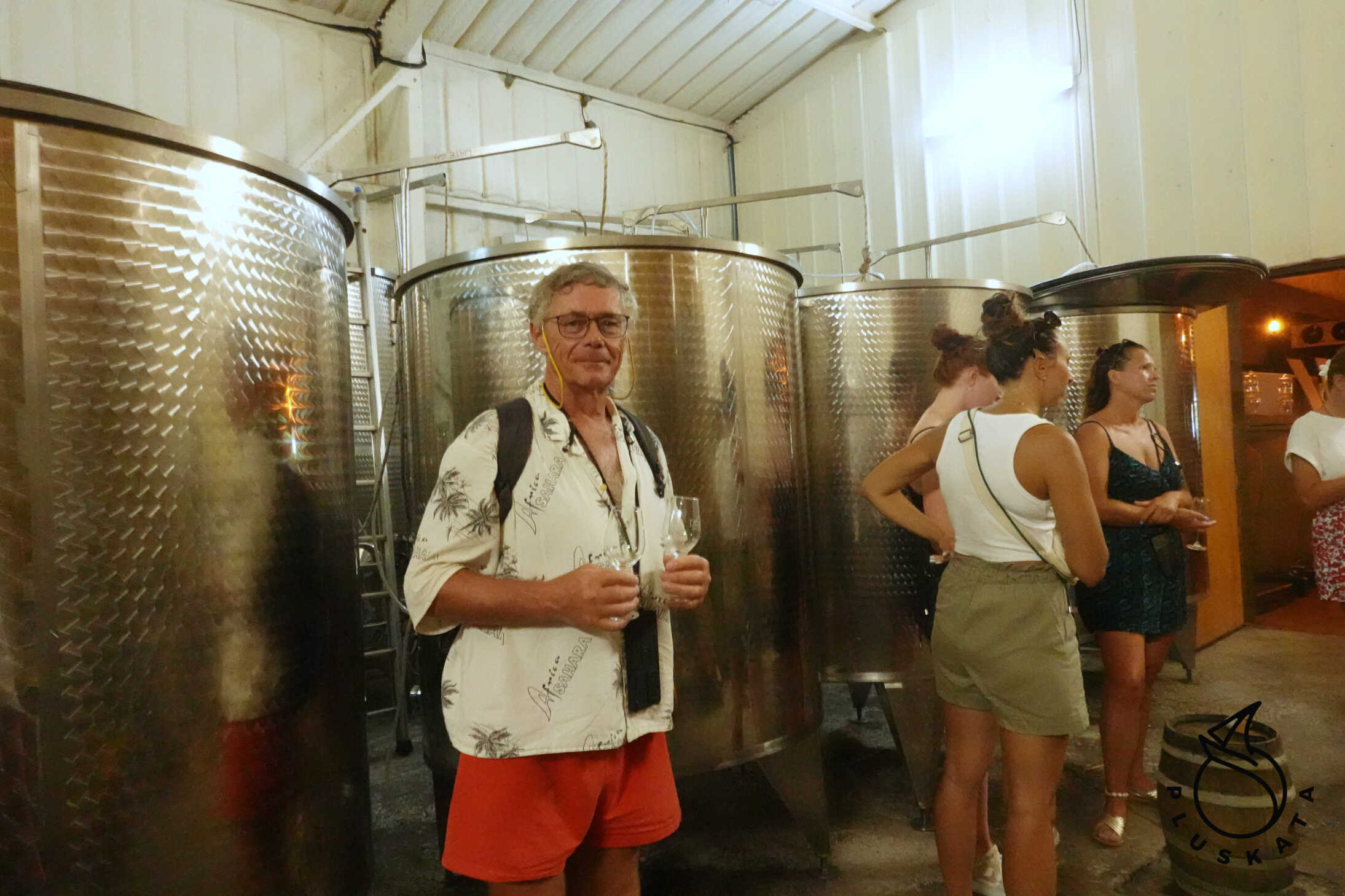
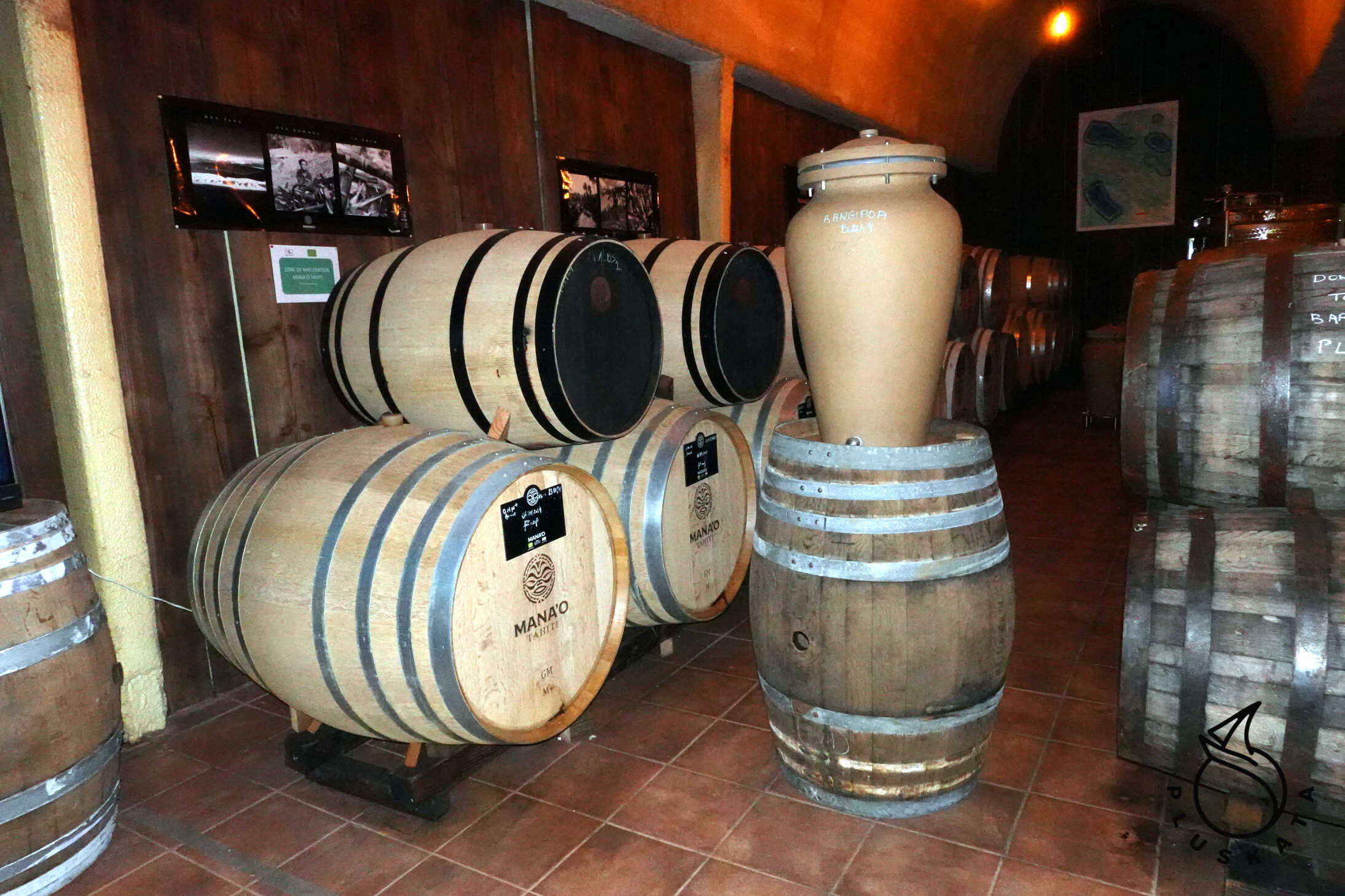
wines and one rum. The tasting is accompanied by a film about the winery’s origins and a visit to the winery, complete with enormous plastic fermentation tanks, steel tanks, and oak barrels for aging the wine.
We sampled two dry whites (aged in a barrel and a steel vat), one rosé, and one slightly sweet.
Aquarium
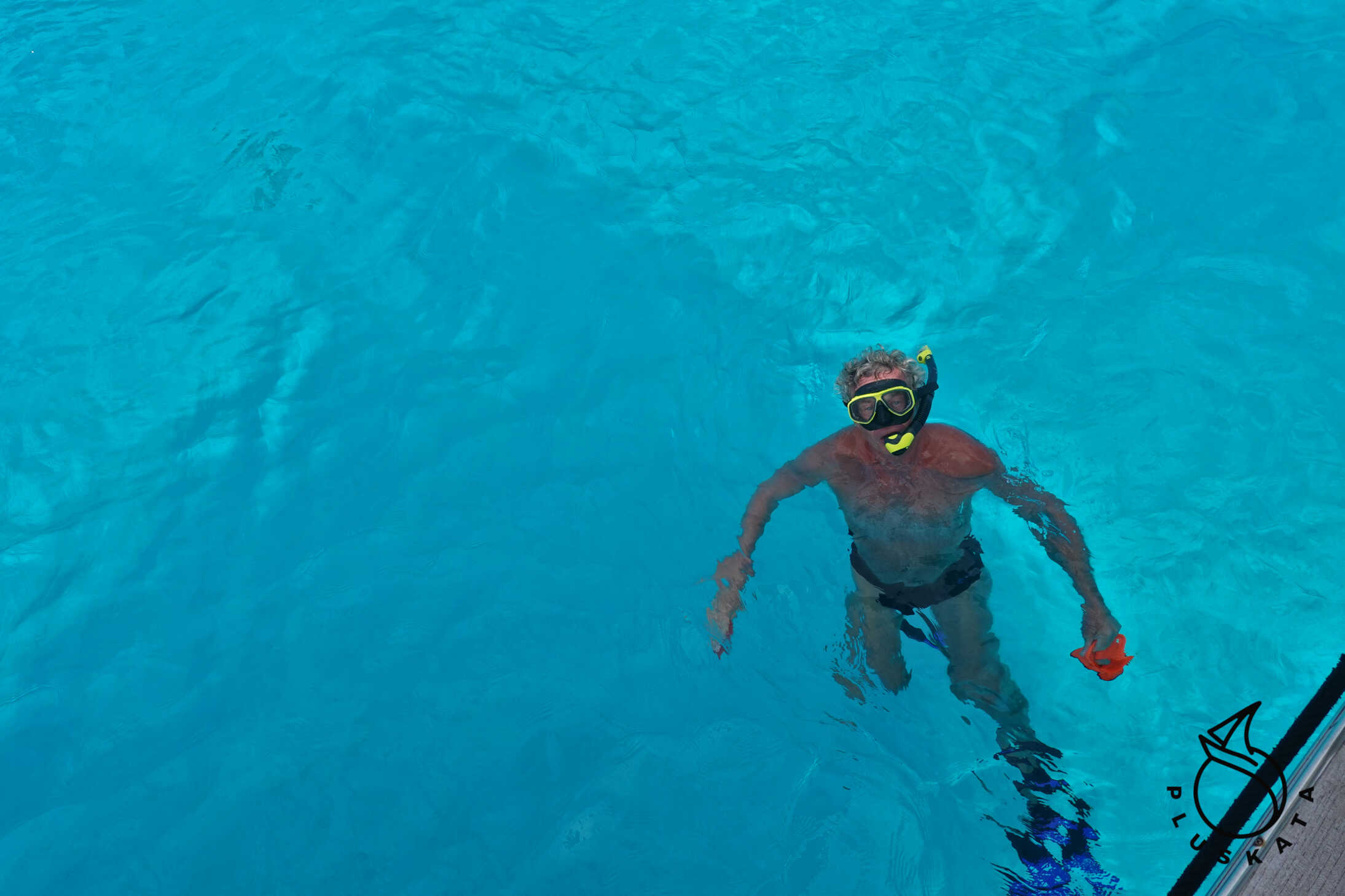
A beautiful snorkeling spot on the eastern shore of the island near the Tiputua Pass. A light current attracts a large number of colourful reef fish, including reef sharks.