Date: 7-26.06.2026
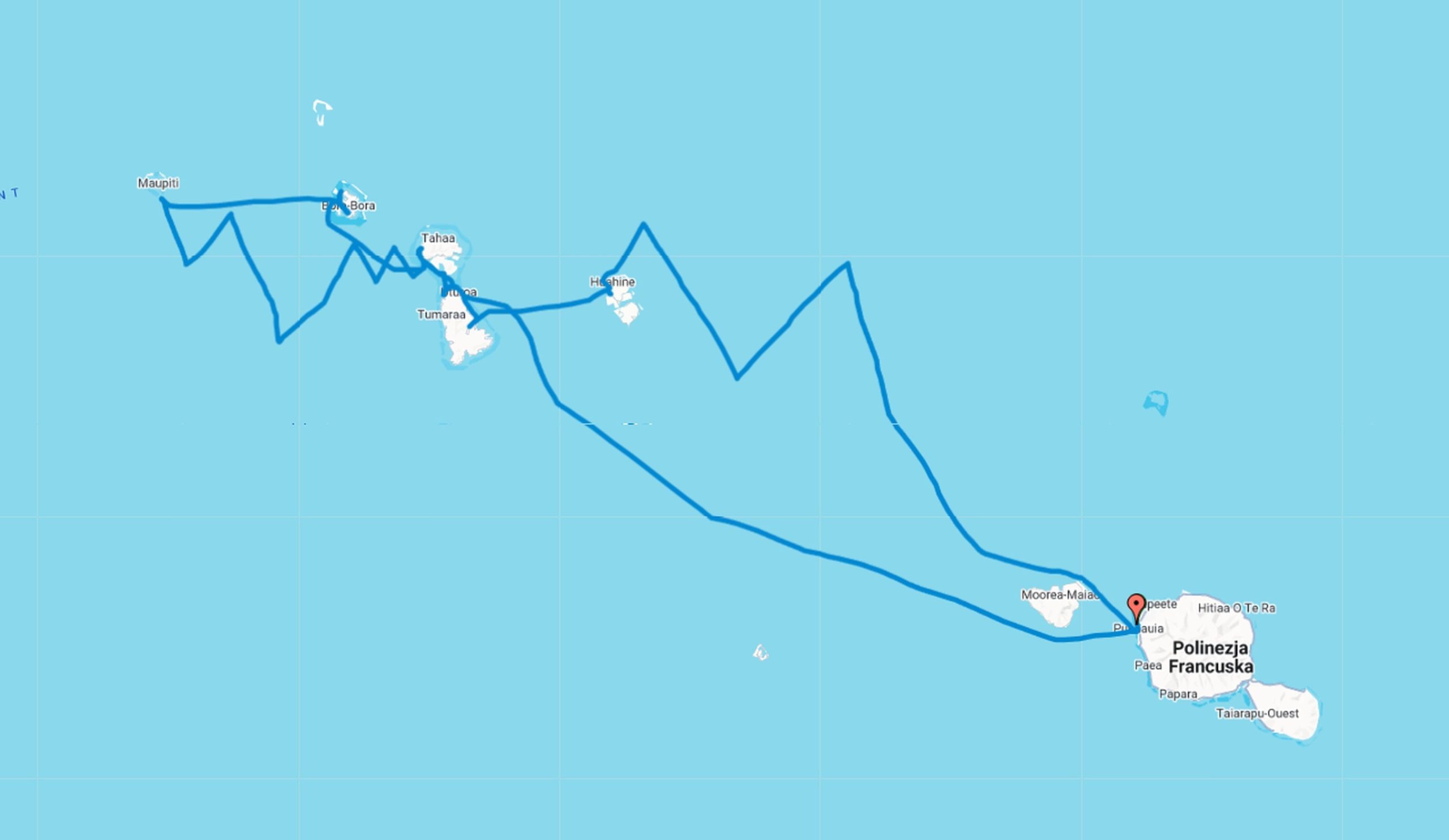
Route: Papeete – Uturoa- Apu Bay,-Tapuamu Bay-Povai-Faaroa Bay-Tahateo-Papeete
Miles/Hours: 92h/453nm
Route to Raiatea
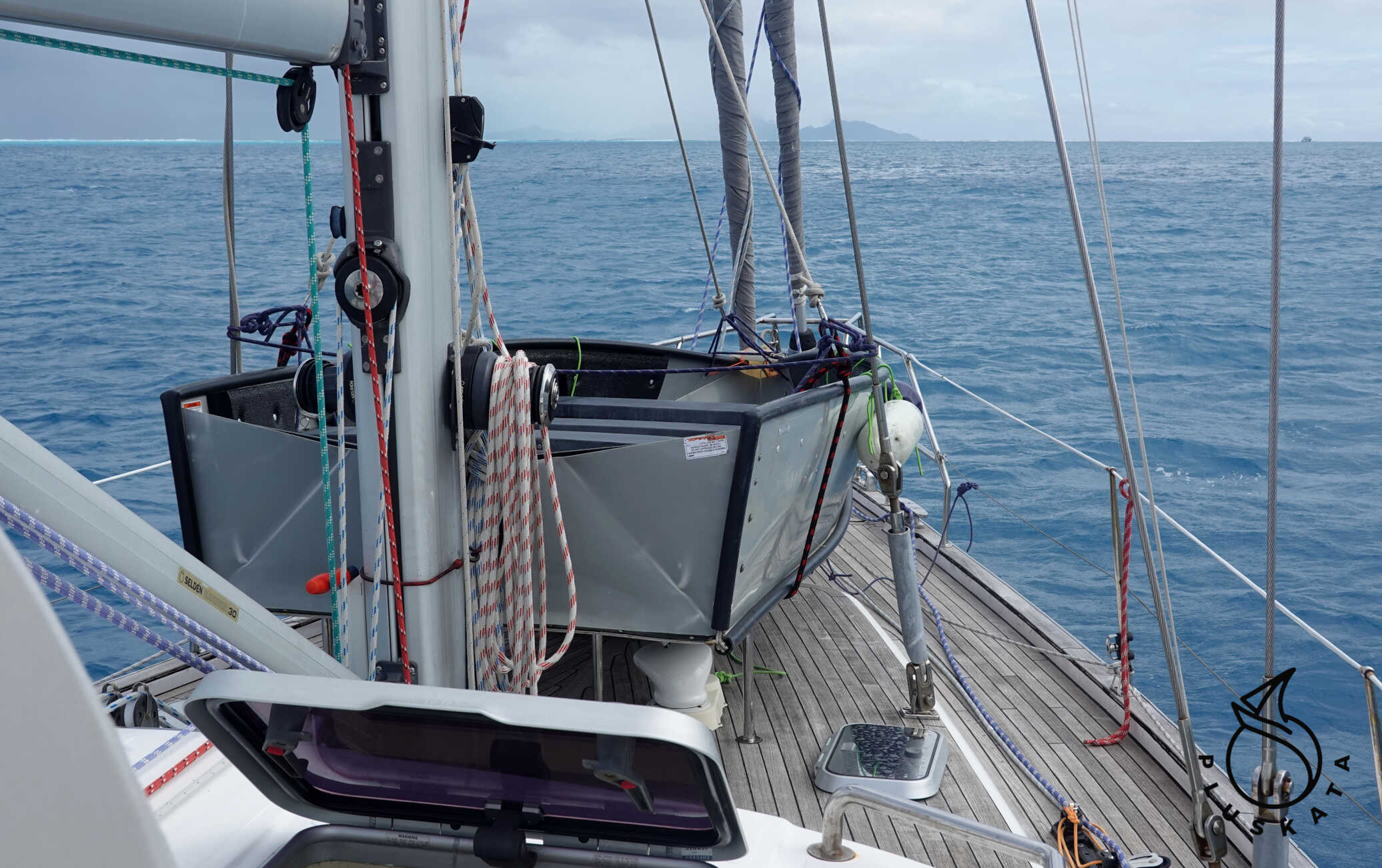
We depart the marina at 7:30 AM. We have 120nm to Raiatea, where we have an appointment to haul out the yacht and replace the seals on the S-Drive. We initially sail with the wind towards Genoa (14-18kn), and when the wind begins to exceed 20kn, we switch to a jib. There are logs floating in the water that we need to avoid (where do logs come from in the middle of the Pacific?).
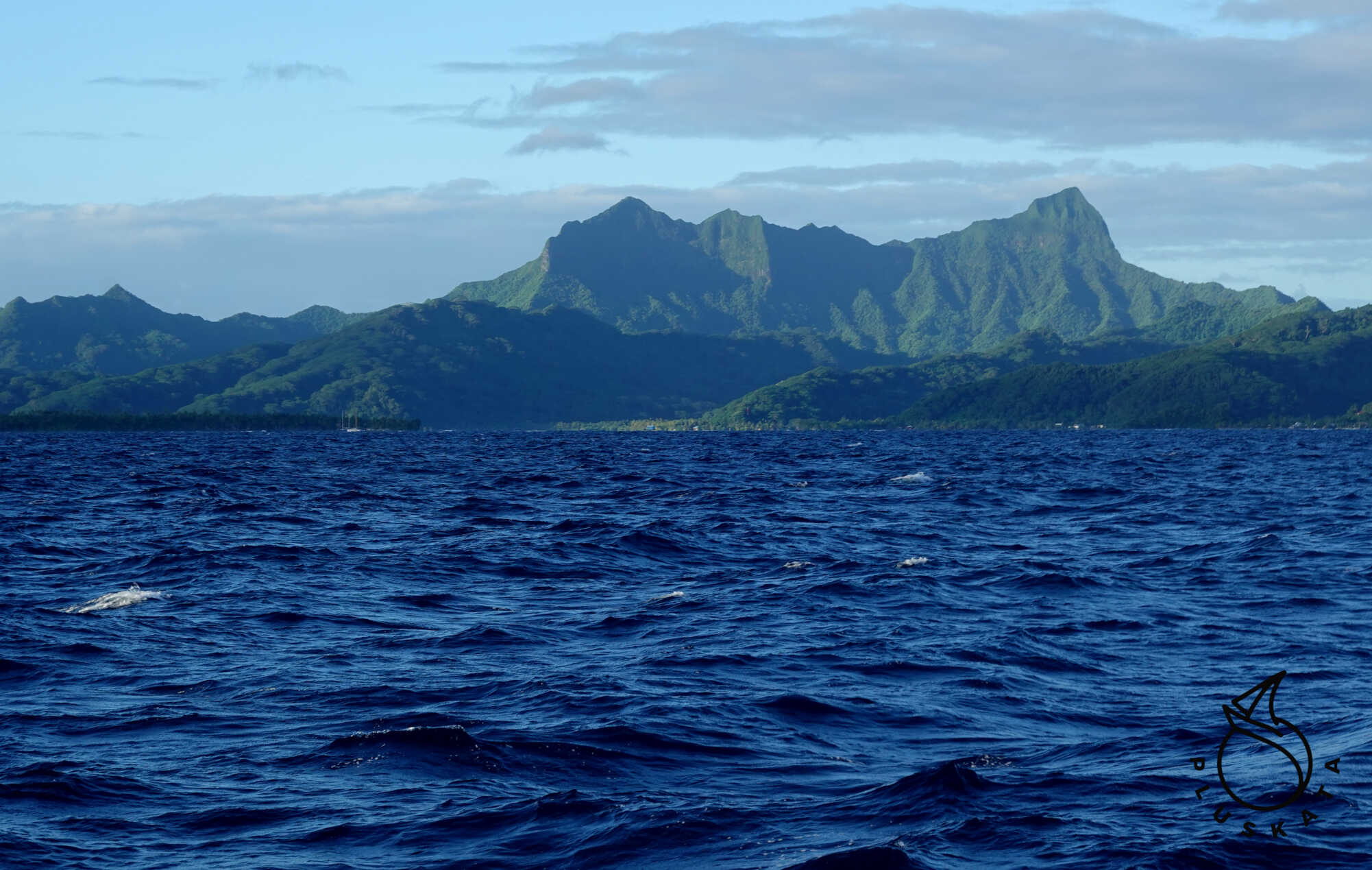
In the morning, we enter the atoll near Raiartea and admire the island from the water.
Raiatea
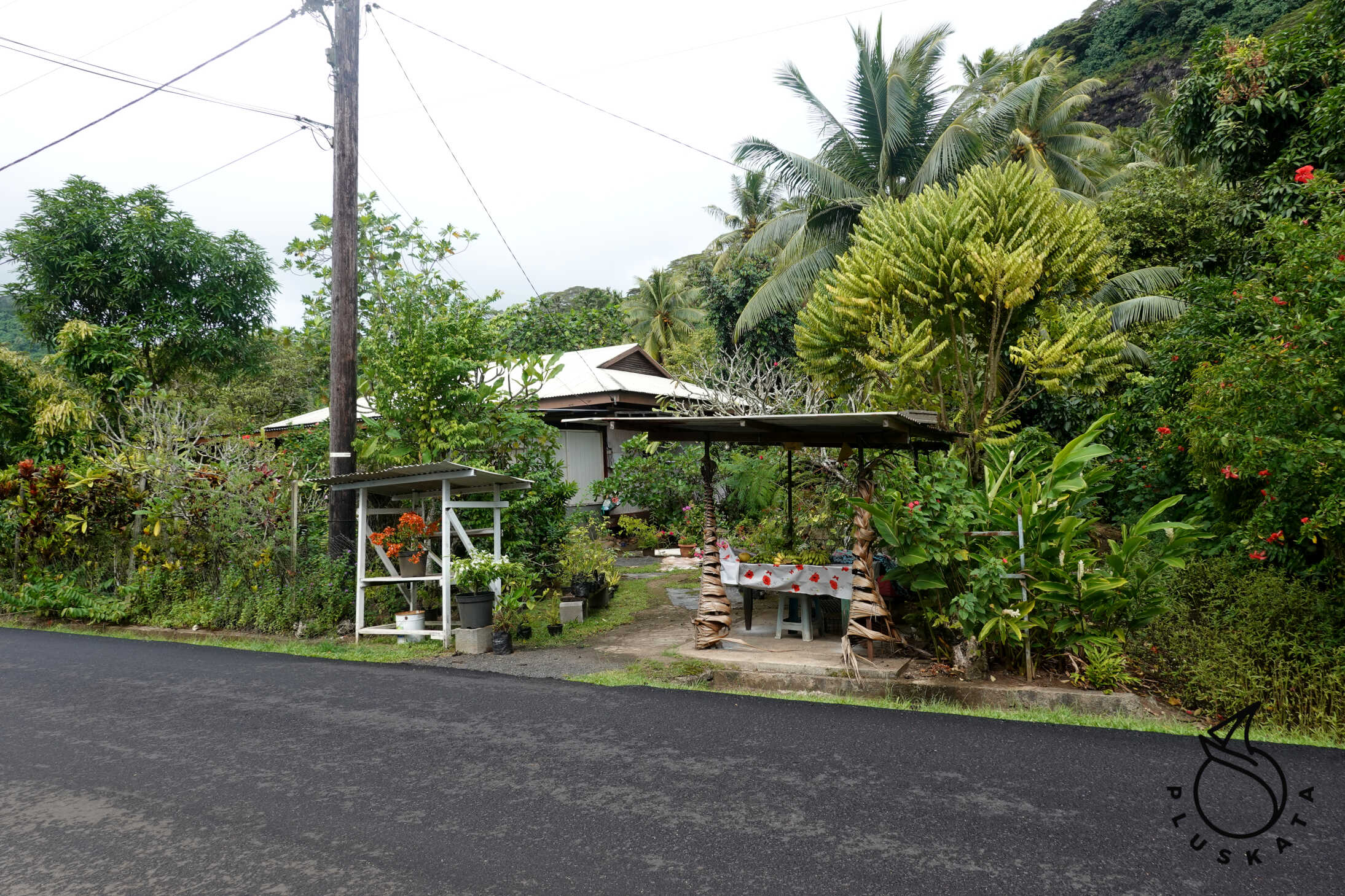
Raiatea is the second largest island in French Polynesia. Like most of these islands, it is of volcanic origin and belongs to the Society Islands archipelago. There’s a road around the island, and villages along it. The center of the island is made up of mountains (the highest is over 1000m), most of which are inaccessible (no paths and vertical walls, and when there is a path, it’s closed by a gate with a sign saying “private property”).
Uturoa
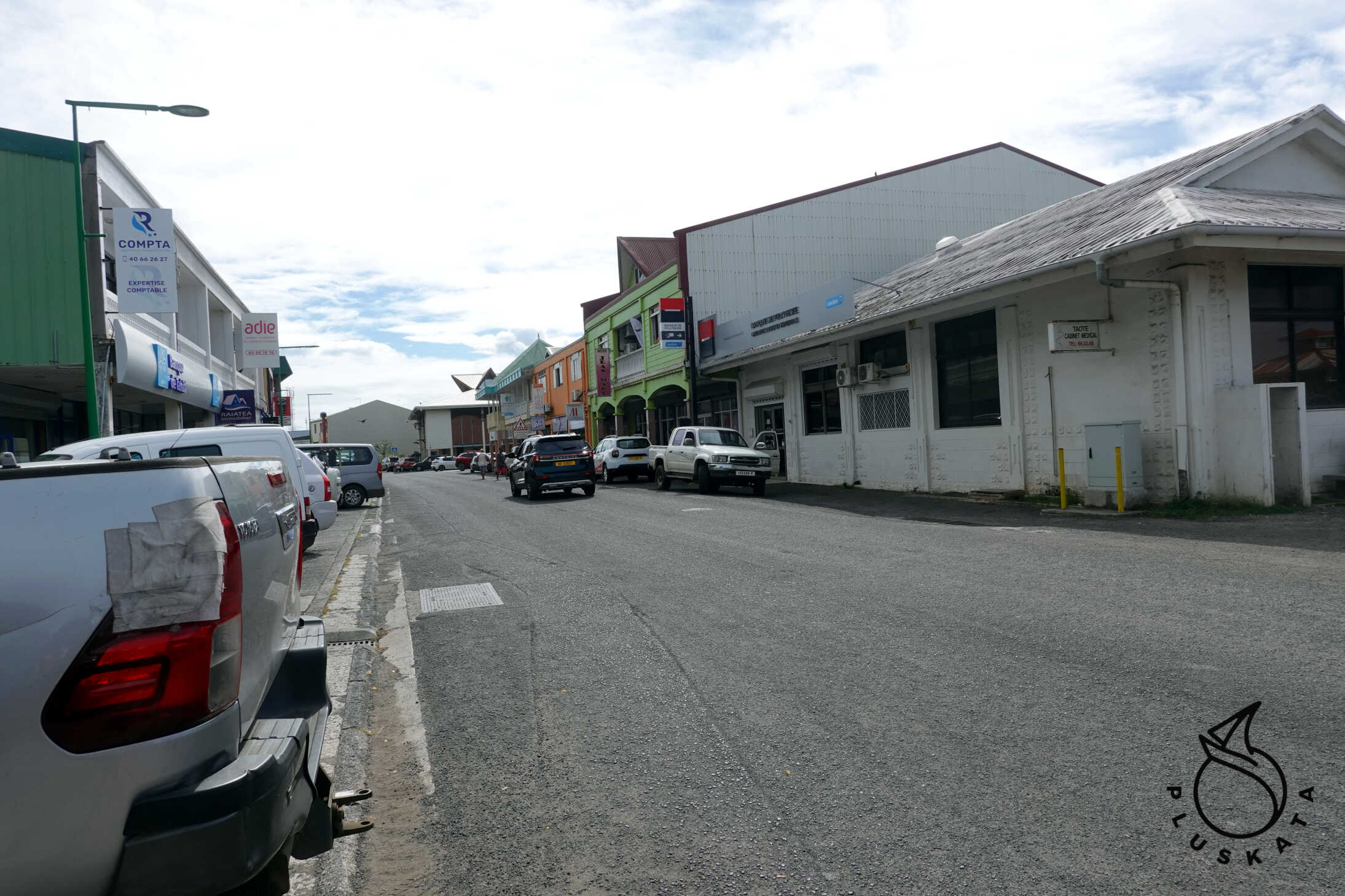
The island’s capital and also the capital of the Leeward Islands. There are several shops (including Carrefour and Super U), several churches of various denominations, a museum, a marina (of course, there are no vacancies), and nice, well-maintained cottages. As with most Polynesian islands we’ve been to, it’s clean.
Uturaerae Anchorage
It’s more of a mooring area full of buoys. Most of them are private buoys (apparently, they have phone numbers on them). We find a buoy with no visible sign and attach our mooring lines to it. There’s another available buoy next to us. We inflate a small dinghy and row to the shipyard office.
Chantier Naval Raiatea Carénage SERVICES
We had a 4-hour appointment to haul out the yacht to replace a gasket on the S-Drive (some time ago, we wound up with a piece of fishing net around a propeller, which damaged the gasket). We arranged this via email, but when it came to scheduling a specific time, it turned out they only had a landline for contact, not WhatsApp. Fortunately, Janusz left me his card with his phone number, so they could call me when they were ready.
Houl out the boat and Replacing the Gasket
At 9:30 a.m., the woman from the shipyard called to say they were ready. We untied ourselves from the buoy and rowed into the dock to the travel lift. The dock is accessed through a narrow, unmarked passage in the reef, about 3.5 meters deep. Fortunately, we had a fairly good map of the area (C-Map). The dock is quite narrow, but Pluskata fits with 20 cm of clearance on each side. The travel lift pulls us out and leaves us on the slings, while the crew places wooden blocks under the keel. We’re given a ladder and a mechanic to help. The mechanic is excellent, replacing seals in 1.5 hours (in Guadeloupe it took another mechanic 4 hours), and he’s a wealth of knowledge (he’s a diver, a sailor, has his own yacht, and also makes money by delivering).
At 1:15 PM, we’re back on the water and back to “our” buoy. For the whole operation we pay about $500.
Faaroa Bay
A deep bay in the southeast of the island. We anchor in 16 meters at the end of the bay. The bottom is muddy, but the anchor holds well. There’s a river at the end of the bay.
Trip on the Apo’omaou River
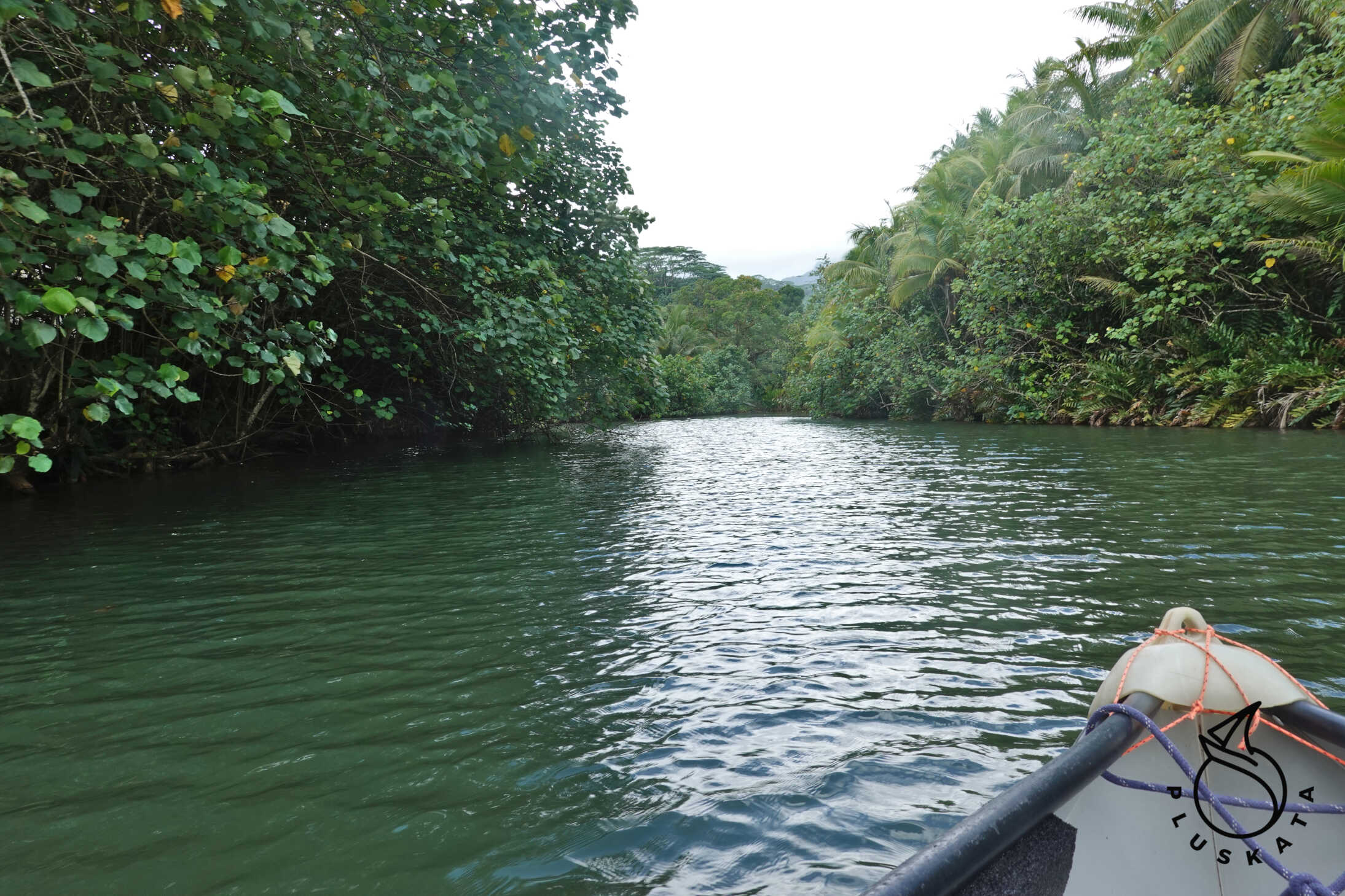
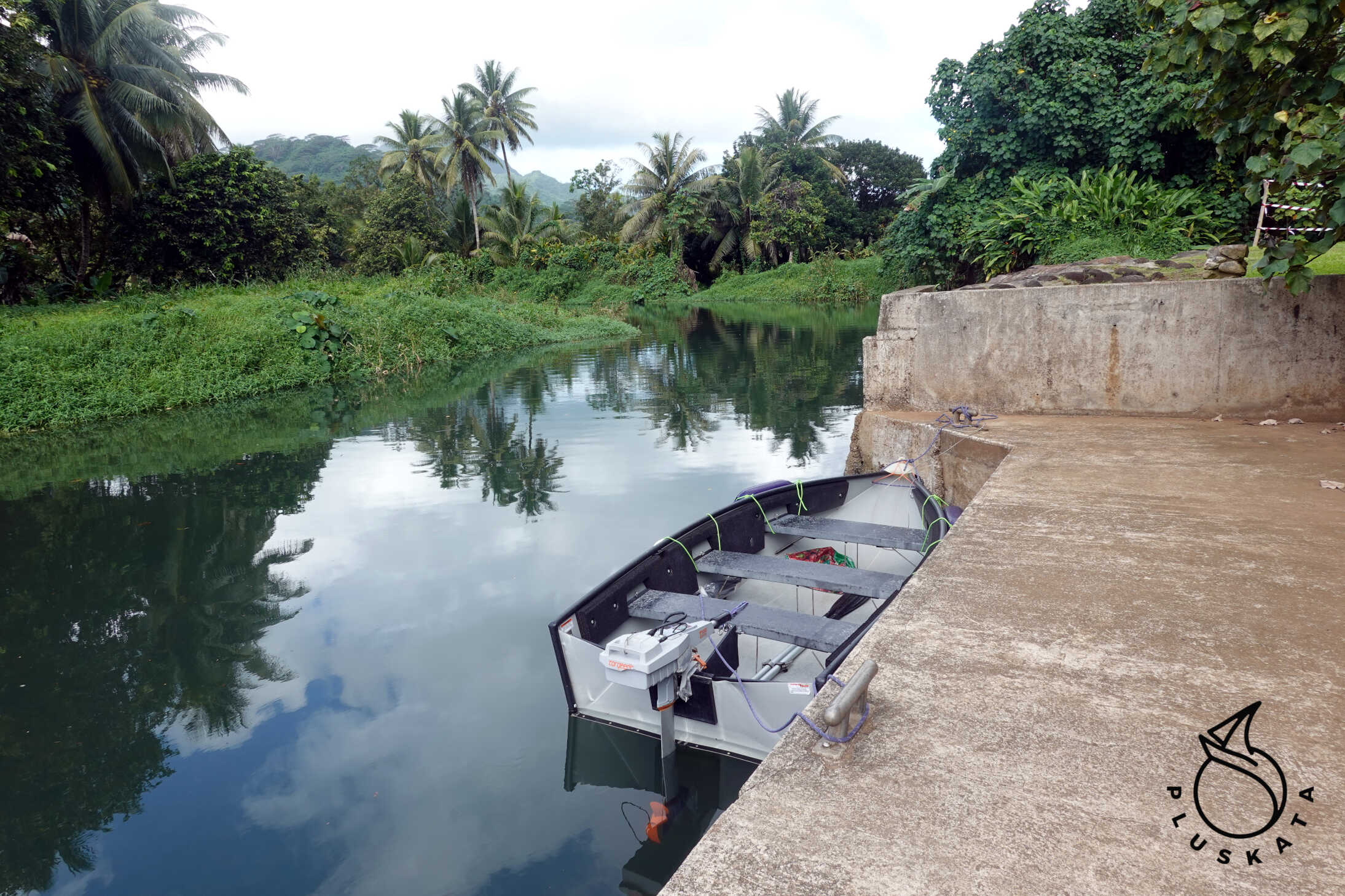
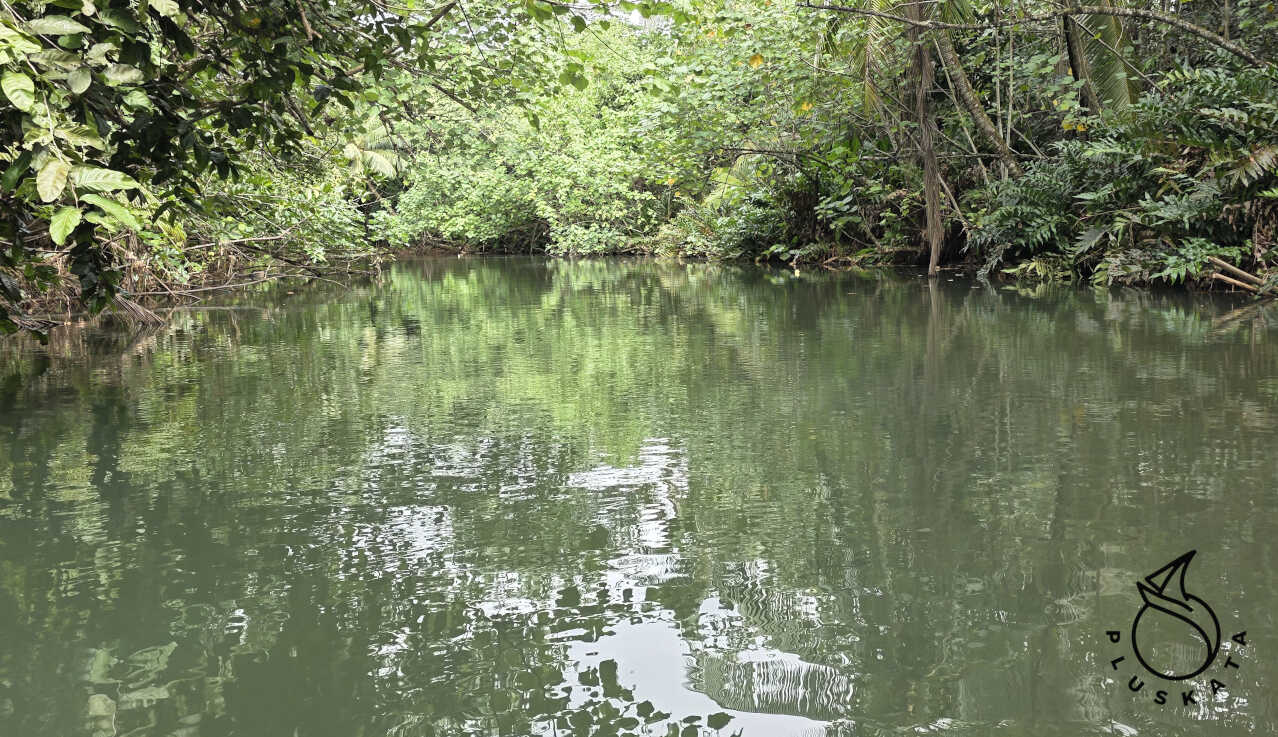
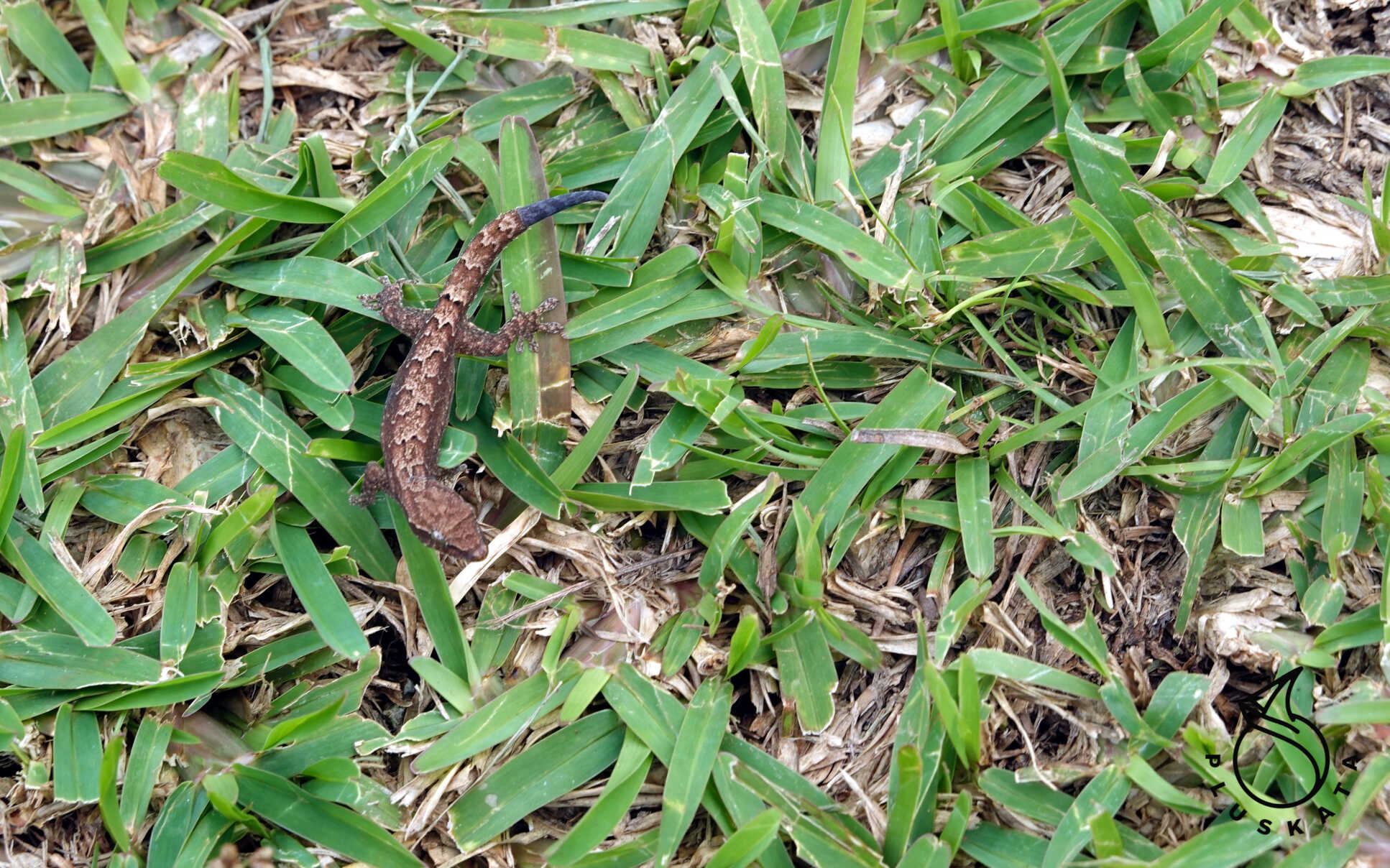
We took our boat down the river to the botanical garden. The river is very picturesque, lined with flowering shrubs, coconut palms, breadfruit trees, and many familiar plants. Unfortunately, the river is shallow, and to avoid the propeller hitting the bottom, you have to raise the engine. All boats that enter the river do this – including pleasure boats. Returning to the yacht, a small gecko falls from a tree onto us. After reaching the bay, we release it onto the grass on the shore.
Faaroa Botanical Garden
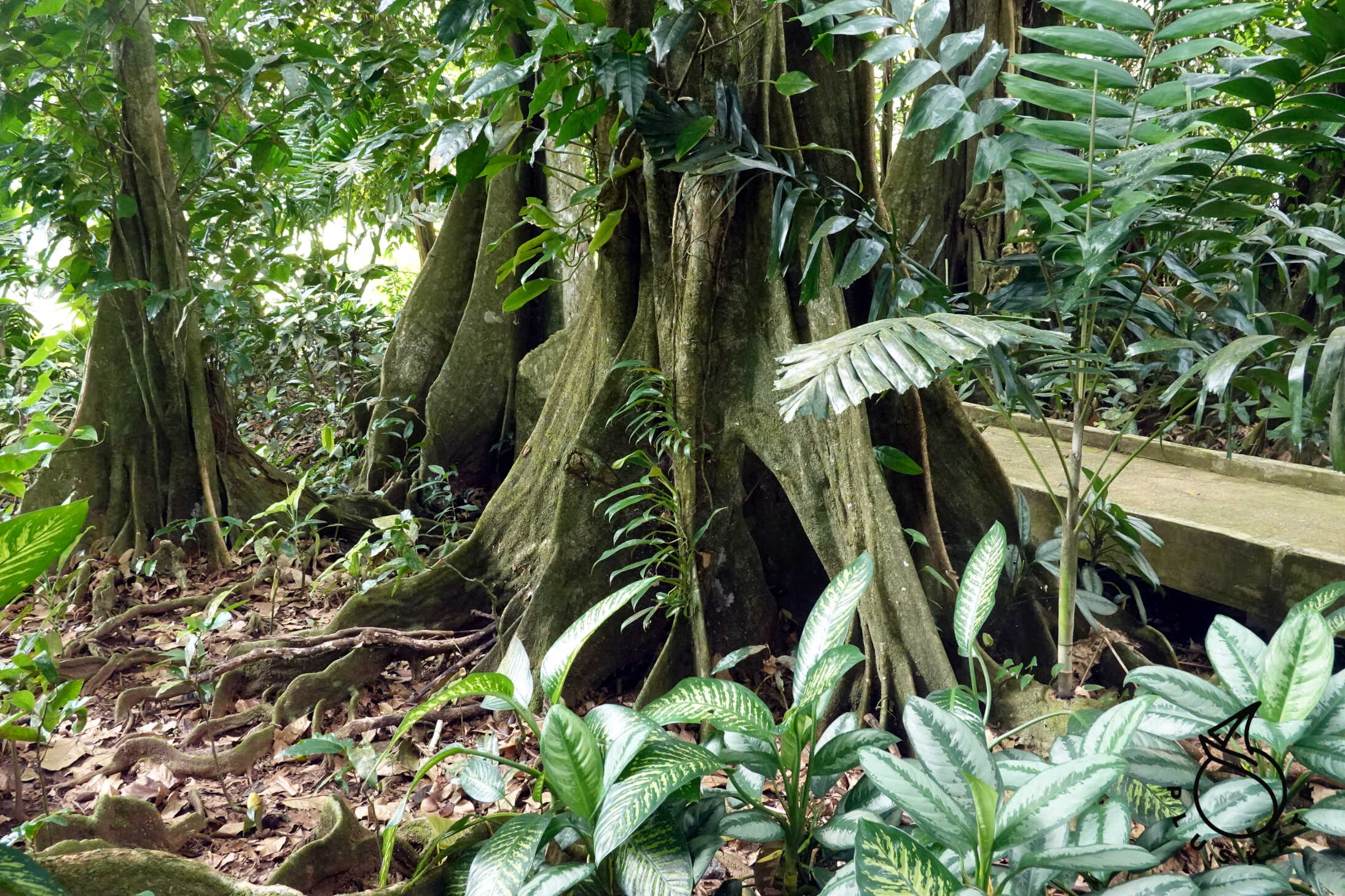
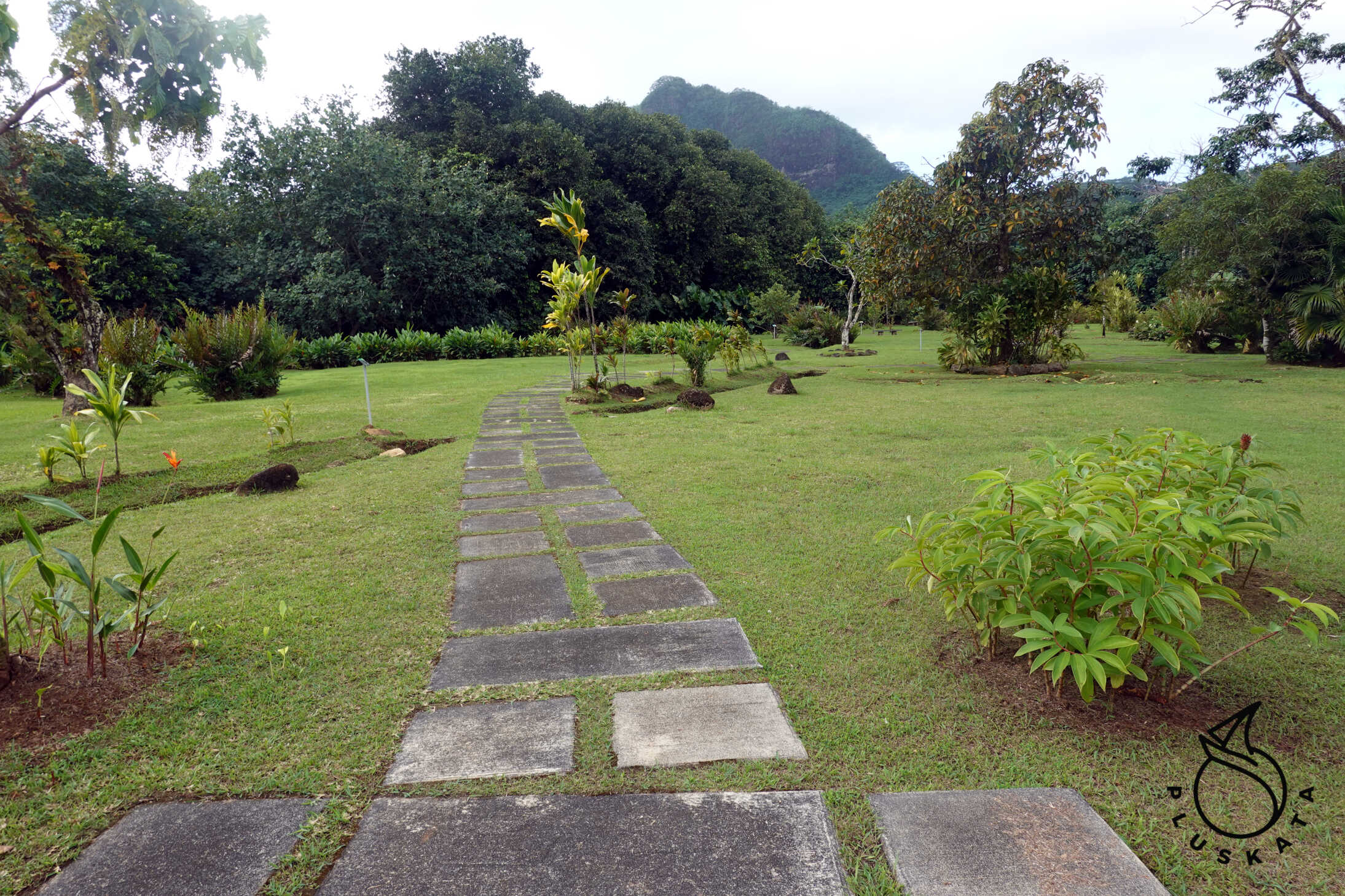
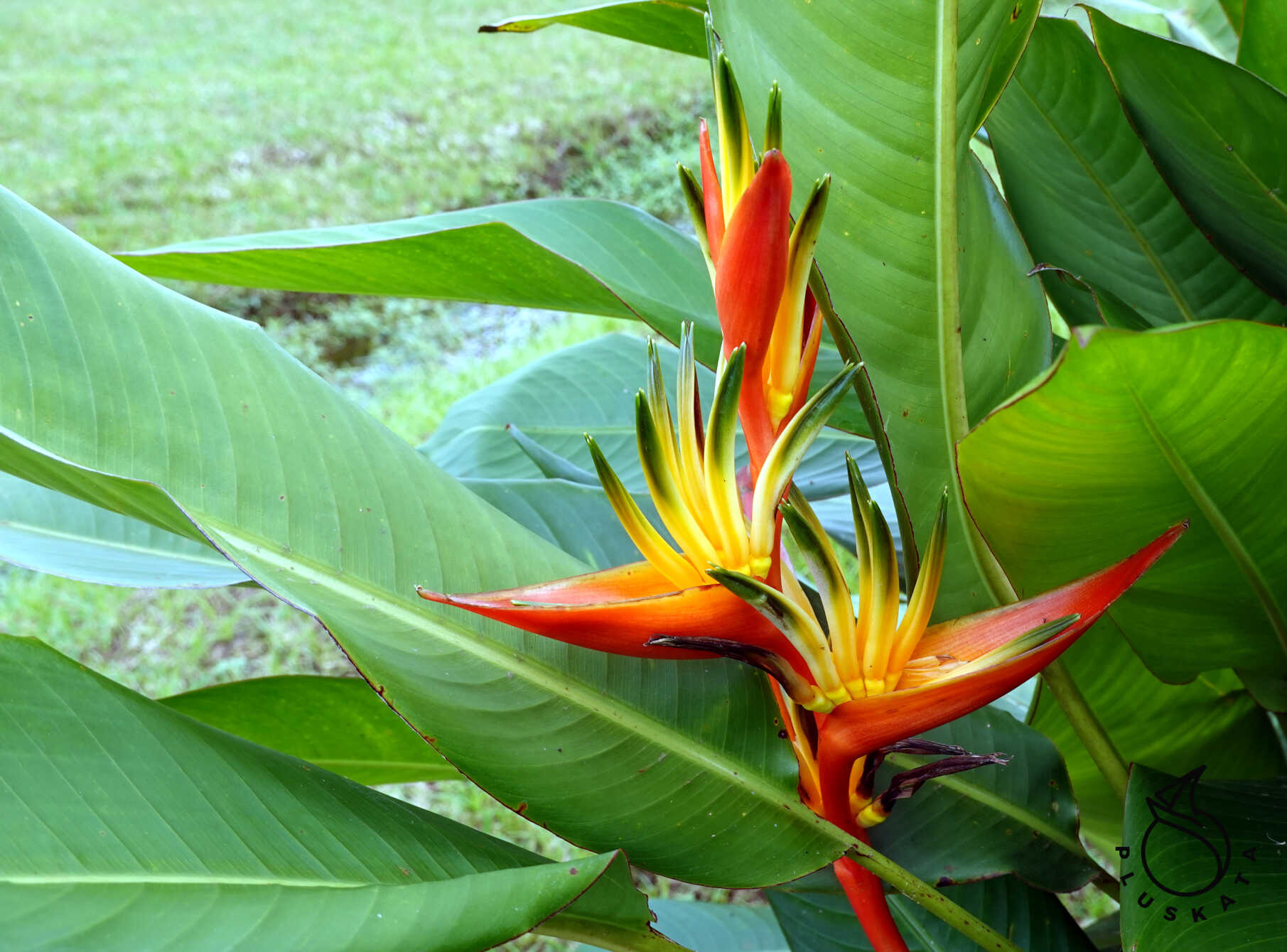
A very beautiful botanical garden, with some descriptions in both French and English, manicured lawns, and marked paths. Admission is free. The botanical garden has its own dock where we leave our boat.
Mysterious House
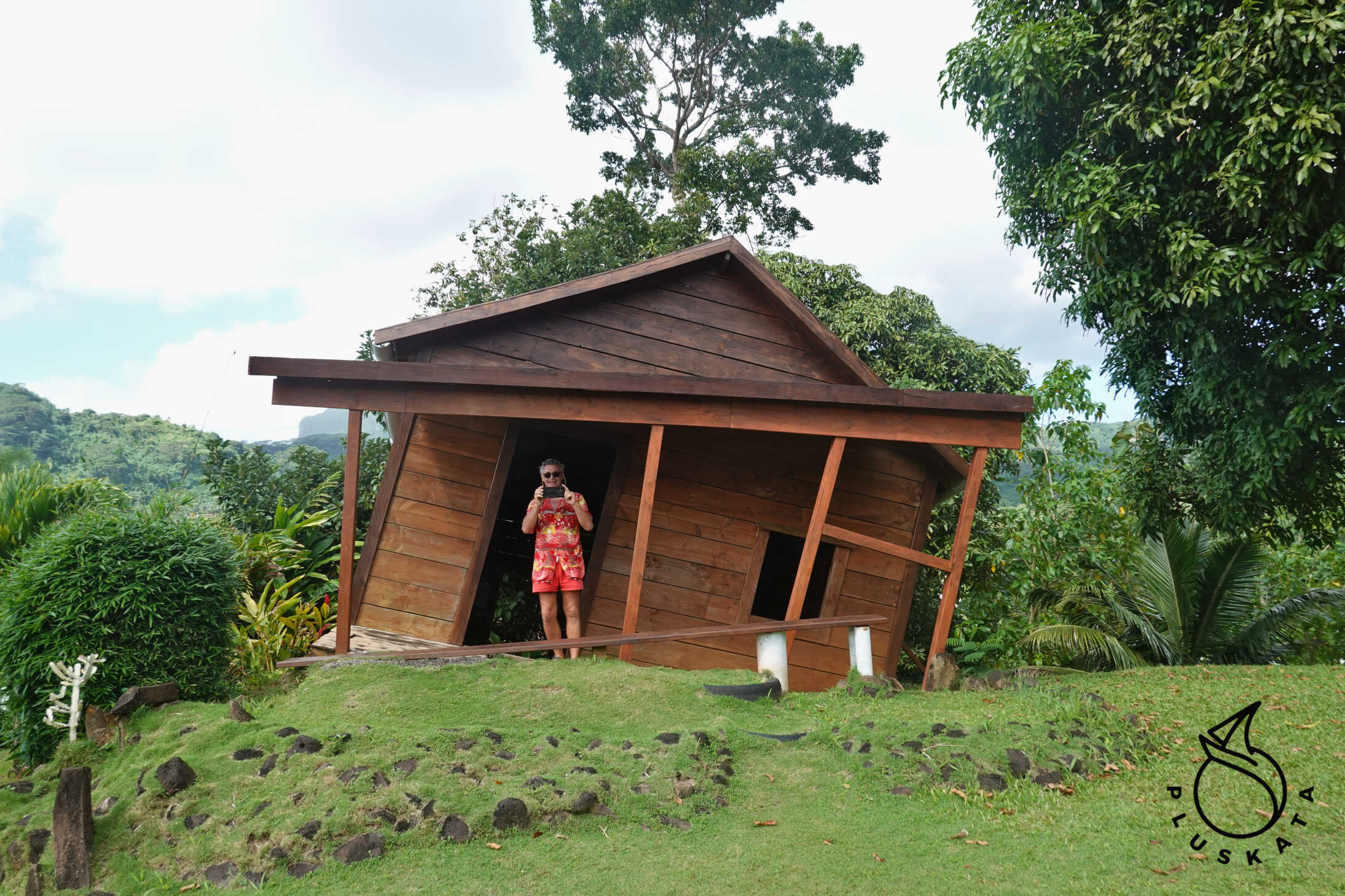
A small house built by a retired French engineer. The house is crooked and has sloping walls and floors. Inside, there’s a Foucault pendulum, and outside, several optical games – a somewhat enchanted world. Admission, with a guide and stories (unfortunately only in French), costs 1500 XPF per adult. Tahaa
An island in the same atoll as Raiatea, much smaller. It’s famous for its vanilla cultivation, but there are also pearl farms and distilleries.
Toamaro Anchorage
An anchorage full of buoys. Most of them belong to a nearby pearl farm (they’re yellow and have a phone number on them). They’re intended for guests of the pearl farm. In theory, standing on them is time-limited. There are also white buoys (but few), and these are supposedly public and perhaps time-limited.
We grab a yellow buoy, call the farm, and arrange a tour. The jetty belonging to the farm is the middle of three jetties extending far into the bay.
Champon Pearl Farm
This farm is at the far end of the island. It’s worth making an appointment by phone, although it’s not crowded in the off-season.
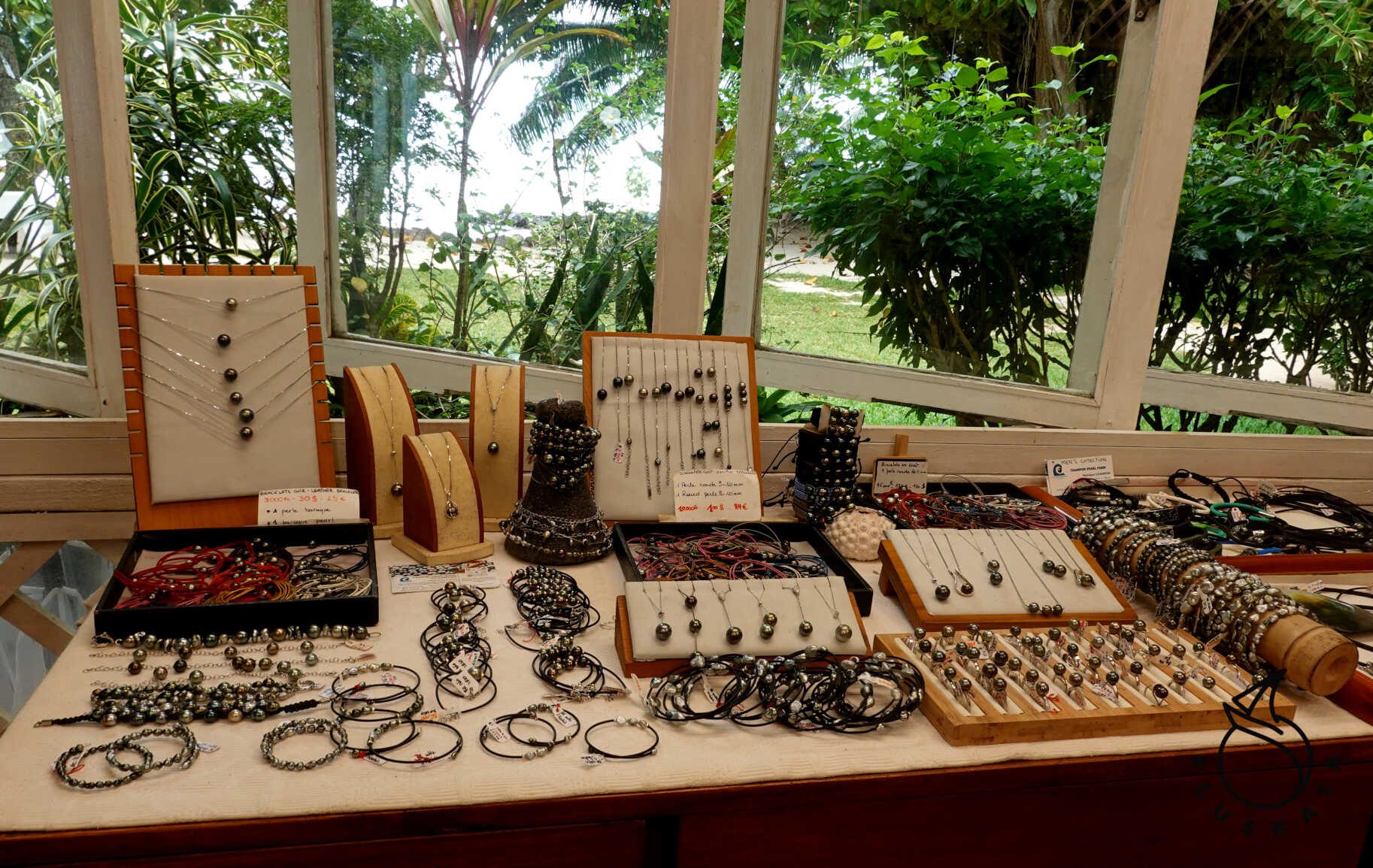
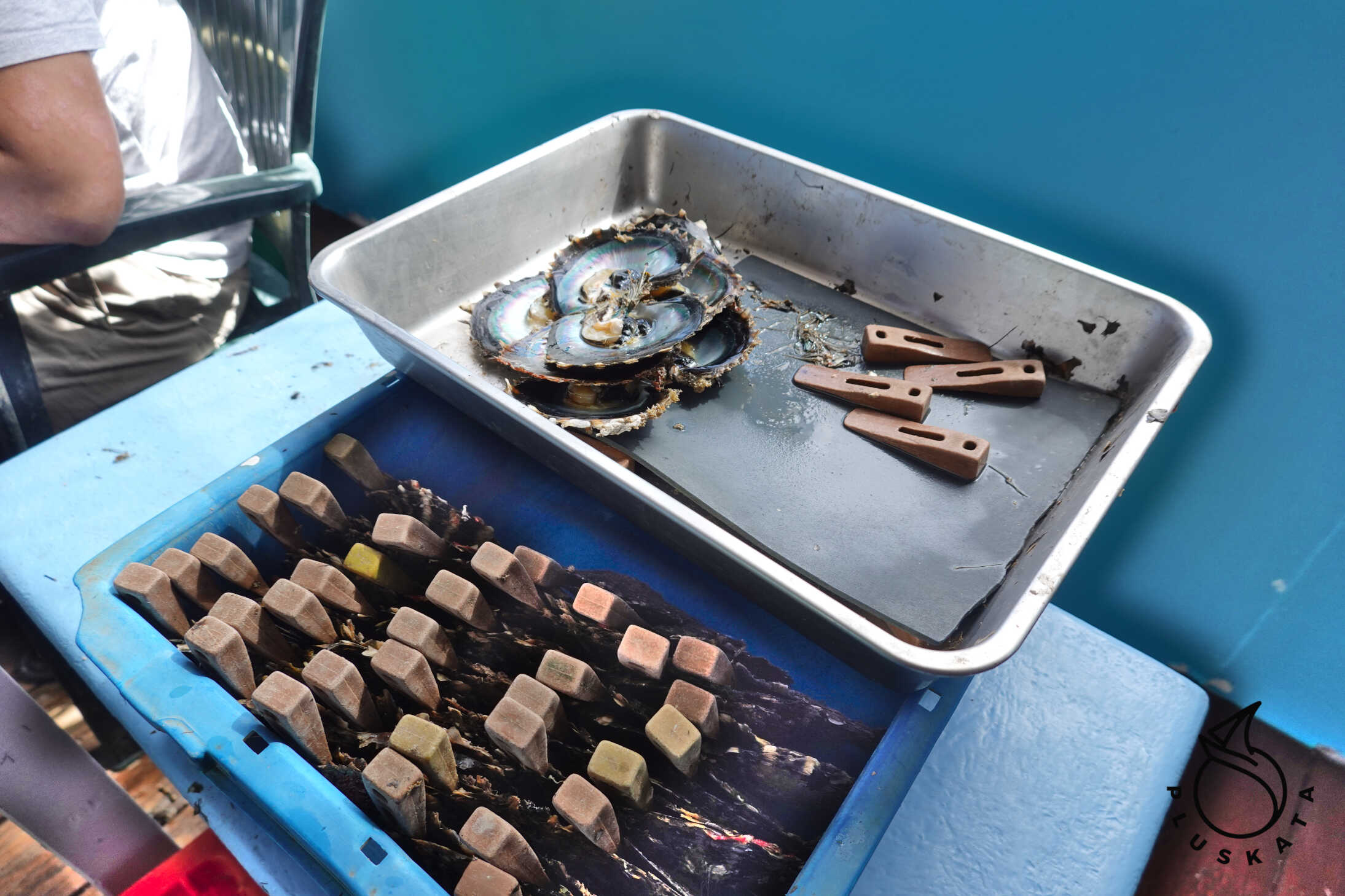
The lady nicely demonstrates the oyster farming and pearl implantation process. Most young oysters are purchased in the Tuamotu (they don’t want to settle there due to strong currents). The newly bred oysters are placed on special strings and waited until they grow larger (about 3 years). The larger ones are “grafted” into Lanterns – special beads made from Mississippi shells. First, small beads are inserted, and after 18 months, the pearl is removed. If the pearl is beautiful, another bead the size of the removed pearl is inserted – and so on, up to four times. The woman shows us the inside of the clam, the various stages of cultivation, and finally, we go to the store. Here, we learn about pearl grading and see the finished products. They are very beautiful, but also very expensive. We’re resigning from purchasing it :-(.
Fare Vanira Vanilla Plantation
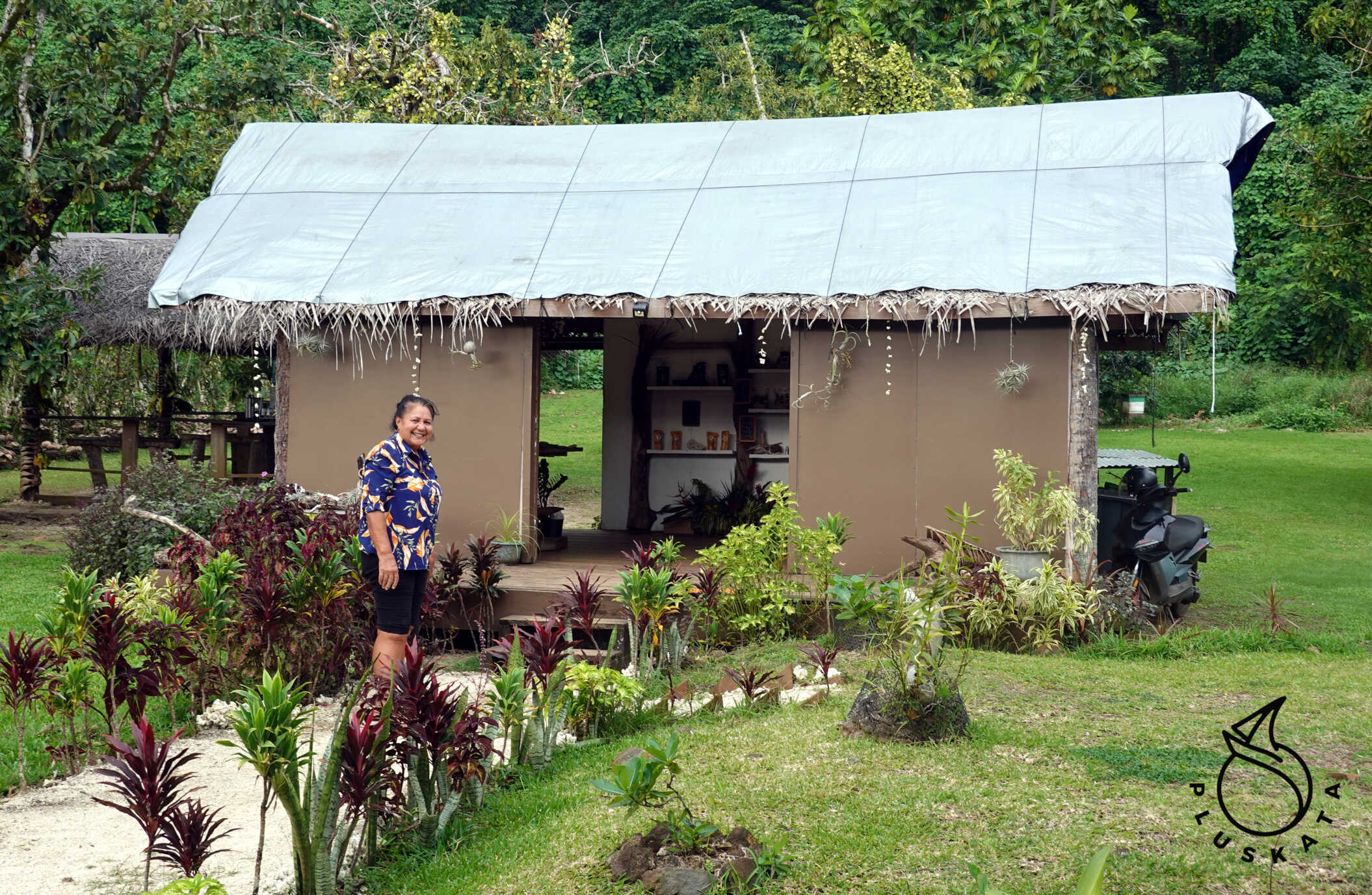
The vanilla plantation is about 25 minutes north of the pearl farm. It’s a small family-run plantation.
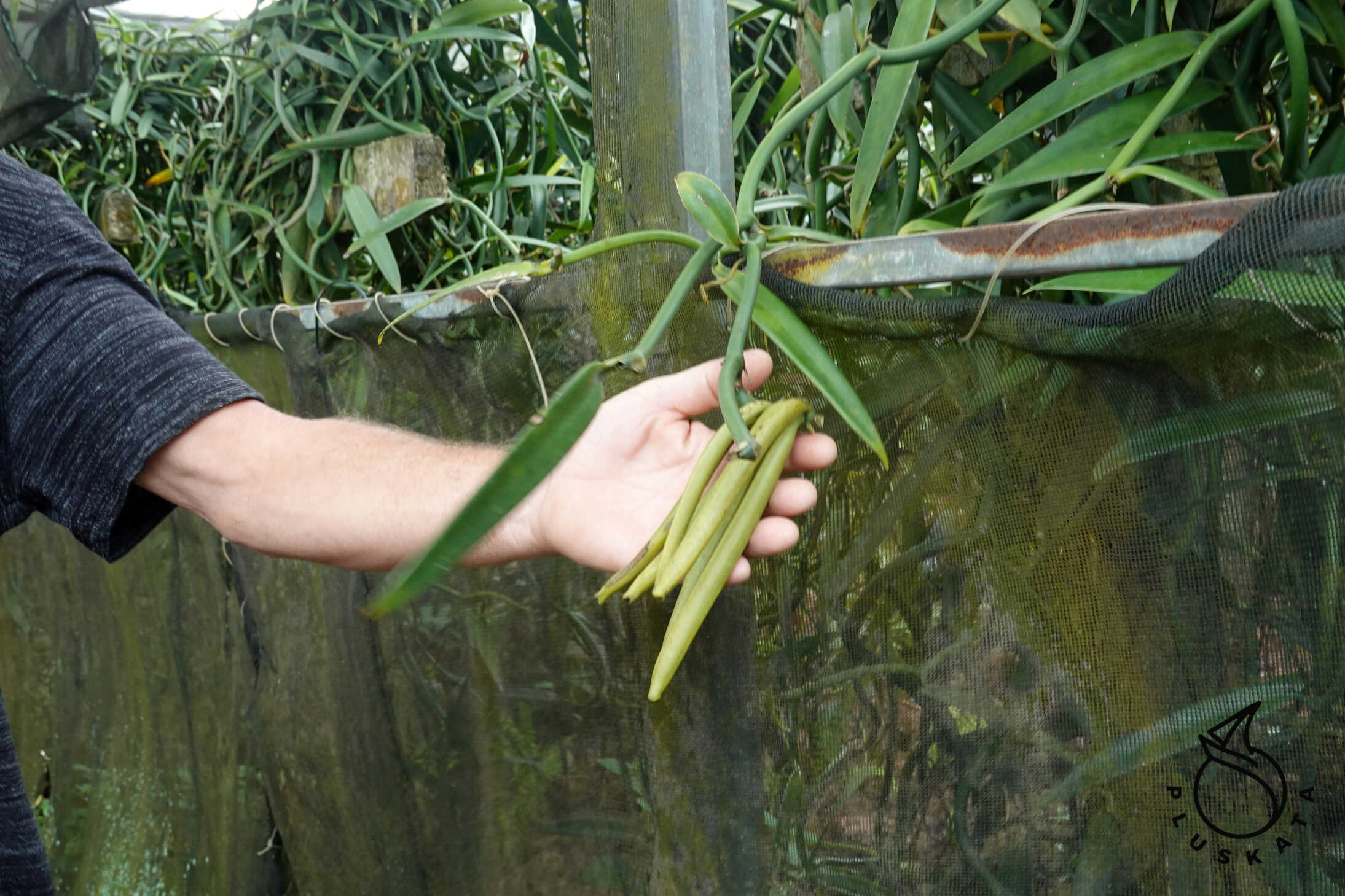
Vanilla is a rhizome that grows on acacia or fig trees that are pruned from the top. Vanilla flowers are hemaphroids – they contain both male and female parts. The yellow vanilla flower blooms only one day a year and usually remains open for a few hours. During this time, it must be pollinated to produce a vanilla bean. Here, it’s done by hand because there are no suitable insects (bees).
Vanilla Prod’s Shop Plantation
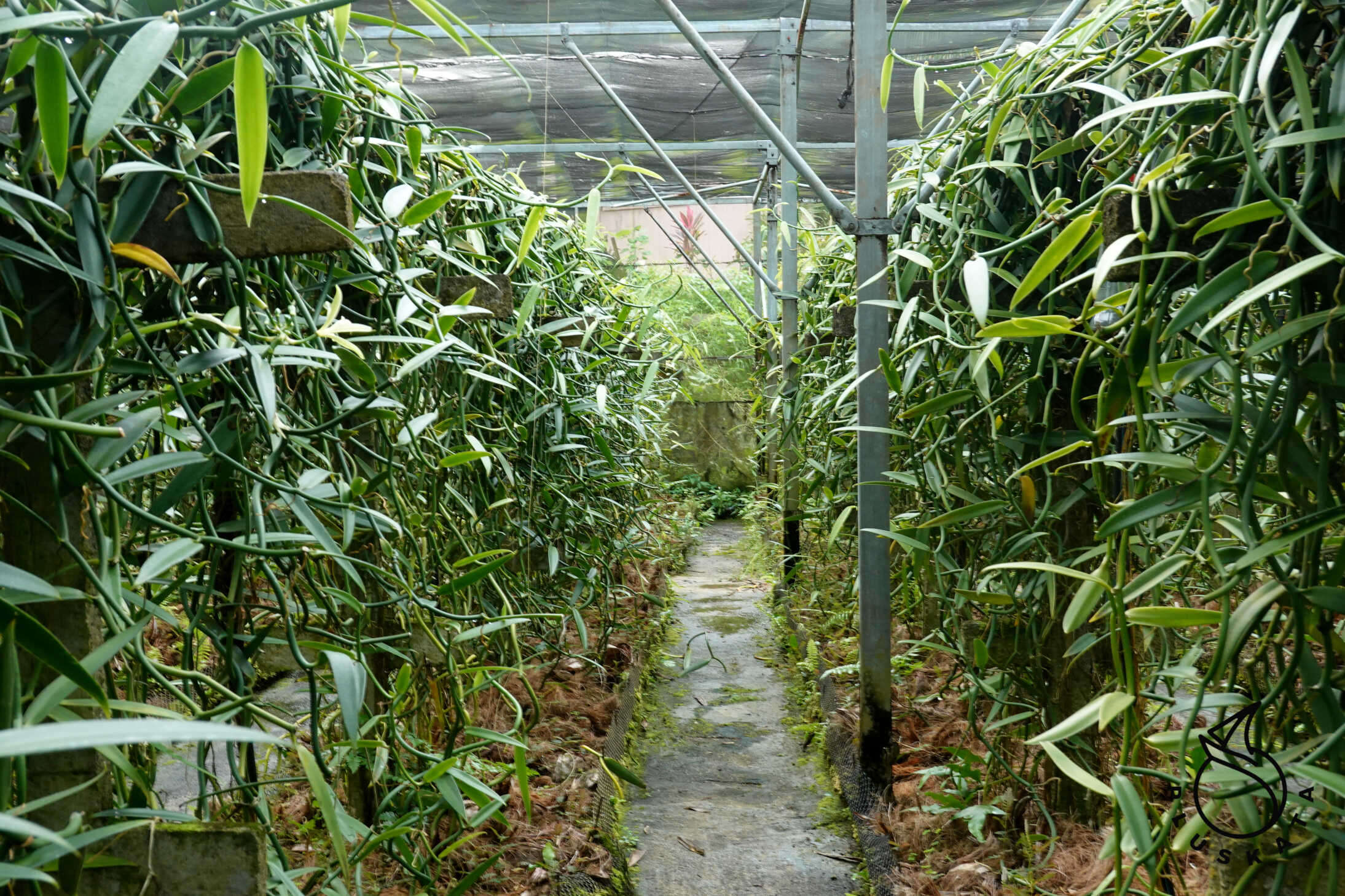
A vanilla plantation in the next bay – we sail to it in our “torpedo boat.” It’s completely different from the previous one; here, the vanilla vines grow on special supports. The plantation consists of several “areas” of different ages. The rhizomes are replaced after 15 years. Three years after planting, the rhizomes produce flowers, but first The growing point needs to be cut off. Each rhizome produces about 15 flowers per rhizome. The season lasts from mid-June to December. Here, as on the previous farm, the flowers are pollinated by hand. During the season, approximately 1,000 flowers are needed for pollination throughout the entire plantation.
Here we buy shrink-wrapped vanilla beans (about 20g for €25). The lady says that hermetically sealed, they will last about 4 years, and the shrink-wrapping material needs to be replaced after 2 years.
Pari Pari Distillery
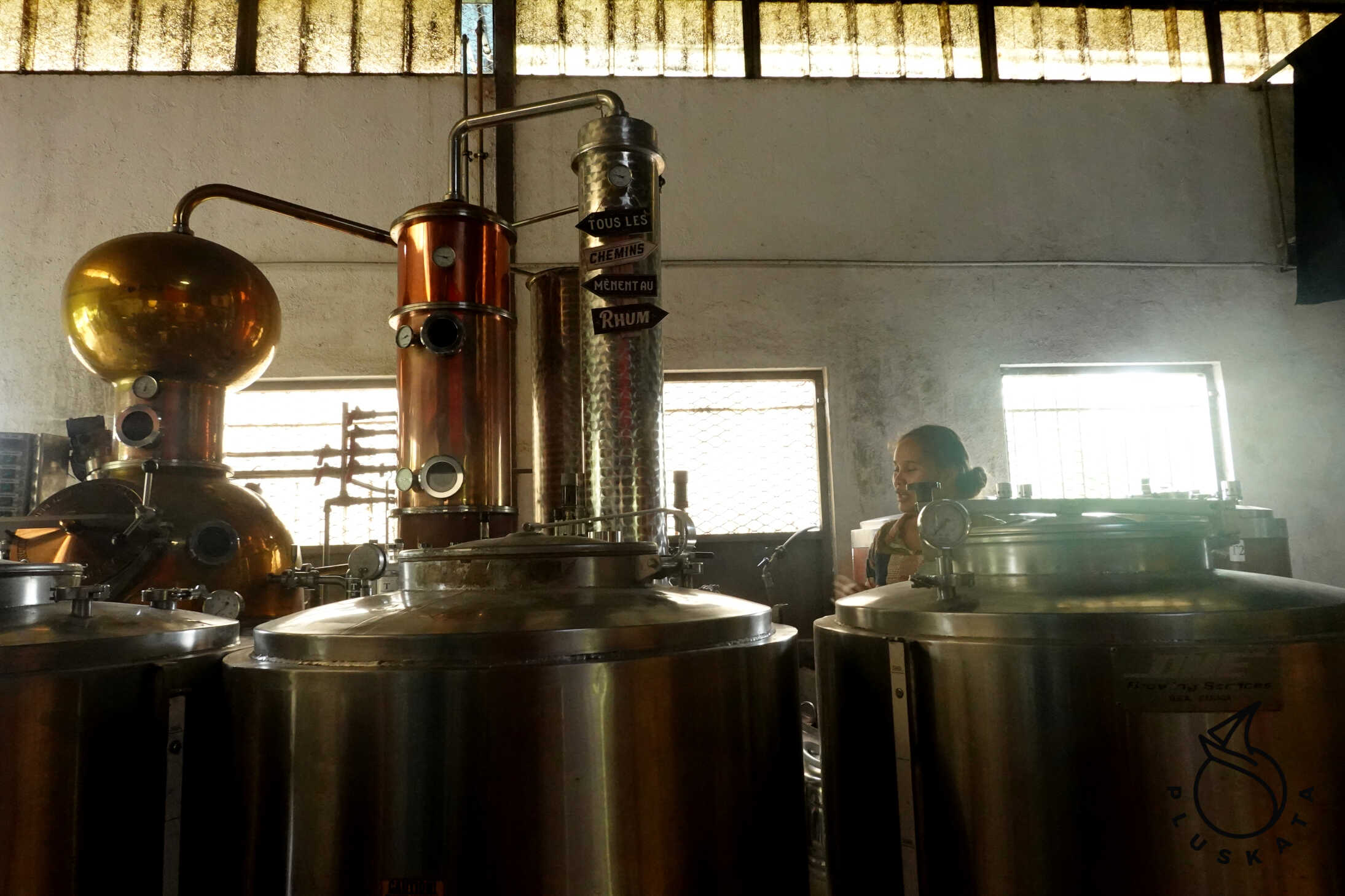
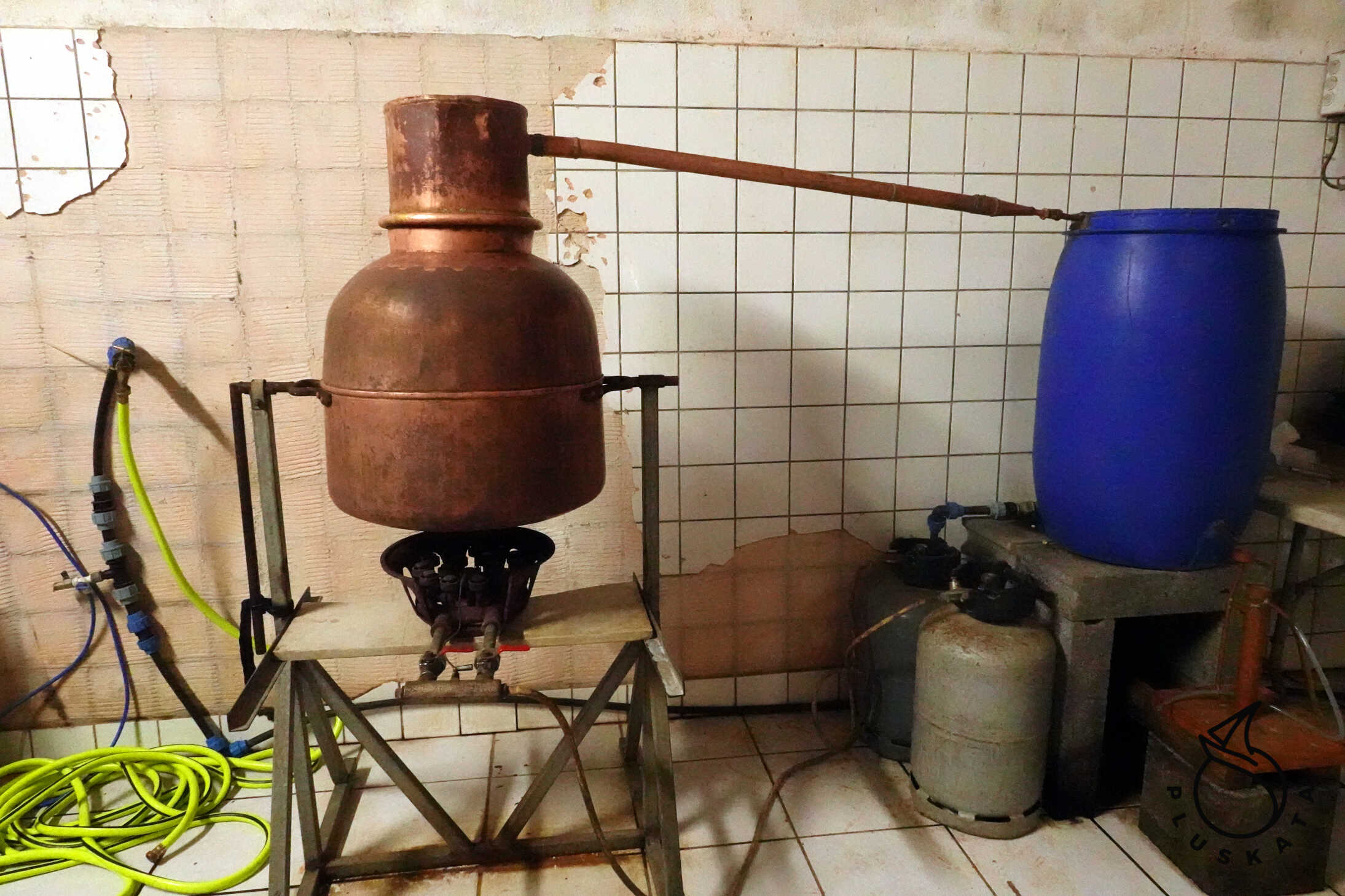
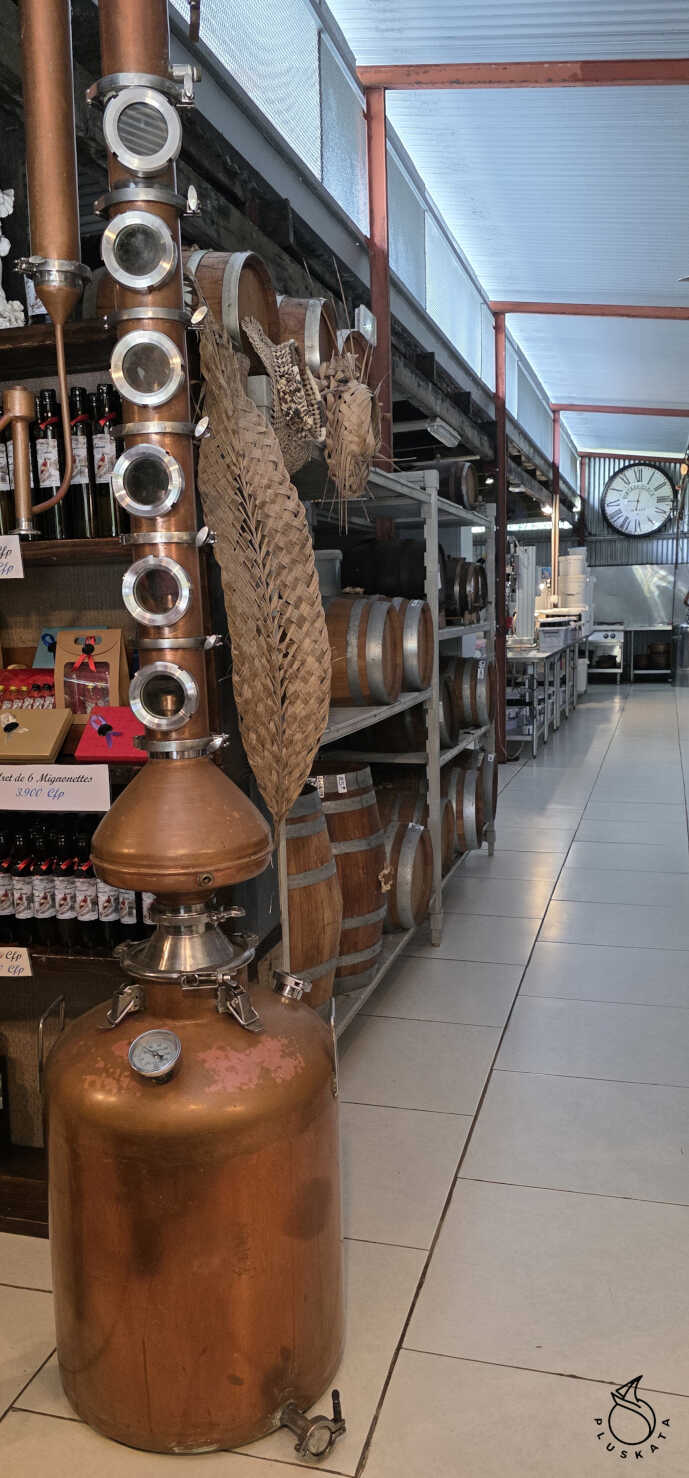
We move to Tapuamu Bay and dock at the buoy of the Pari Pari Distillery. We launch our boat and sail to a nearby port, where we leave it. We go to the Pari Pari Distillery – a small private distillery. They grow their own sugarcane, but they also buy from local farmers. The first fermentation takes place in large plastic containers, then the slightly fermented juice is poured into a container. The still is heated to approximately 65ºC to separate the methanol (which is later sold as industrial alcohol). The next step is ethanol distillation – the resulting rum is 90-95% pure, which is then diluted and bottled in barrels. They use a variety of barrels (French, American, some ex-bourbon, and some charred). The distillery is free to tour (the package includes a tasting of one type of rum). Open from 9:00 AM to 5:30 PM Monday through Saturday, and from 9:00 AM to 12:00 PM on Sundays.
Rumarie Mana’o Distillery
Another distillery is right by the port – open from 8:30 AM to 5:30 PM Monday through Saturday, and from 8:30 AM to 12:00 PM on Sundays. The tour is free, and after the tour, you can enjoy a tasting of several rum varieties. At this distillery, they experiment a lot with rum varieties, adding different ingredients – they have vanilla rum, Aniseed, regular white 50% (very tasty), and barrel-aged (surprisingly, not as good as white). Our guide speaks good English. It turns out their rum is made from 12 varieties of sugarcane (different varieties produce different aromas and alcohol levels).
Iaorana Pearl Farm
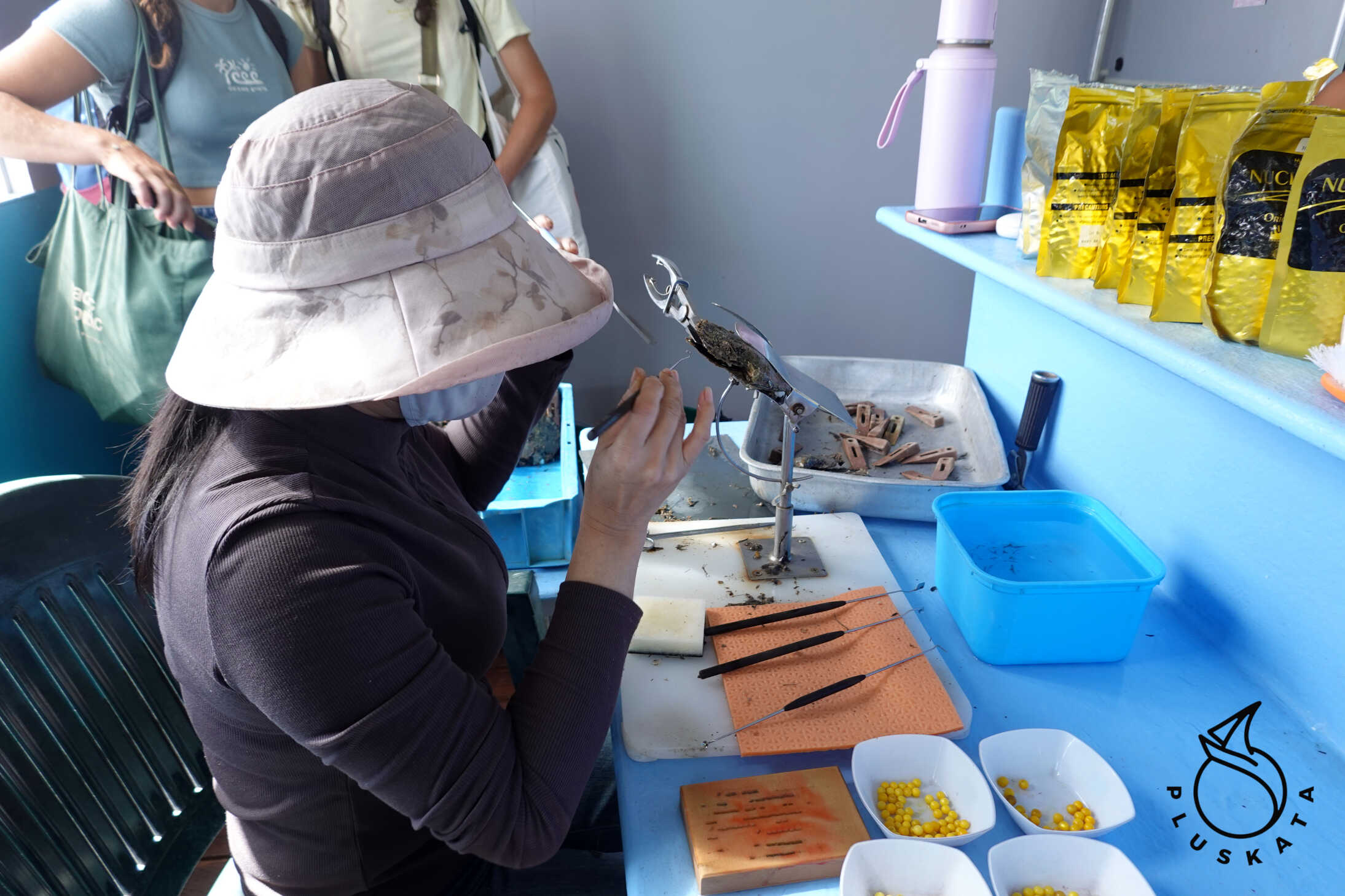
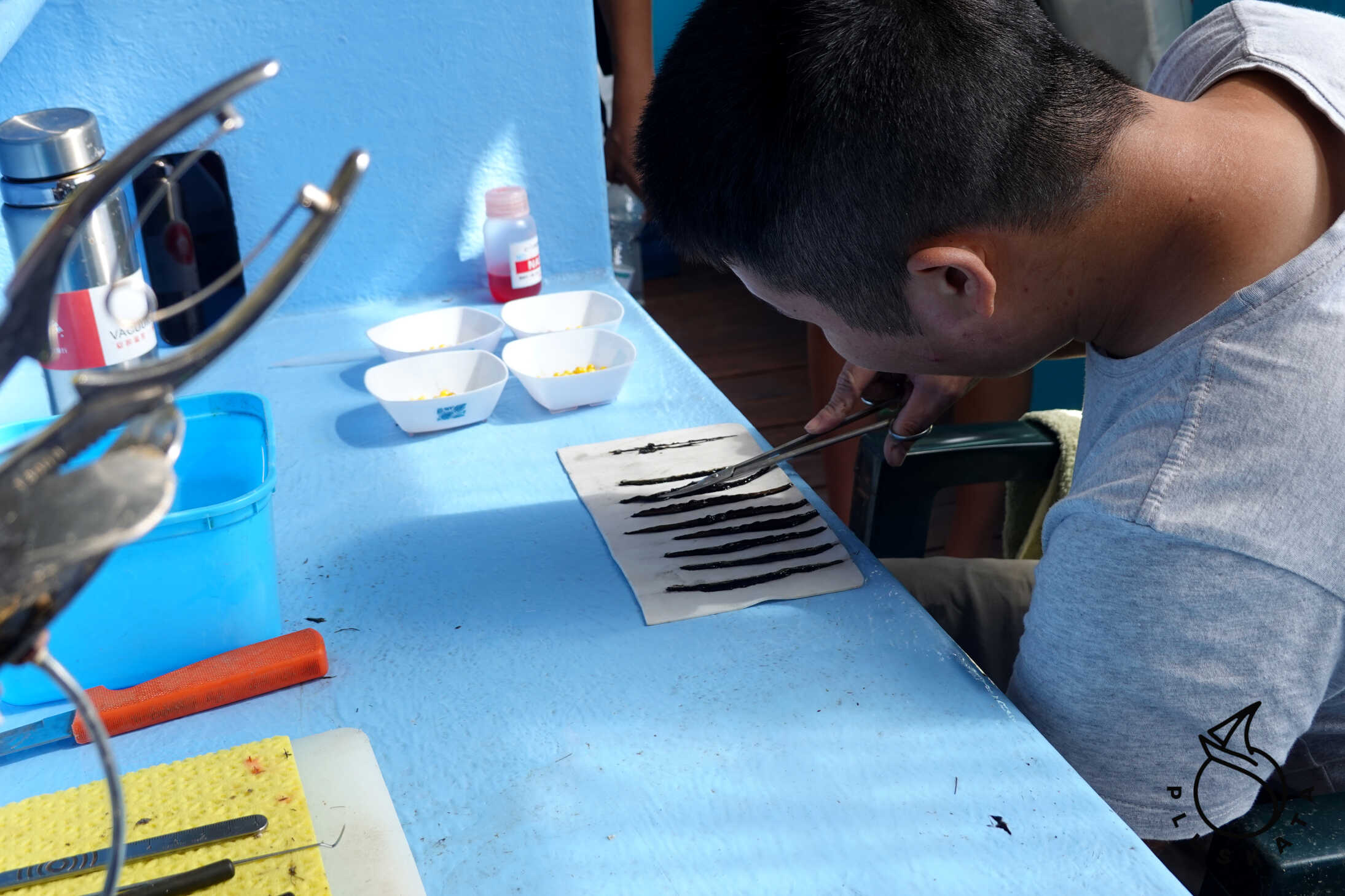
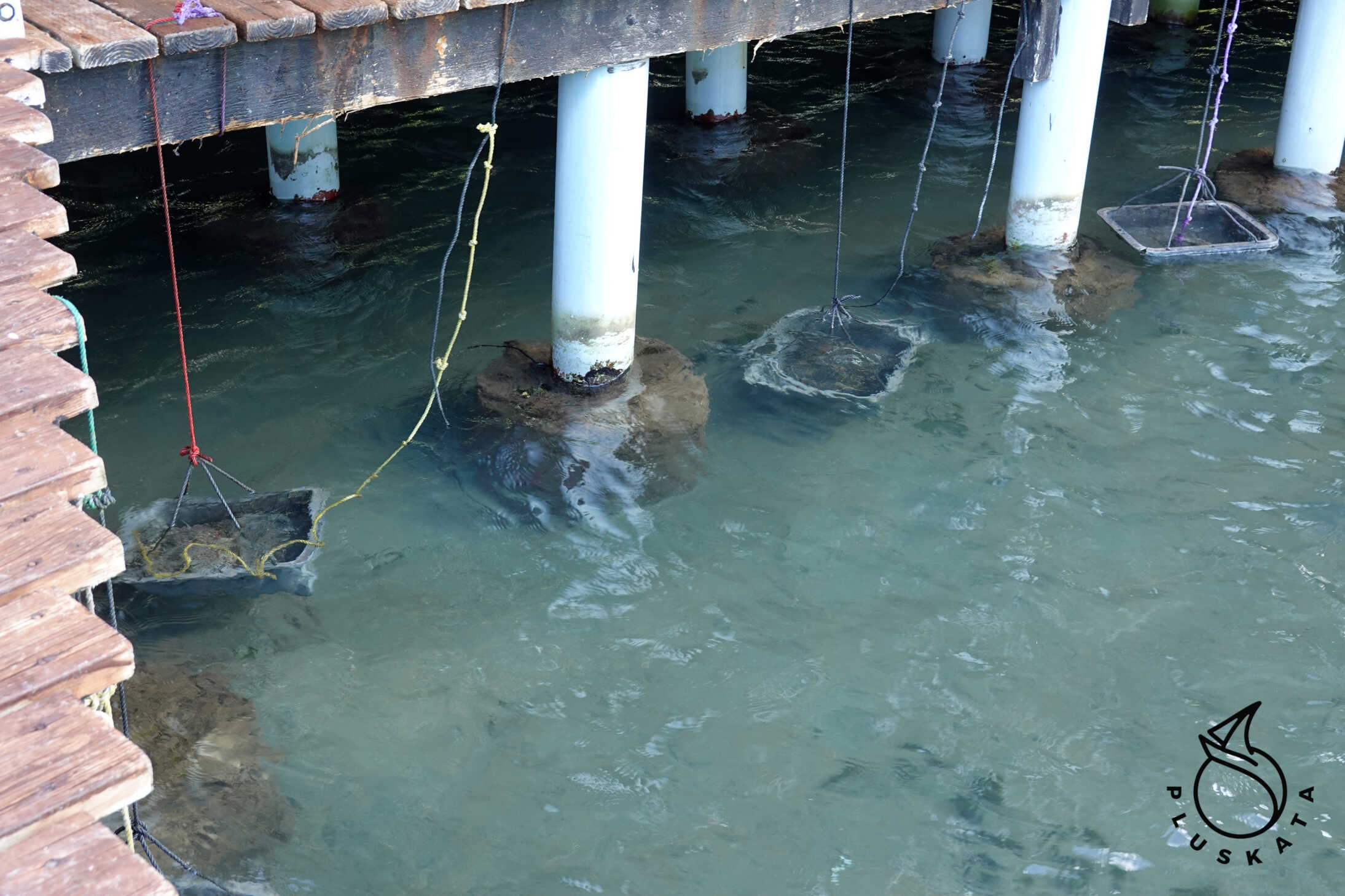
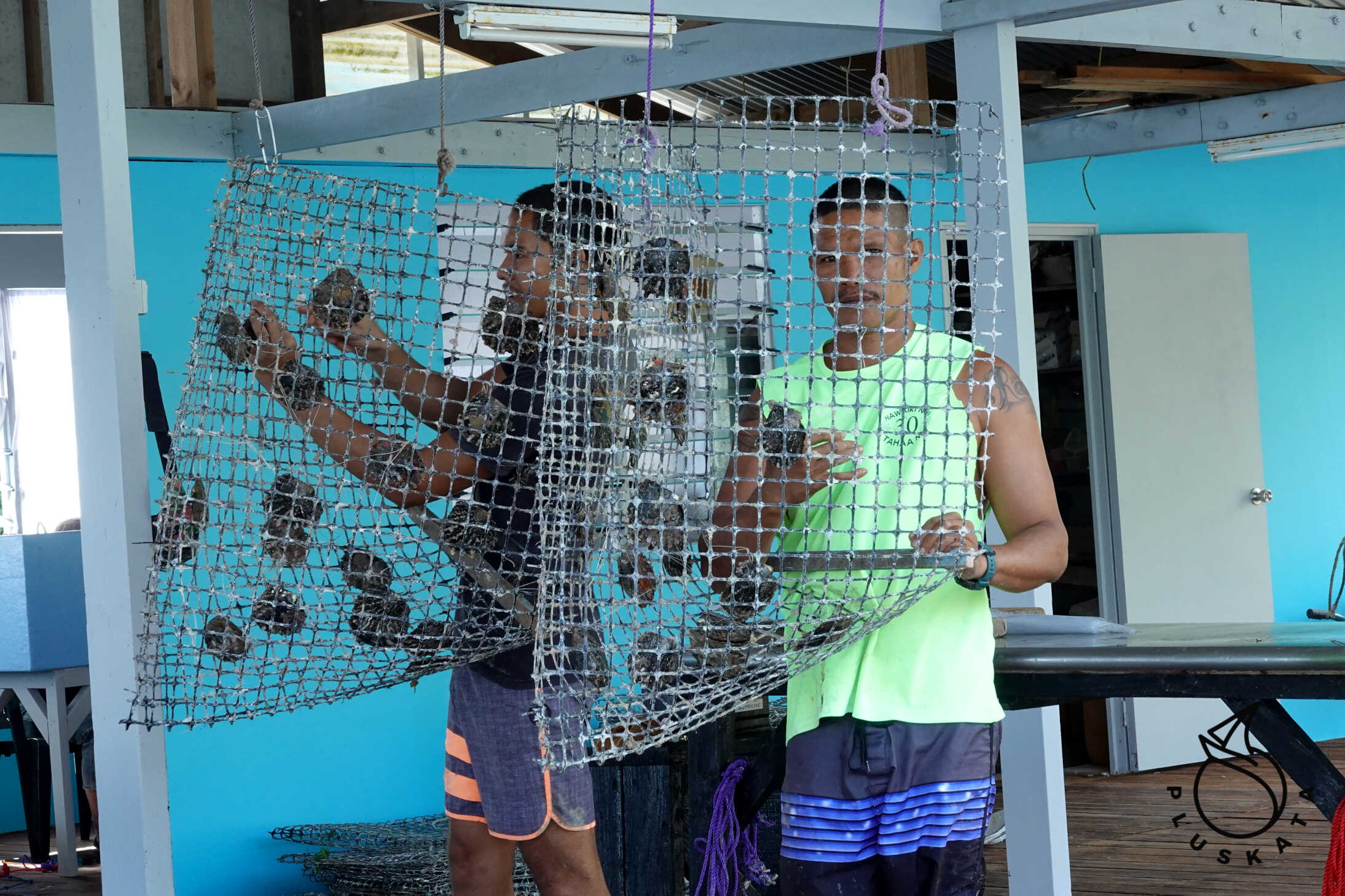
We walk to another pearl farm. The tour is free. This time, we watch the process of implanting a “nucleus” into a pearl oyster and learn how to recognize the pearl’s color (it depends on the color of the “male” part of the shell, i.e., a piece of black epithelium added to the implanted nucleus). The next step is drilling a hole in the shell (be careful not to damage the oyster) and attaching the oyster to a special, closed “net.” A specific colored string is tied to the net. This and the location indicate when a given batch of oysters is from. The pearl grows at least 18 months.
Bora Bora
Povai Buoyage (near Tuuraapuo)
Lots of buoys, mostly white, but some other colors – I couldn’t find any information about their differences. A beautiful Bloody Mary hotel is being built (or renovated) nearby – the completion date is unknown, but an excavator and a pile driver are working daily from 9am to 5pm – they’re making some noise.
There’s another construction site on the eastern side of the bay. From the buoyage, it’s about a 30-minute boat ride to the town marina. A mooring at the buoy costs 4,000 XPF per day, and the guy comes to collect the fee.
Vaiati
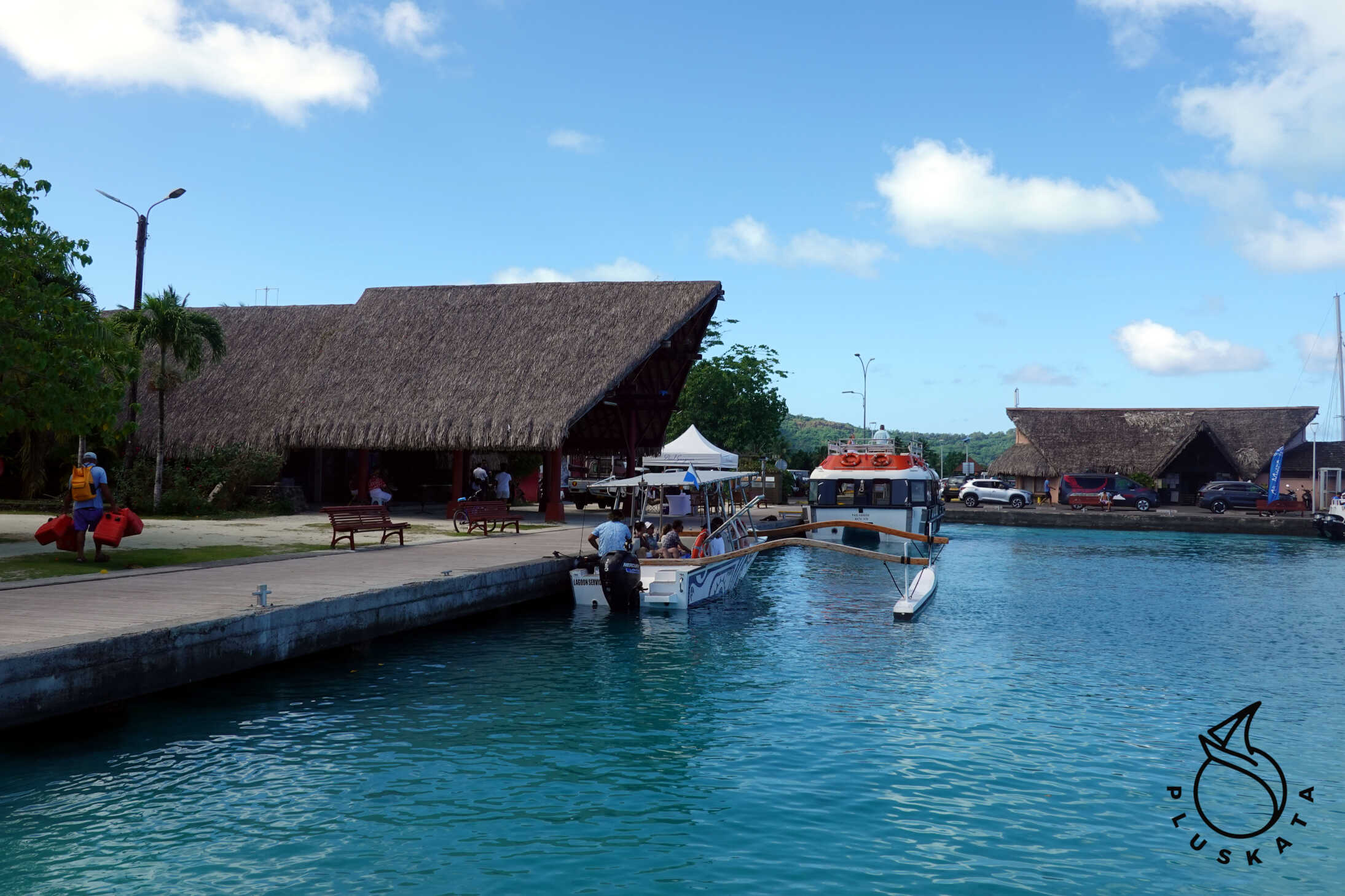
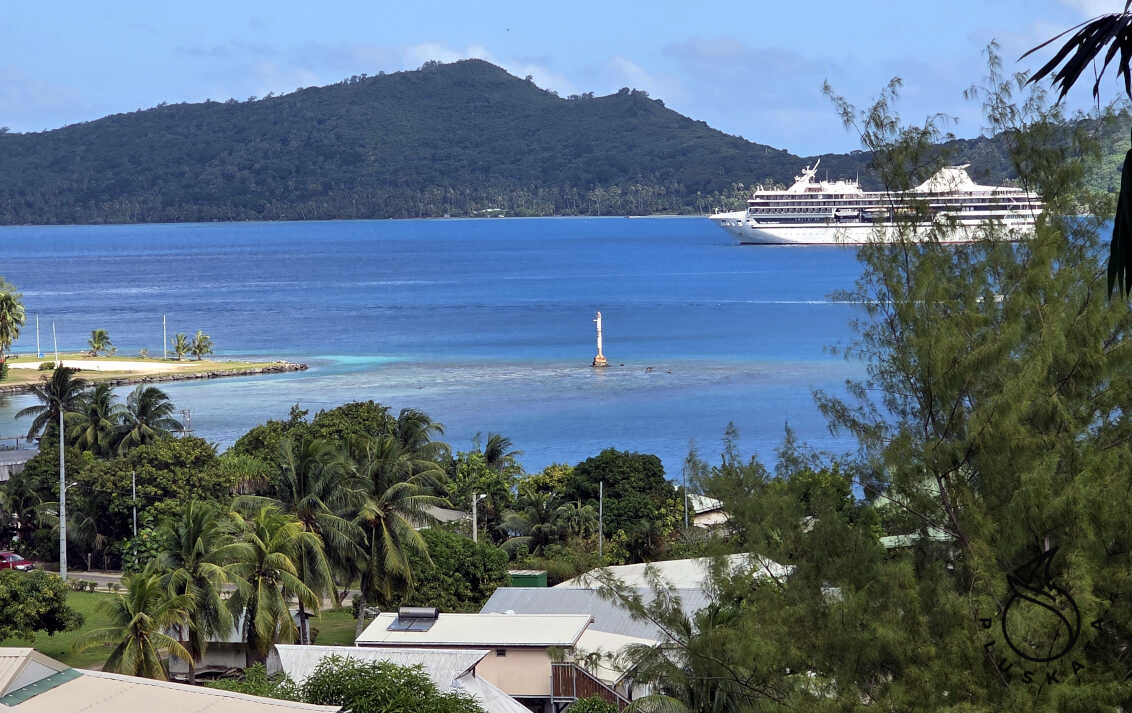
The island’s capital with a ferry dock. Cruise ships also arrive here.
The town itself isn’t very large – walking from one end to the other takes about an hour. There are plenty of pearl shops everywhere, selling pearls of varying quality and price. The town feels like a typical summer resort, although there are also regular grocery and household goods stores. In the center, there are some stylized houses with thatched roofs, and outside the center, there are ordinary houses with fences.
Hotels in Bora Bora
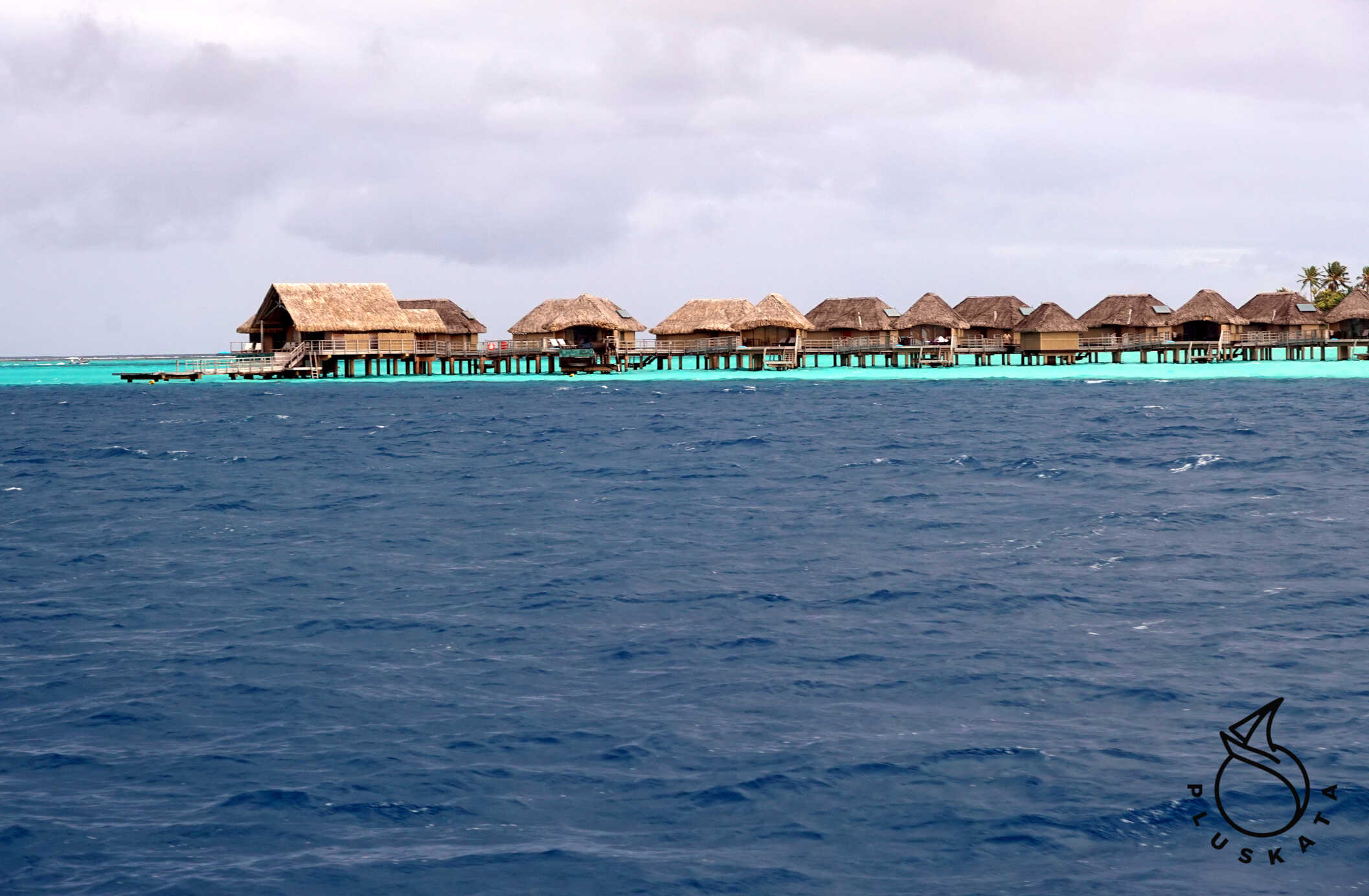
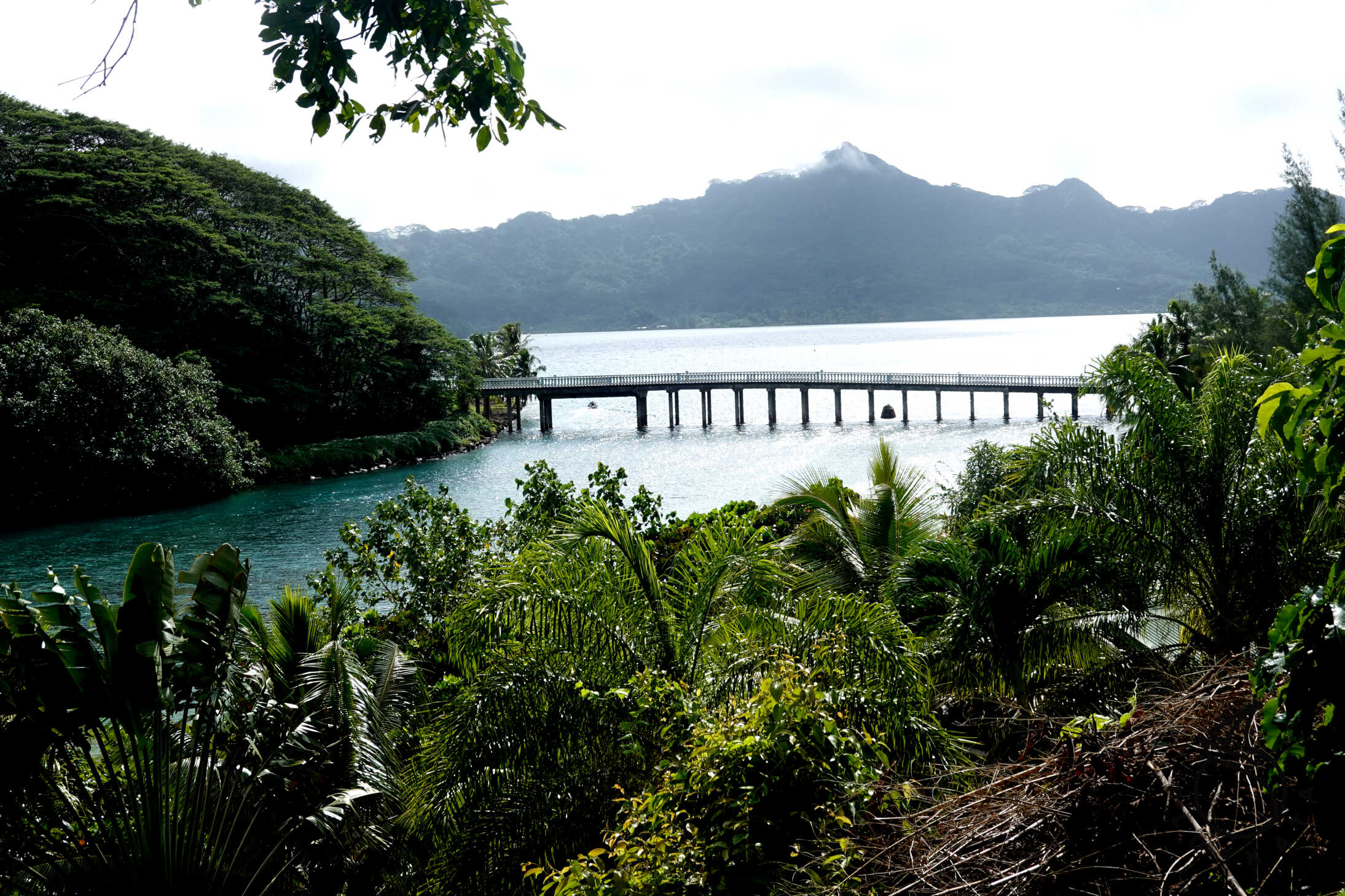
On the main island, everything is normal, and all the hotels and cottages The motu (islands on the fringes of the reef) are standing in the blue water. The water is truly beautiful, with white sand.
And there are manta rays and dolphins swimming in this one – a dream come true.
Maupiti
Another island in the Society Islands archipelago that we plan to visit. We’re sailing there from Bora Bora. Unfortunately, the entrance to the atoll is very narrow, and at the very beginning of the entrance, there’s a counter-current of about 4kn (the map says it can reach 9kn). We gave up – it was too much for us – and we sailed to Raiatea.
Huahine
An island about 20nm from Raiatea.
Fare Anchorage
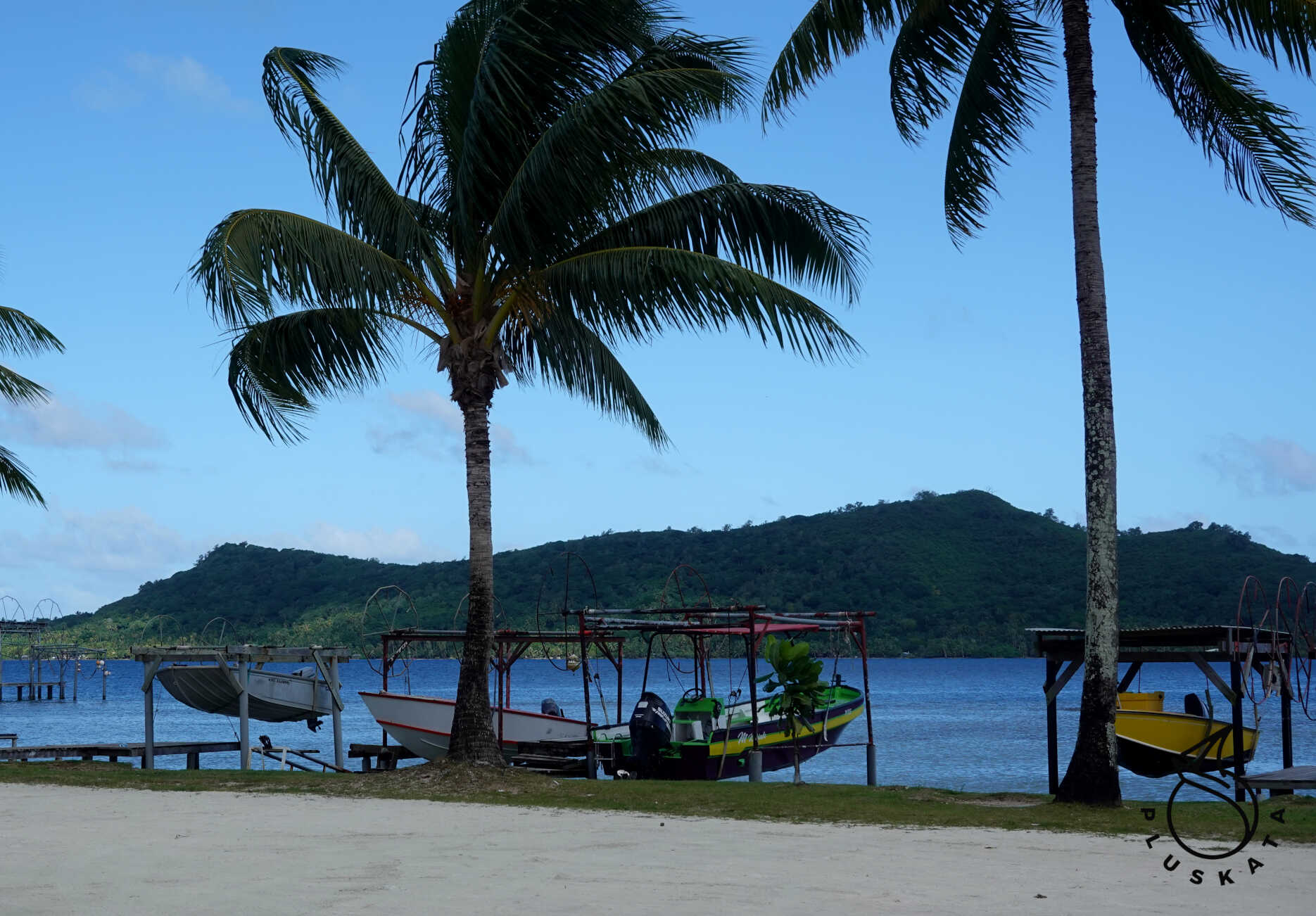
An anchorage on the reef slope. In the northern part, there’s no sand – only white coral and some rocks – the anchor doesn’t hold. Nearby is Fiti Bay, but the locals don’t allow anchoring there (there are pearl farms at the end). We anchor in the southern part of the anchorage – it turns out there’s sand on the reef’s edge and the anchor holds well. We anchor at 3m. There are lots of colorful fish swimming around.
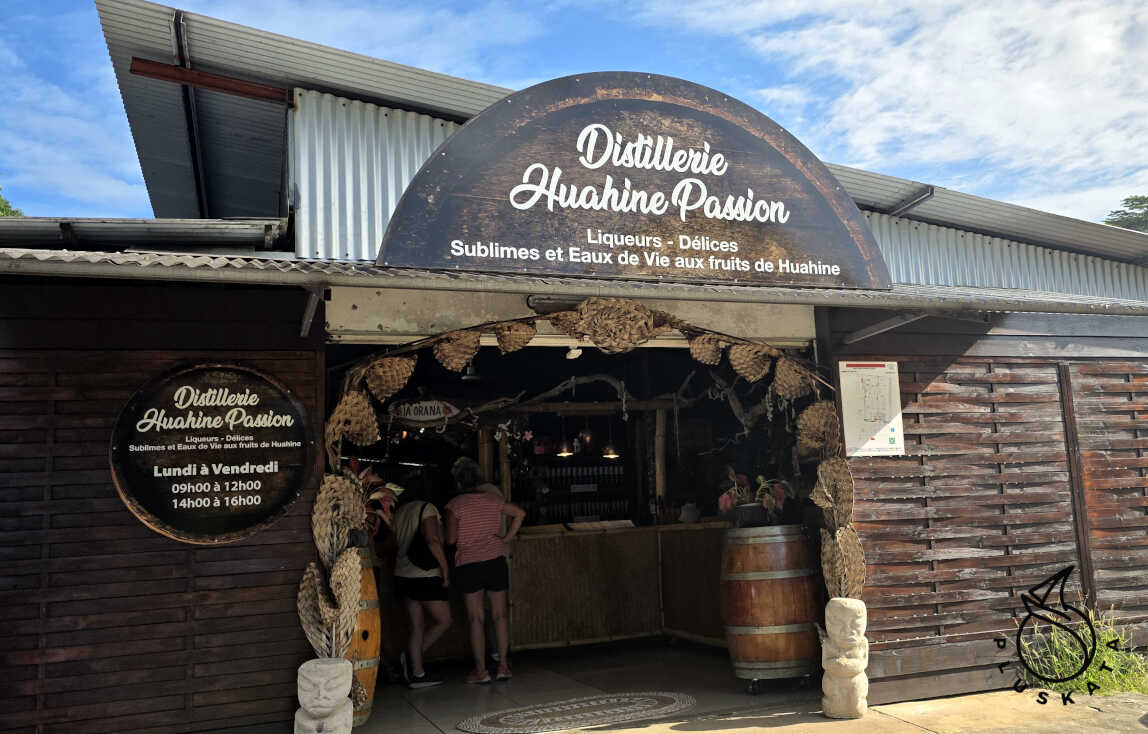
Huahina Passione Liqueur Distillery
This distillery produces mainly liqueurs directly from fruit (around 18% ABV). They also make stronger fruit-based liqueurs (around 45%). All are very tasty. You can choose one of each of four varieties to taste (18% ABV liqueur, 25% ABV coconut liqueur, sweet fruit brandy 45%-55% ABV, and dry rums – also fruit-based 45-55%). The tasting costs 500 XPF per set, but if you buy something, it’s free.
Car Rental
There are many rental companies on the map in town, but when you try to find one, it turns out they don’t exist at that address or are closed. We finally decide on Europcar – they exist, have a car, and the price is quite reasonable (7,900 XPF per day). It’s 4 p.m., so we still have an hour until sunset, so we set off.
Food
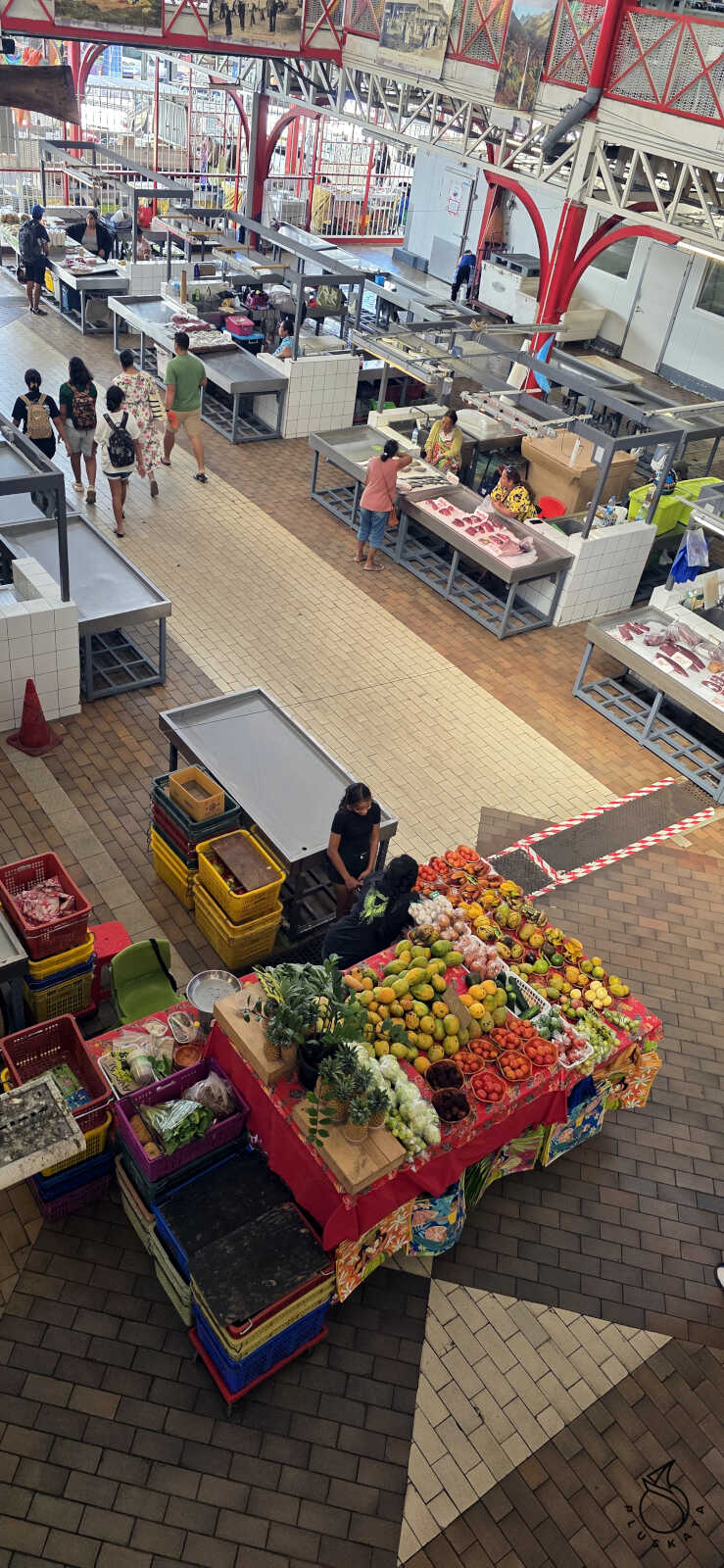
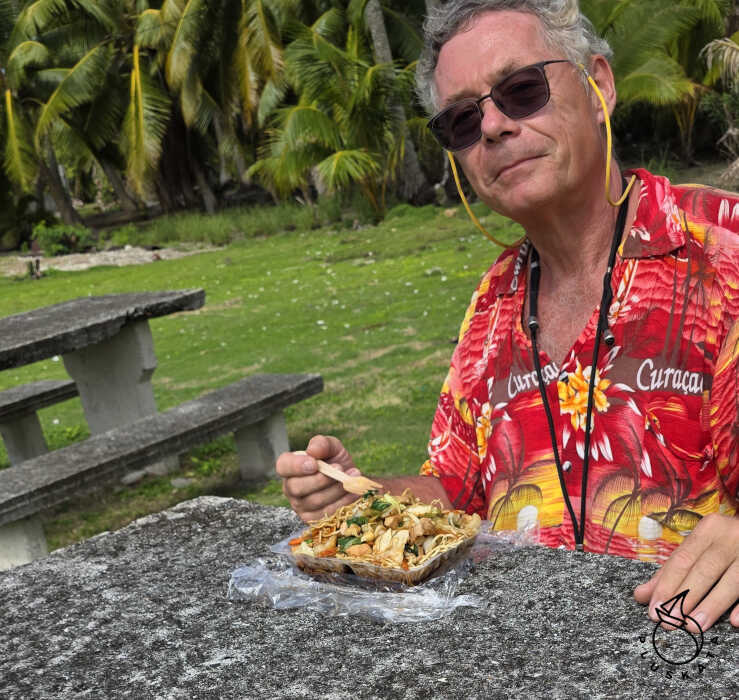
The best way to get a tasty and inexpensive dinner is to buy a ready-made meal – you can buy it at a grocery store (e.g., Super U) – they have special heated counters, or at a local kiosk where the food is prepared freshly. Typically, the cost of such a meal doesn’t exceed 1,200 XPF, or about $11.
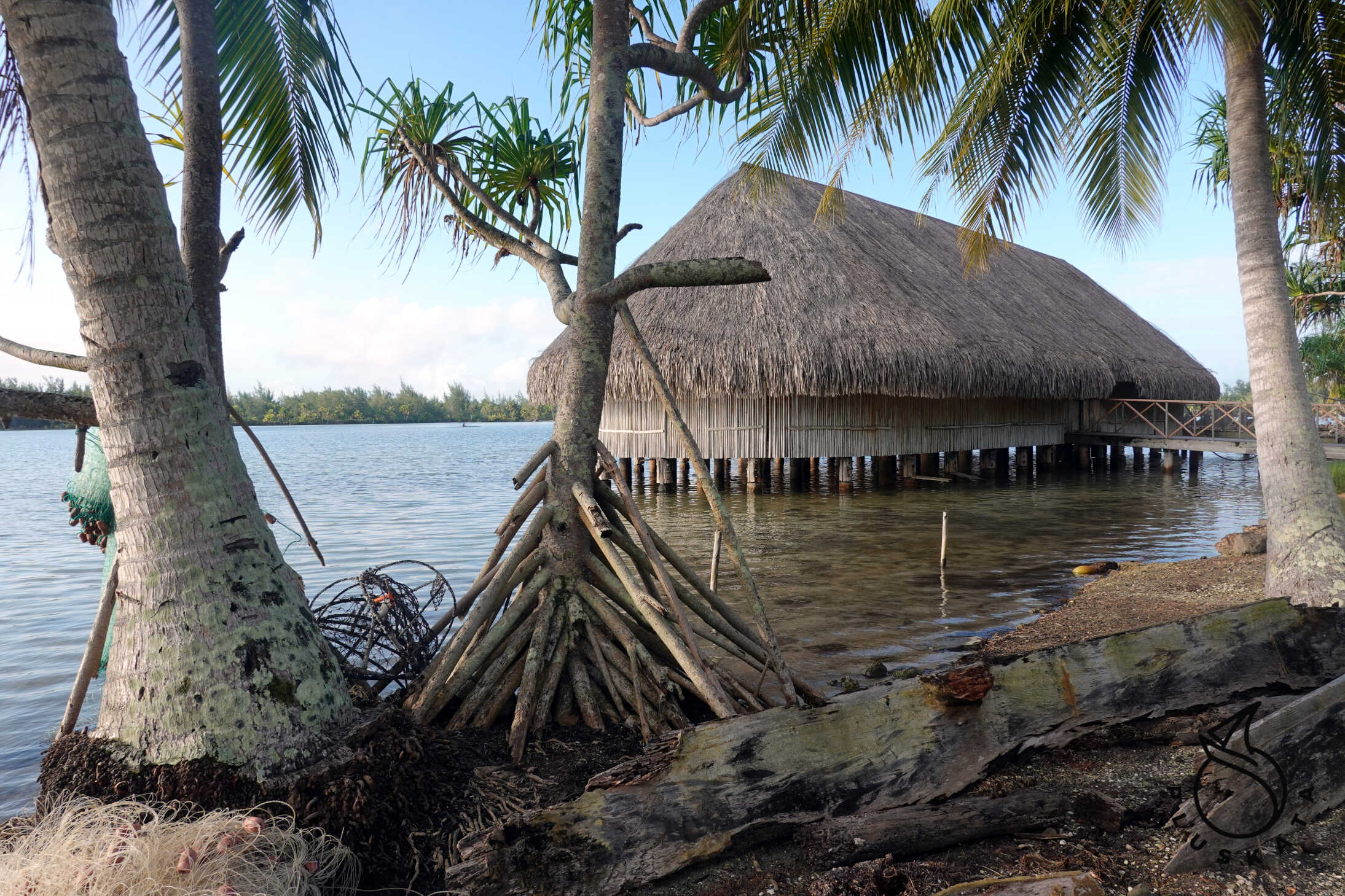
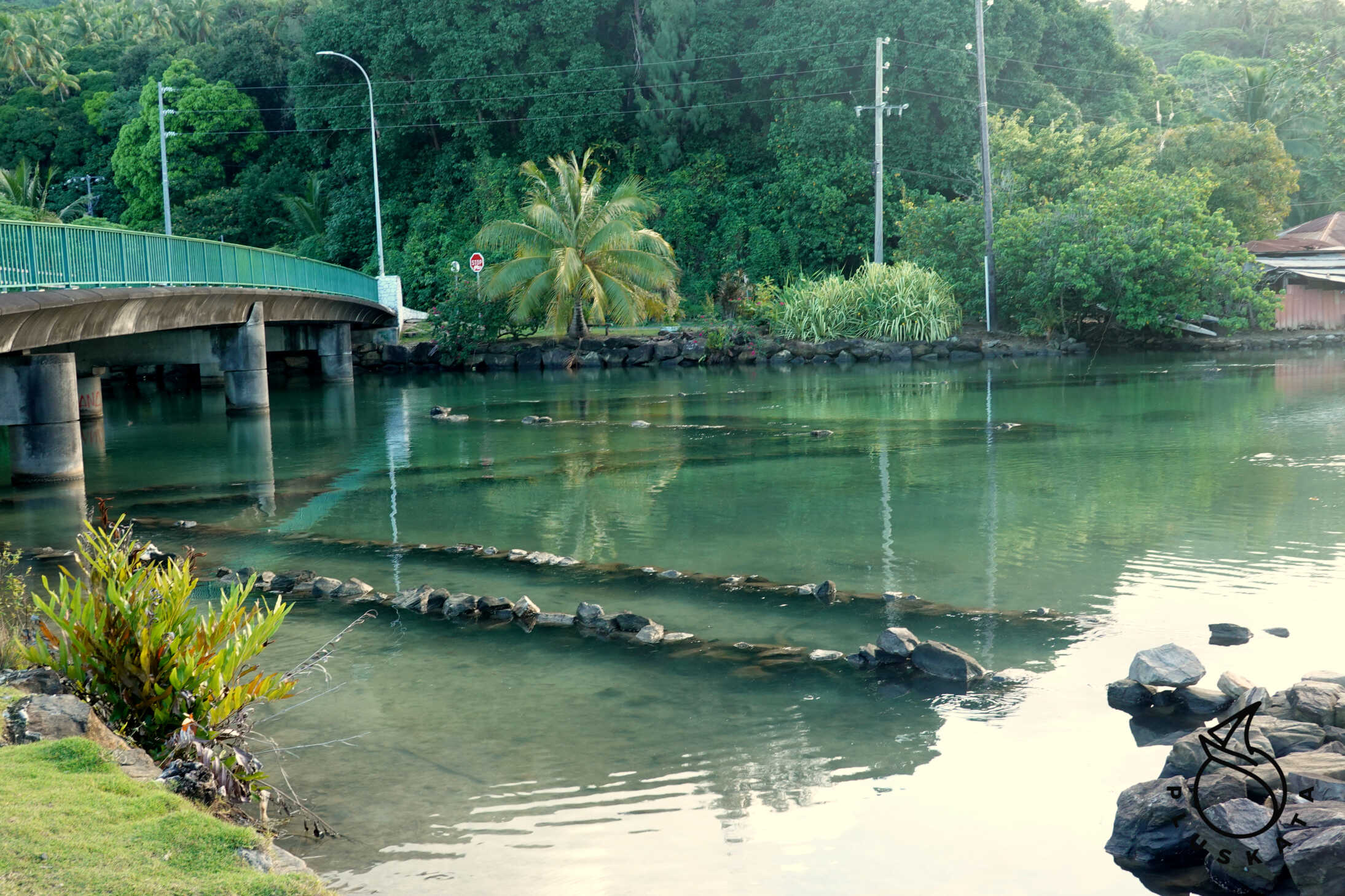
Stone Fish Traps
Fish traps are structures into which fish swim and cannot escape. This is not only a very simple method of catching fish, but also a primitive form of aquaculture, as the trap allows the caught fish to survive.
The fish dams on Lake Maeva are believed to have been built in ancient times, during the reigns of the eight Maeva chiefdoms. Eighteen of these dams are believed to date from that period and remained in use until the early 19th century, with their maintenance varying due to rivalries between the descendants of the eight chiefdoms that managed them. They were not fully restored until around 1880, during the reigns of Te-ha’apapa and Teuhe, who took them over for their own use.
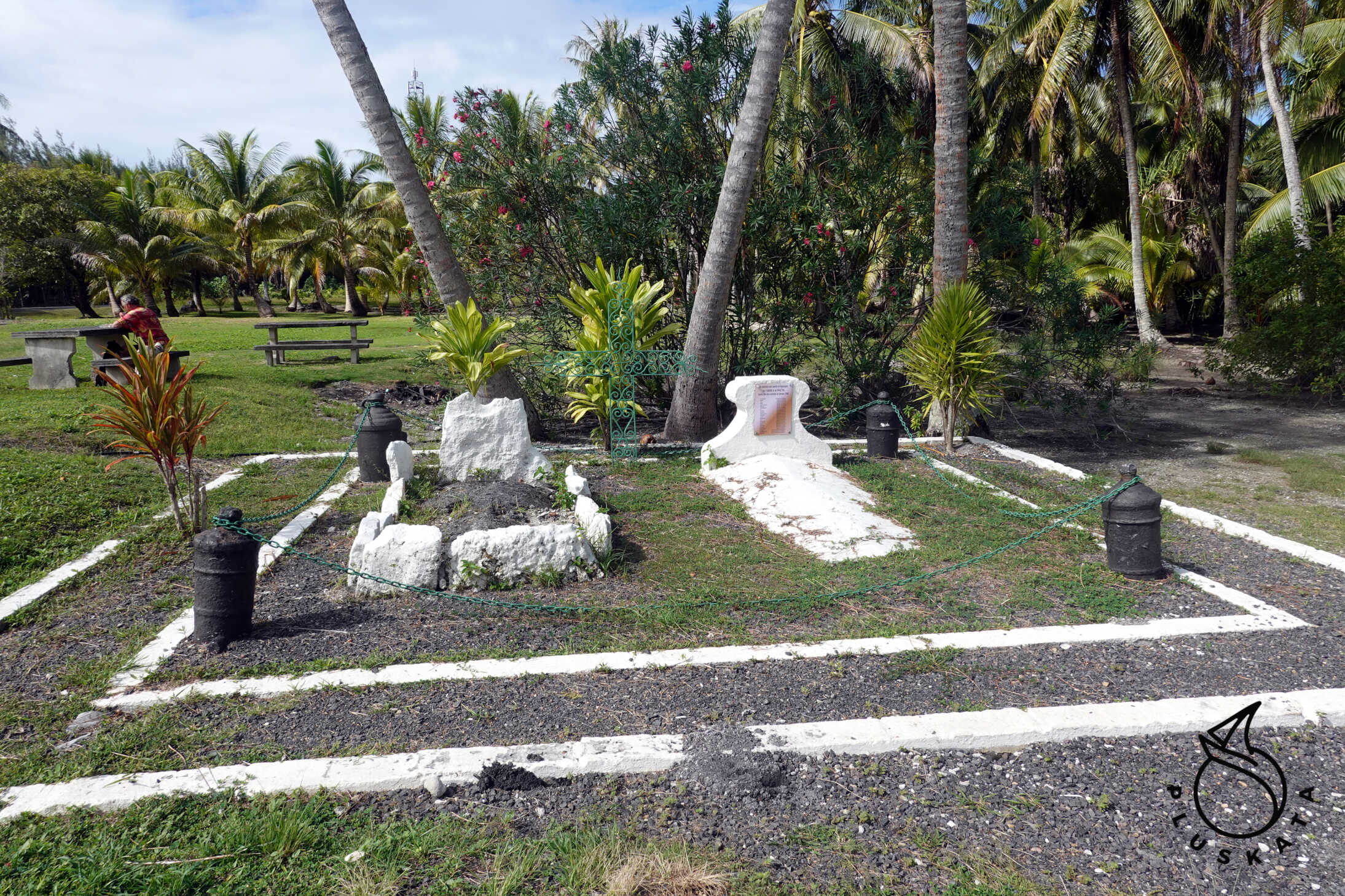
The gradual establishment of French administration from 1890 led to the lake and its shoreline becoming public property. The traps were left at the disposal of the residents, but the system was not properly maintained and fell into disrepair. Today, the traps are operational again. The Road to the South Island – Huahine Iti
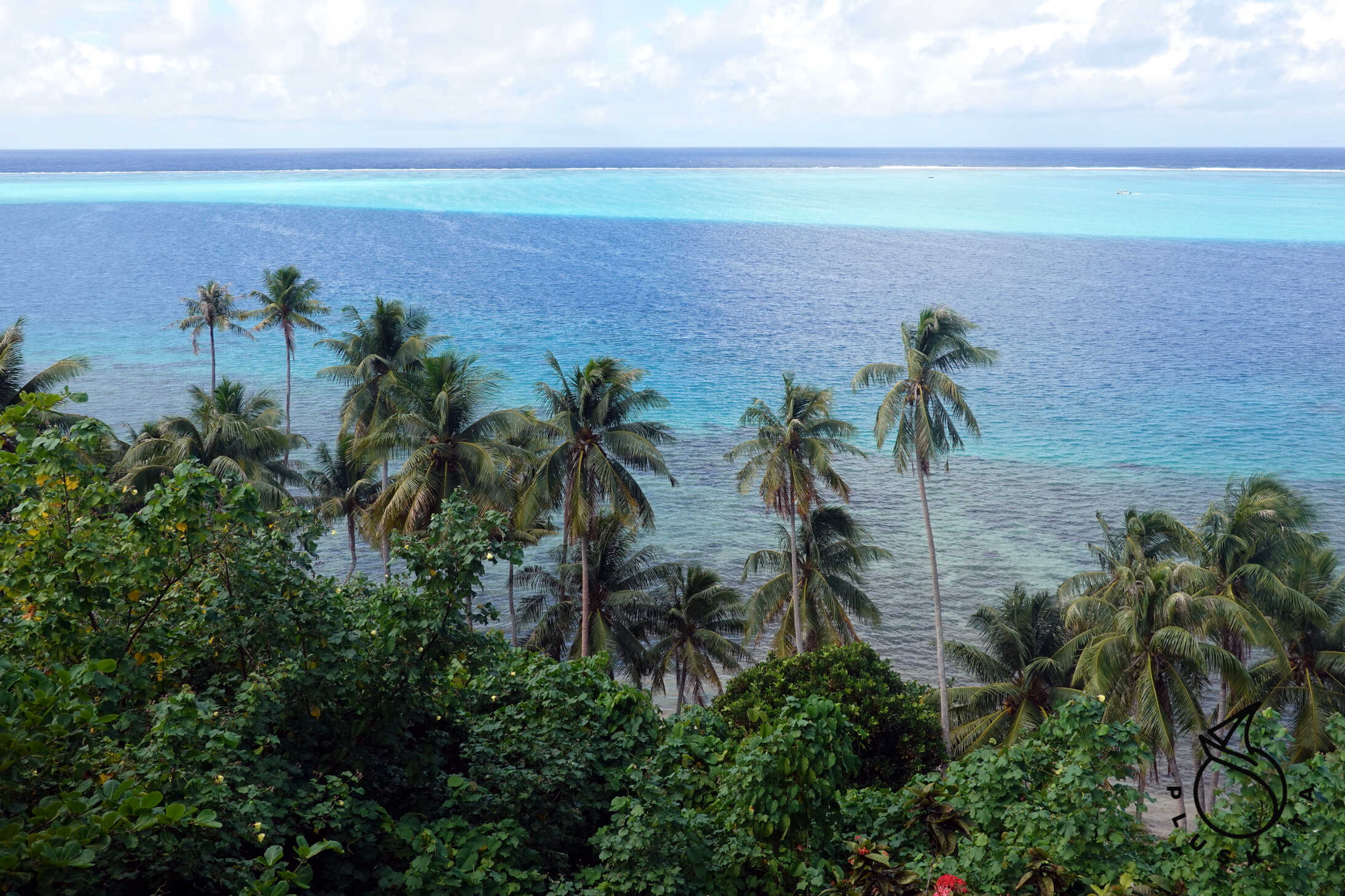
A very beautiful road through the north island (Huahine Nui). Along the way, we pass another viewpoint – Belvedere. The views are stunning – blue water, lush vegetation, colorful flowers.
Vairupe Vanille Farm
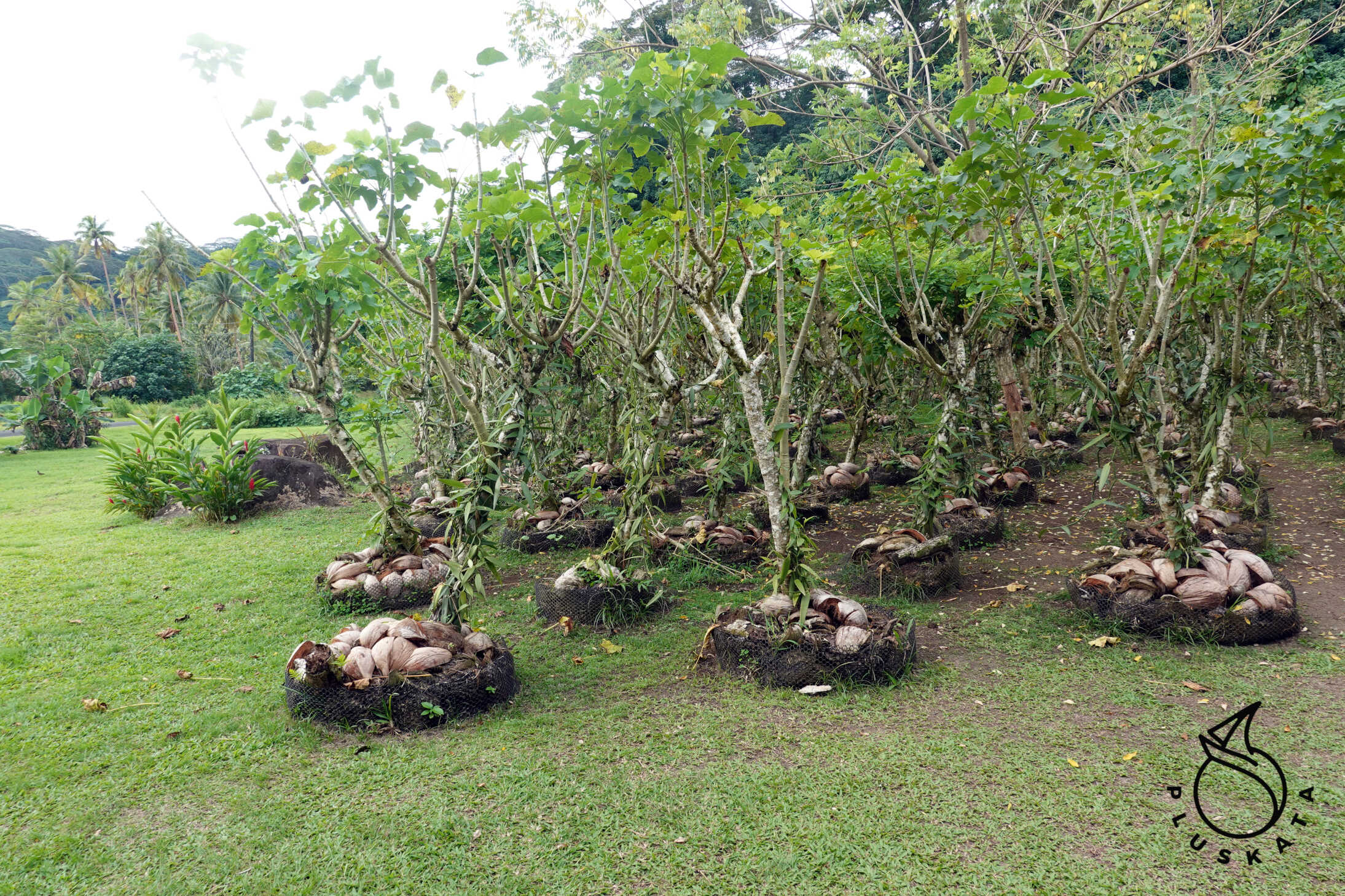
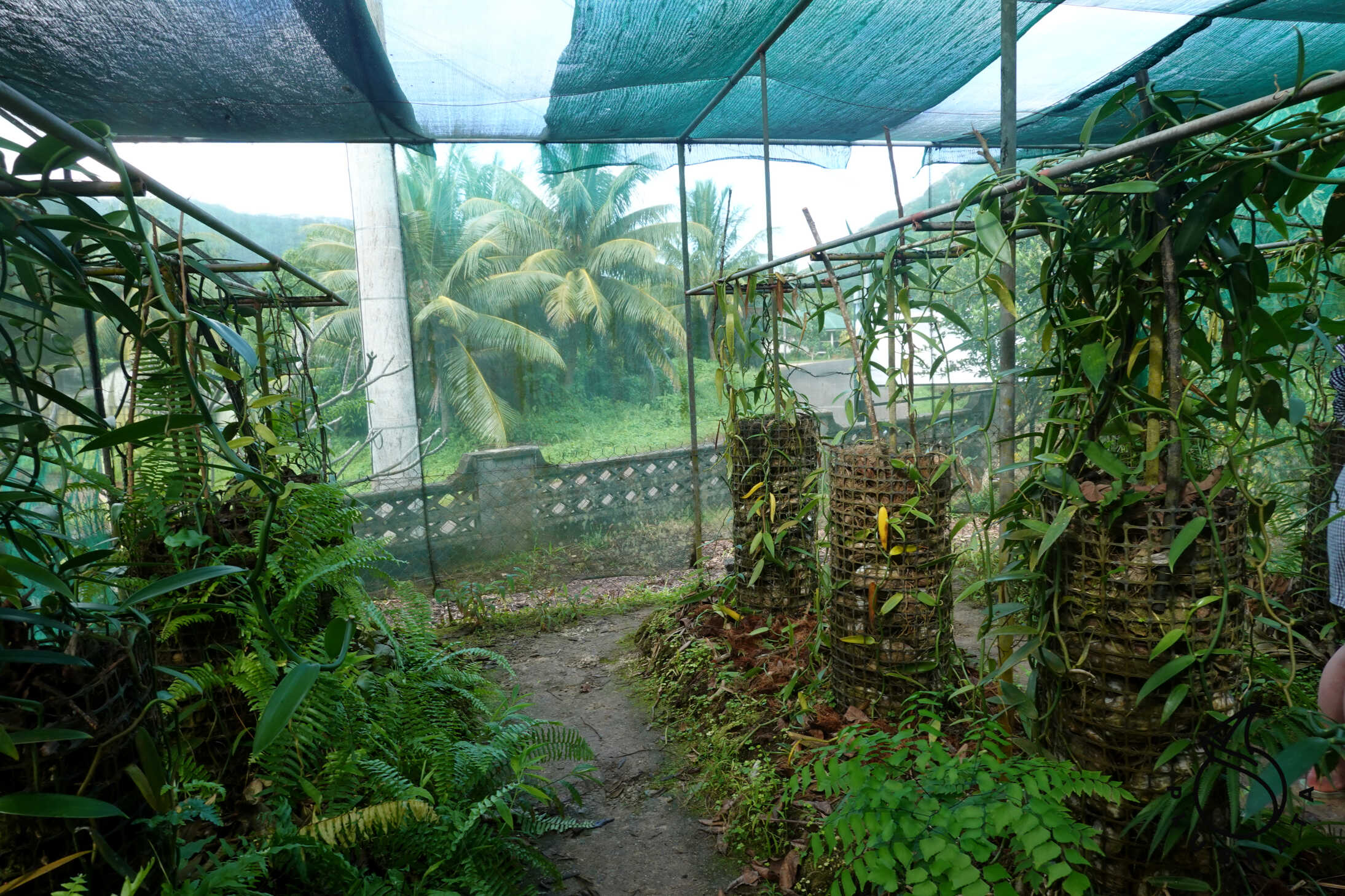
Another vanilla farm – this time, vanilla plants climb up mesh tubes filled with coconut fiber. The vanilla plant begins to flower after three years, and after pollination, it takes another nine months for a vanilla pod to develop. Here, the pods are harvested once they are brown.
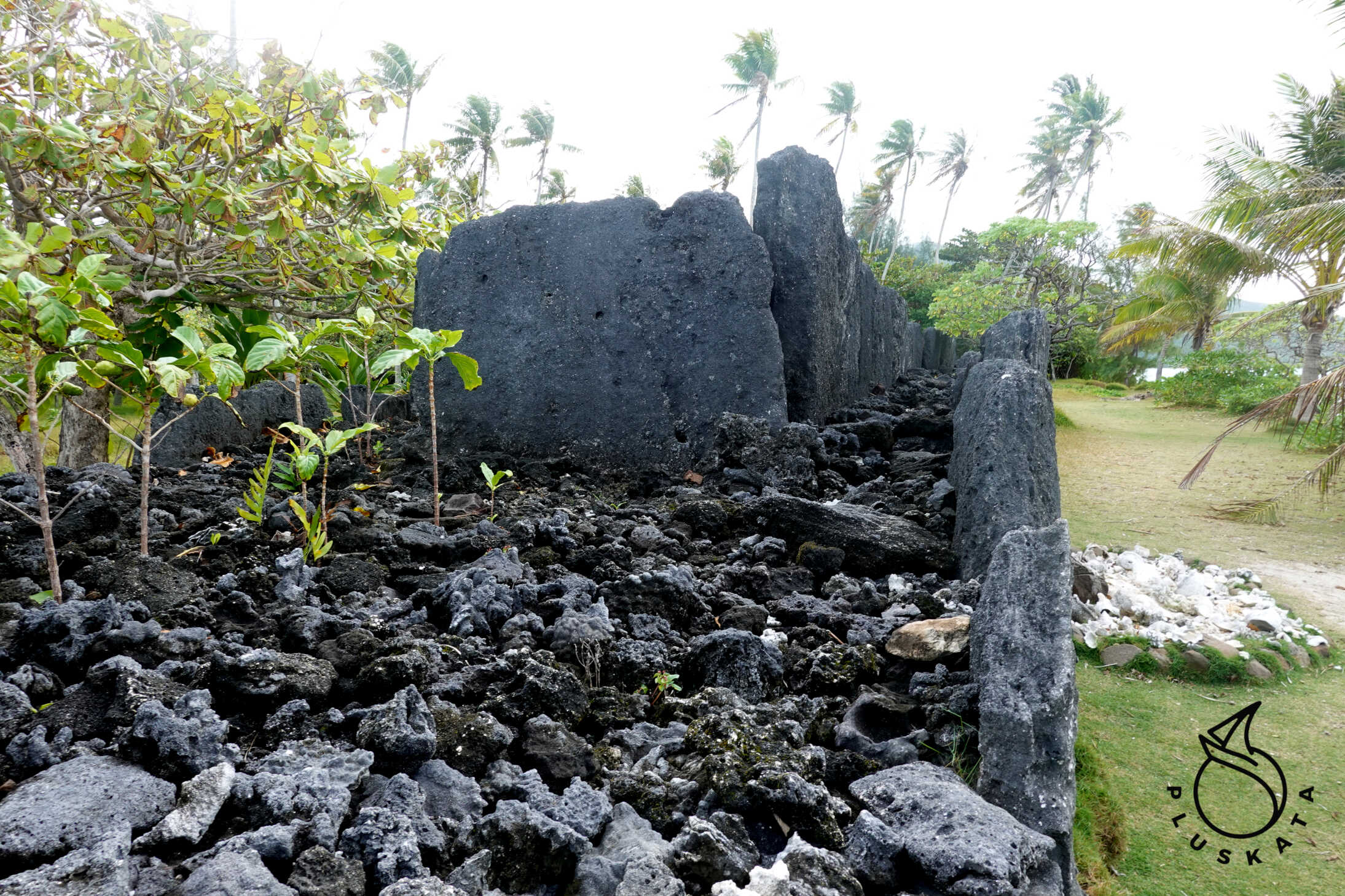
Anini Mara’e
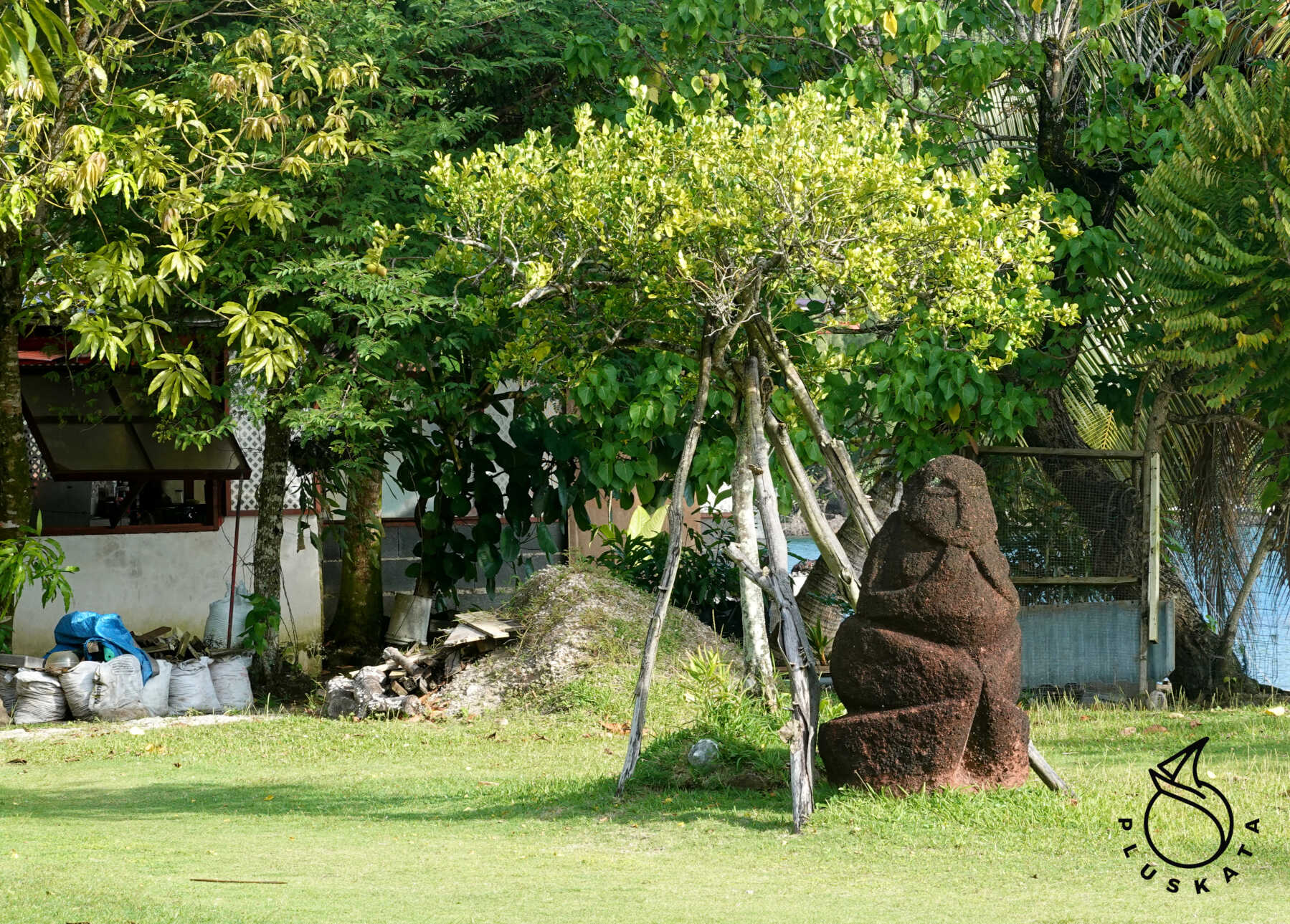
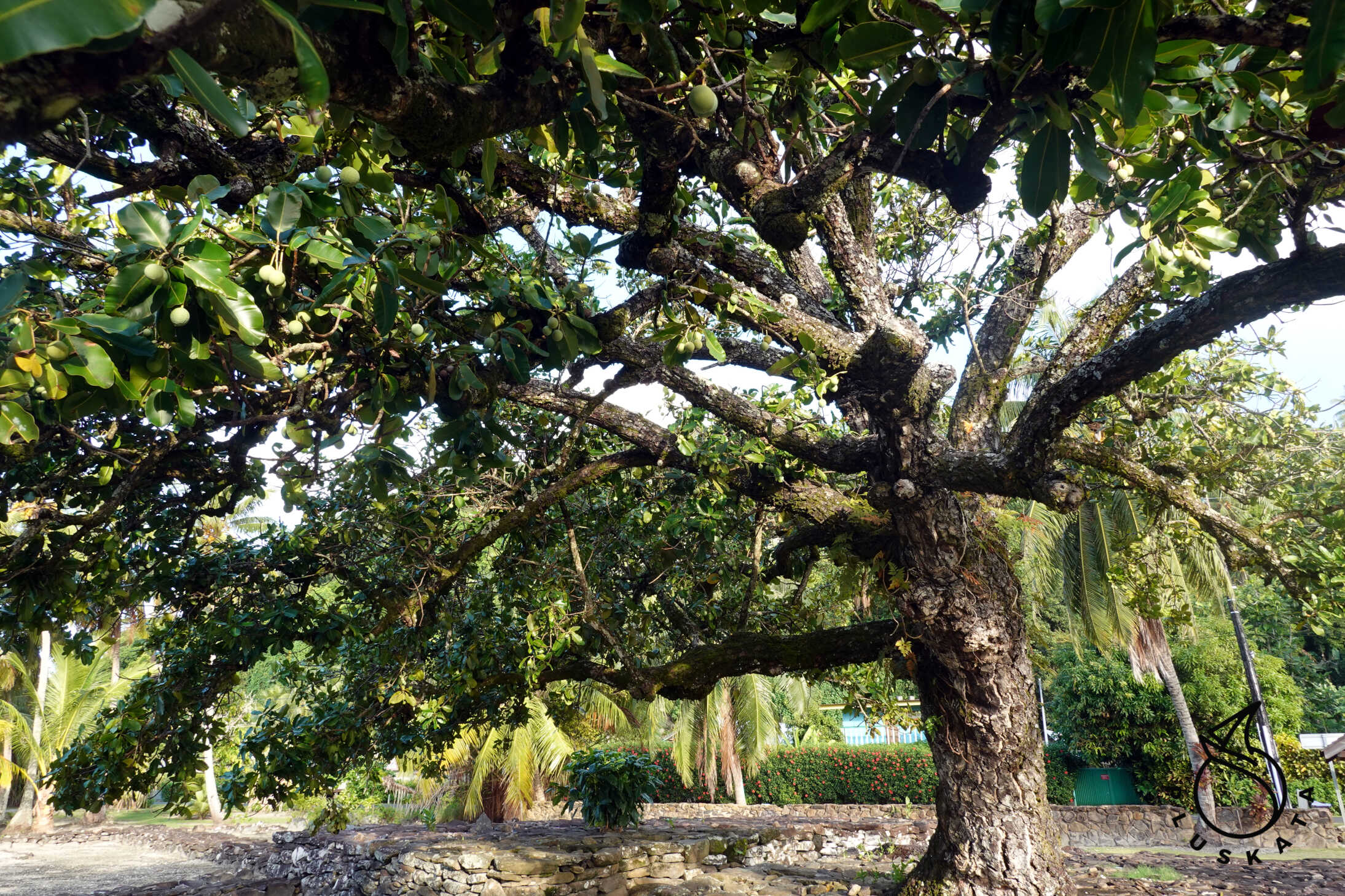
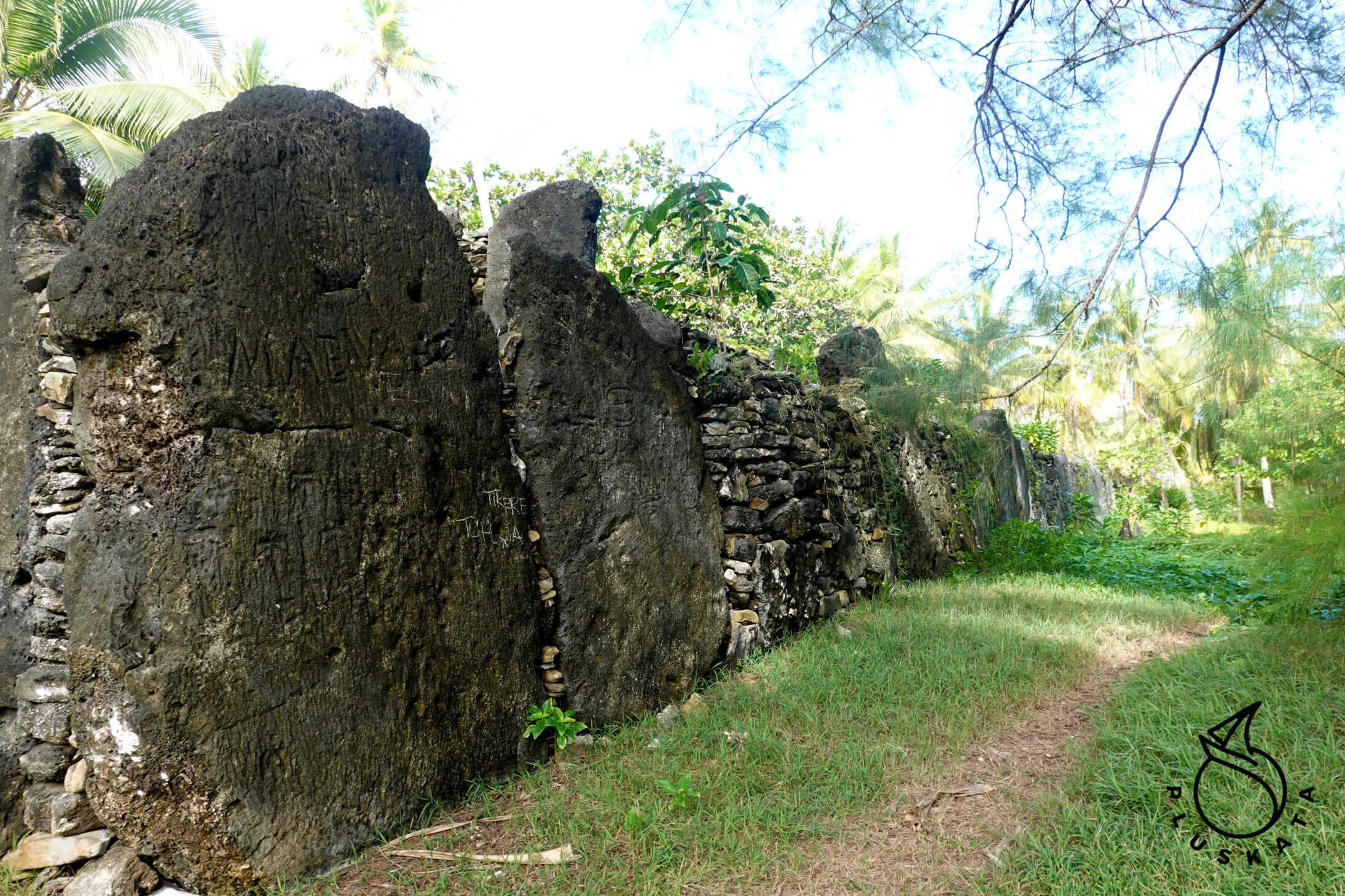
Anini marae, an ancient ceremonial site, built on the southern tip of the island. Constructed of large coral blocks, this seaside marae impresses with its impressive size and location on the edge of a lagoon. It is a relatively new relic, dedicated to Oro (the god of war) and Hiro (the god of thieves). The Oro cult, accompanied by human sacrifice, was almost the last gasp of the ancient religion before its final decline in the face of the growing influence of Christianity. In his memoirs published in 1818, missionary William Ellis reports that the last priest of the marae remembered at least fourteen human sacrifices.
The temple was supposedly built for Ta’aroari’i, son of Mahine, king of Huahine, in the late 18th century. It was there that Ta’aroari’i, against his father’s orders, attempted to revive traditional religions before being exiled by pro-Protestant factions in Huahine.
The marae was researched and described by Kenneth Emory in the 1920s, restored by Professor Sinoto in 1969, and is now regularly conserved.
The main feature of the Anini marae is its ahu (altar). Small platforms, ro’i, were considered the beds of the gods Oro and Hiro. Upright stones, ofa’i turui, allowed priests and chiefs to rest on them or served as memorials to deceased chiefs.
A small marae with stone posts in the section bordering the road was built when the royal family adopted a child of lower birth. A platform some distance from the fence marks the site of the Oro house. It is believed to have been a small, now-vanished structure where each post was allegedly driven into the body of a victim.
Tefarerii Viewpoint
This is another beautiful viewpoint on the eastern side of Huahine Iti.
Anguilas Sagradas de Ojos Azules
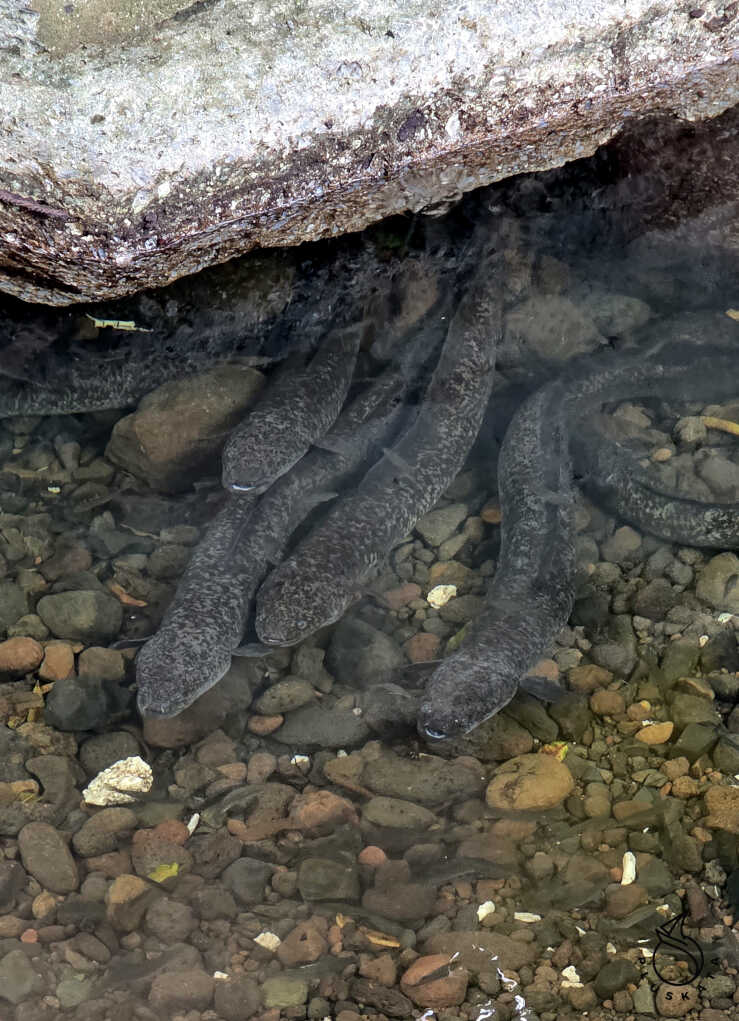
In Polish, these eels are called blue-eyed eels. Some weigh 20 kg. In the heart of the village of Fā’ie, in a small stream, live the famous giant eels, or puhi tari’a. They are famous for their blue eyes and size, sometimes reaching 2 meters in length. Interpreted as a gift from God and a promise of abundance, their presence delights both children and locals.
A local man shows us the place where the eels live, feeding them canned tuna. The place is open year-round, with no admission fee, although the man who shows us around does ask for a tip.
Motu Tresor
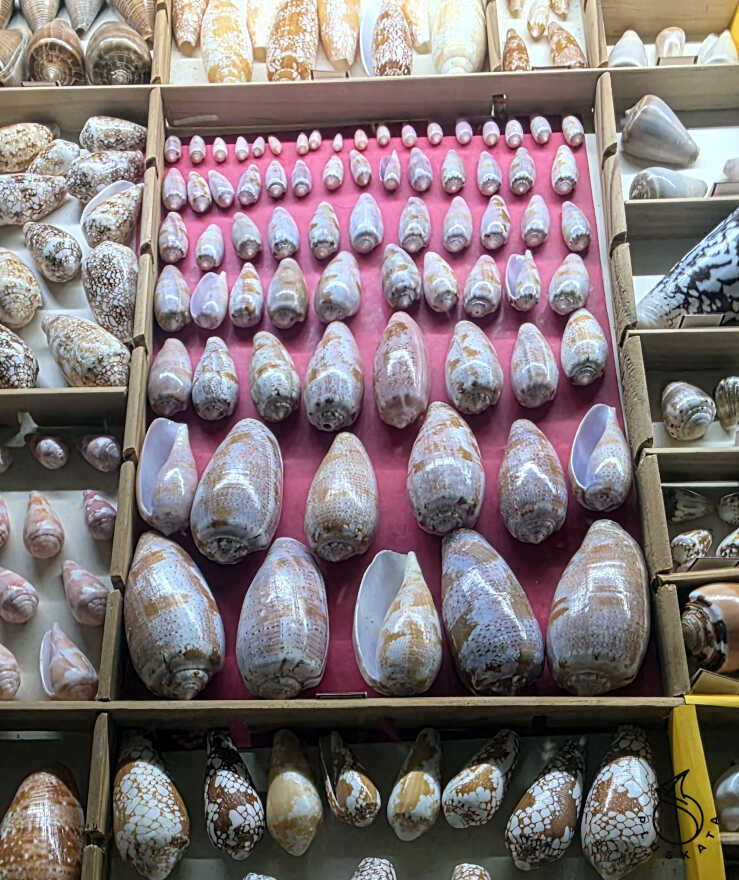
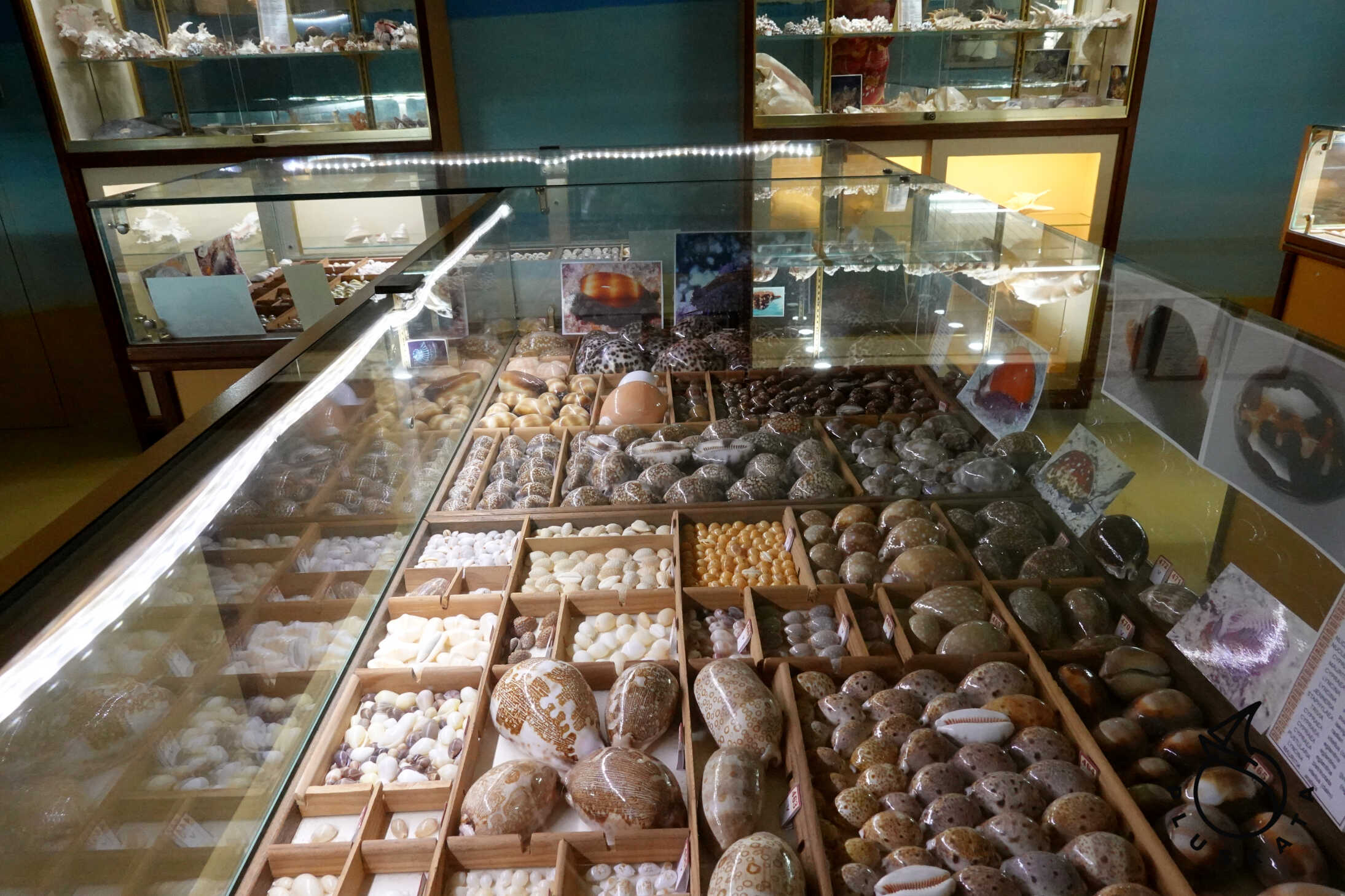
A private shell museum – the owner collected all the shells himself – it’s impressive. The display cases are numbered and labeled with the collected shells. On a red background are shells whose “occupants” can kill a human – fortunately, there aren’t many of them. Each compartment contains shells of the same species, but of varying sizes. There’s also a small exhibition of pearls with classifications. Next door is a boutique with beautiful shell and pearl items, unfortunately very expensive.
Tahiti
Marina Taina
After three weeks, we’re back at Marina Taina. This time, they put us at the quay with the superyachts. It’s perfect timing, because in the evening, there’s a party on the quay organized by companies from Australia. There’s a barbecue, Tahitian dancing, wine, beer, and plenty of good food.