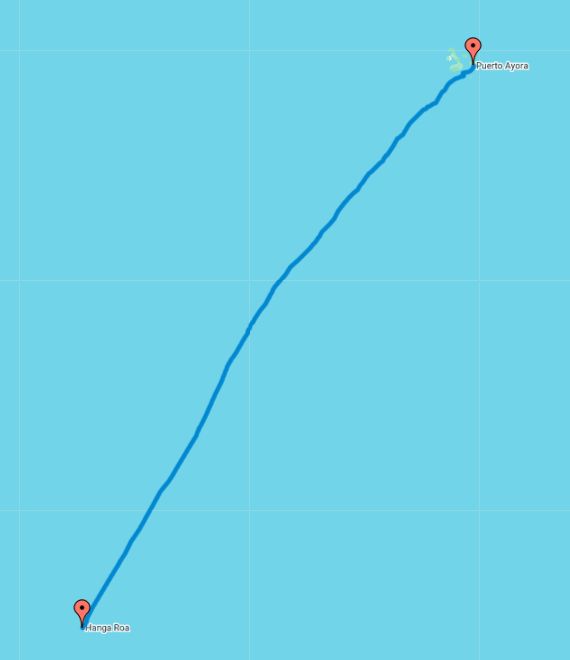
Date: February 2-21, 2026
Route: Puerto Ayora – Hanga Roa
Miles/Hours: 1905 NM/436 Hrs
Santa Cruz Island
Diving
We chose Shark Bay, a company recommended by our agent. Their weekly schedule changes dive sites every day, so if you want to dive with this company at a specific location, you’ll need to choose the appropriate day of the week or change companies.
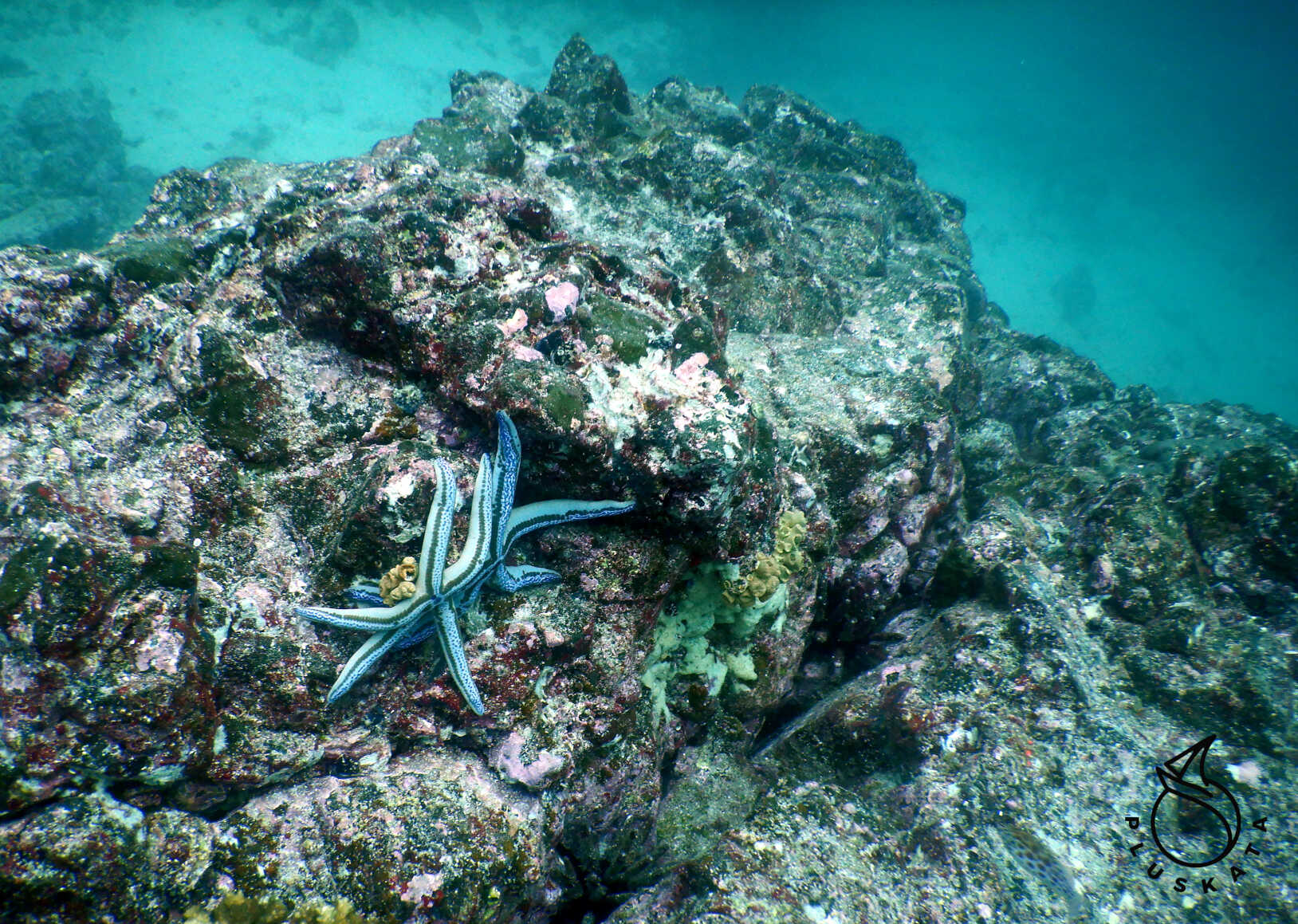
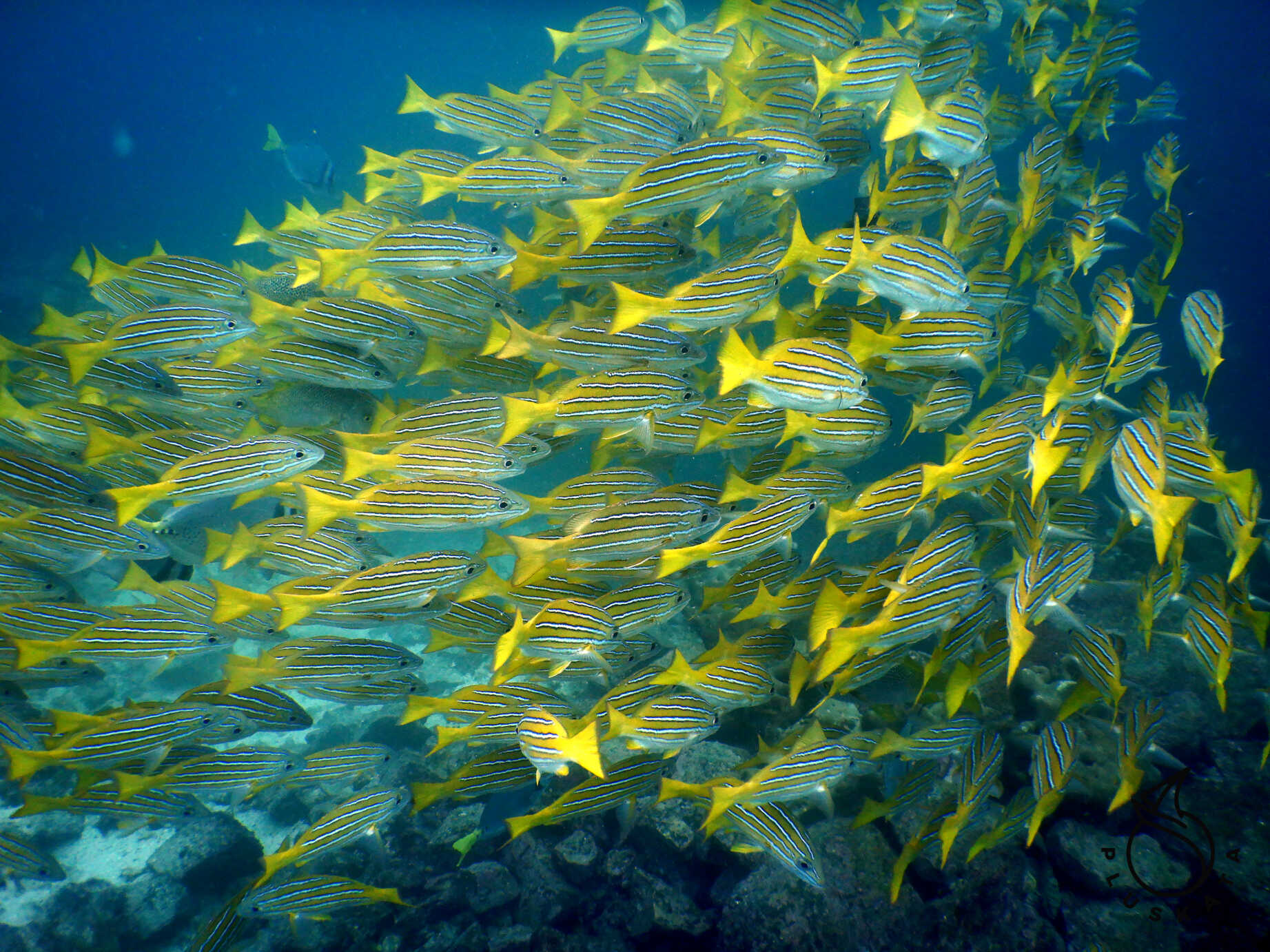
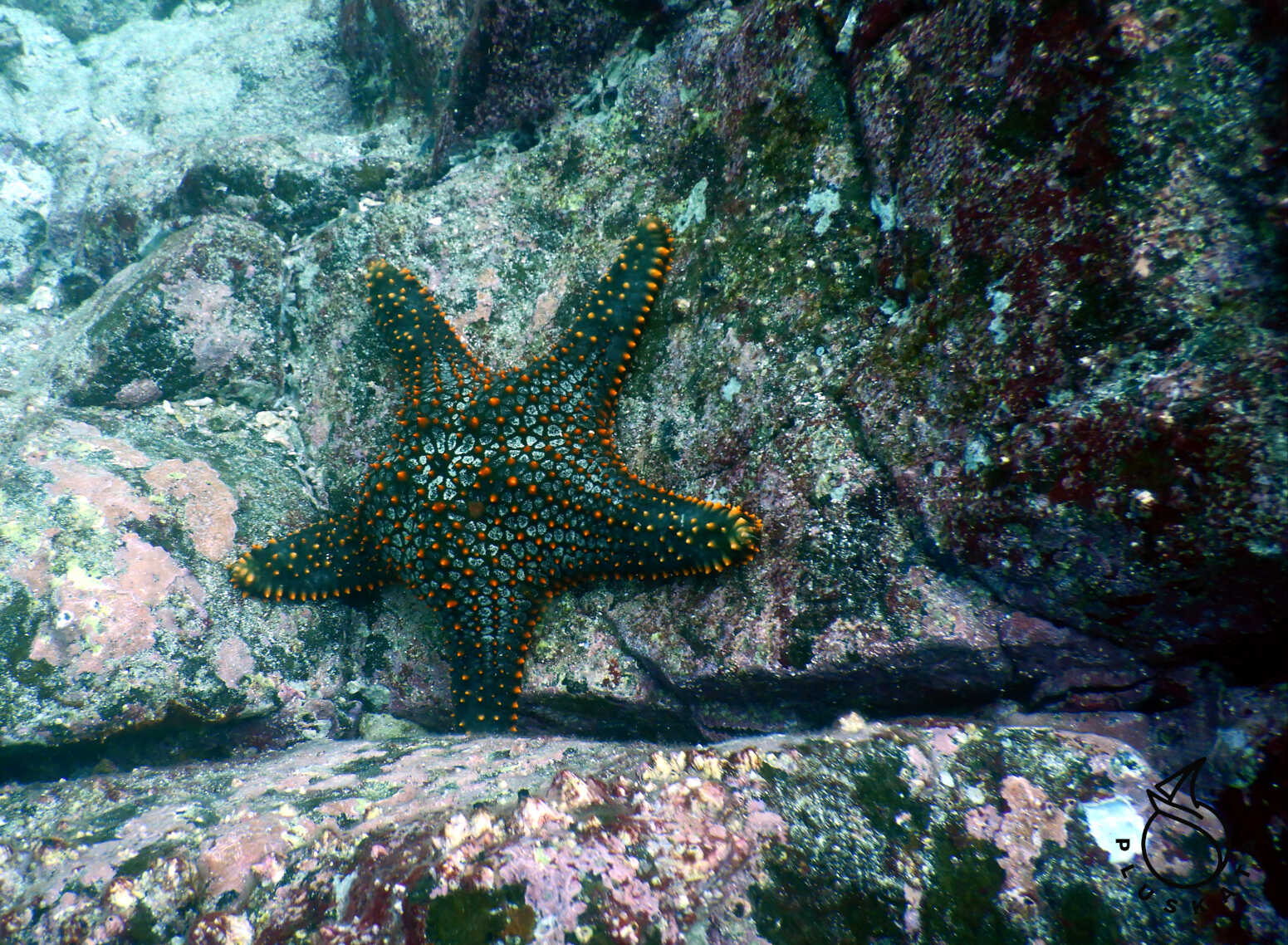
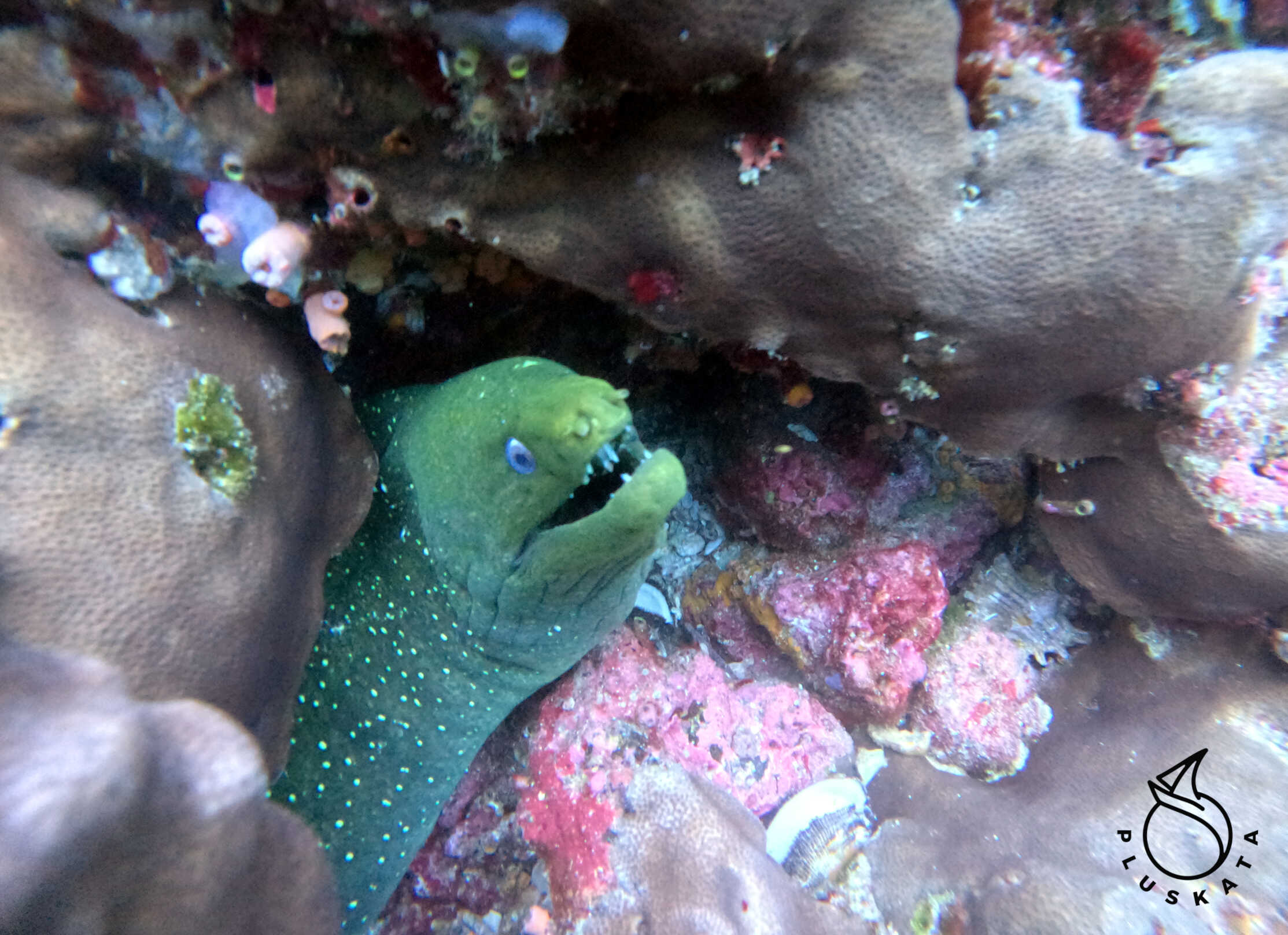
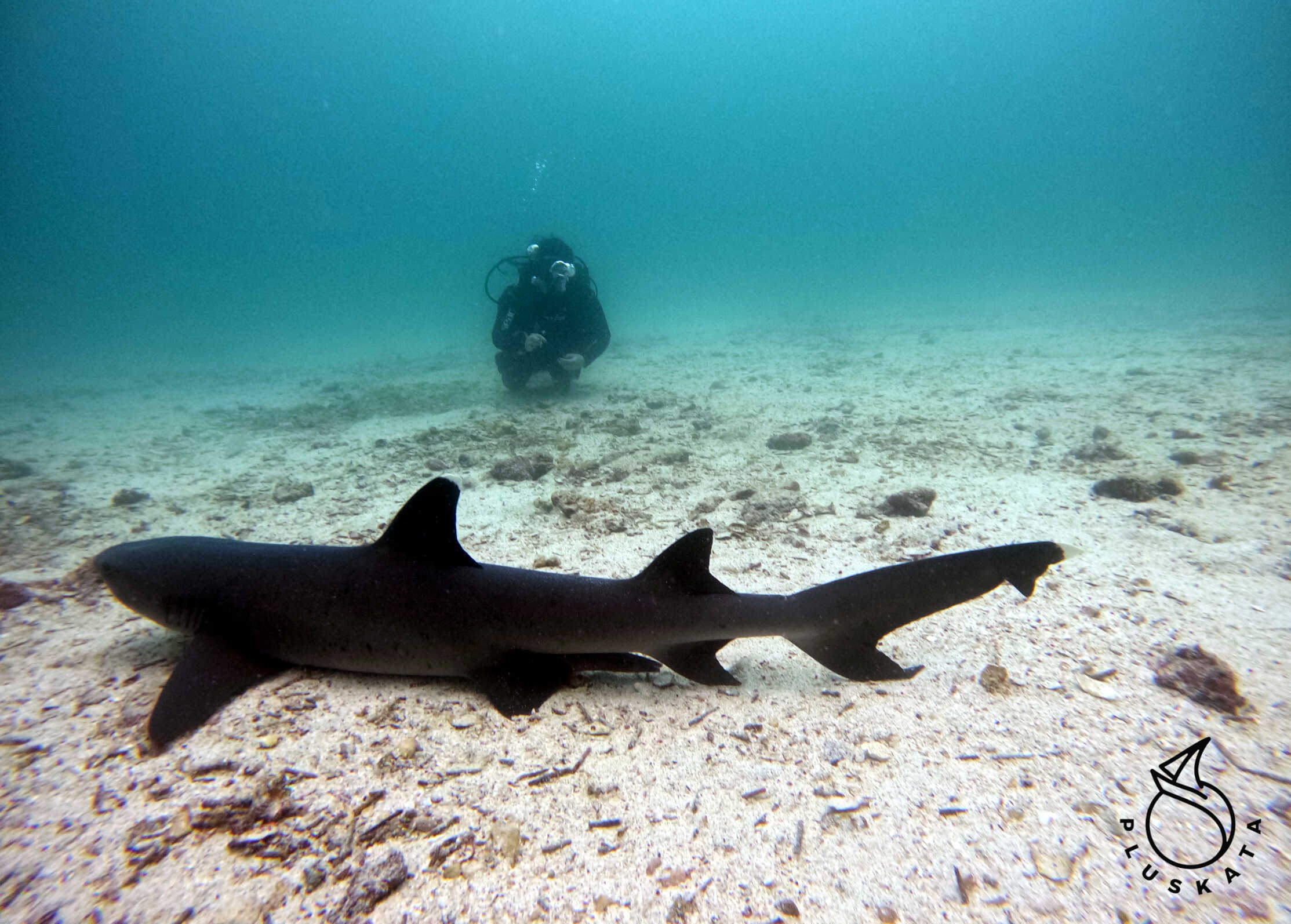
We decided to dive on Friday, so we dived in the north of the island at North Seymour and Mosquera Islet. We saw many manta rays, sharks, schools of fish, and even moray eels.
Supplies
There are several grocery and general stores on the island. Prices are comparable to those in Poland. Meat is only frozen, and cold cuts are packaged. There’s also a municipal market where you can buy vegetables and some fruit. The selection is limited, and the prices tend to be on the higher side. Some stalls sell vegetables by the piece, others by weight, and still others by the package (the vendor puts some vegetables in bags and sells them as a “set”). It’s best to buy vegetables sold by the weight. Local vegetables are mainly tomatoes, some bananas (sold by the piece or bunches), and the rest come in containers from the mainland.
Once a week, there’s a vegetable market where local farmers come – you can buy fresh vegetables there at good prices. Unfortunately, it’s only open on Saturdays.
So we buy some vegetables and a bunch of bananas and return to the yacht.
Check-out
We arrange to meet the Agent at the quay at 10 a.m. We go to get our passports stamped, and at 11 a.m., the park inspectors arrive at the yacht. They fill out forms, take photos, and ask more questions about safety equipment and fuel. After about 20 minutes, they depart, leaving us with about an hour to leave.
We take coffee and leave.
The Way to the Easter Island
Day One – Tuesday
The Pacific greets us with a 4kn wind, bow-driven, so we motorize. We see plenty of sharks in the water, but they’re not interested in our boat. By evening, it’s blown to 7kn, we raise the genoa and mainsail, and surprisingly, we’re sailing at almost 4kn, westward rather than southward, but always quieter.
Day Three – Friday
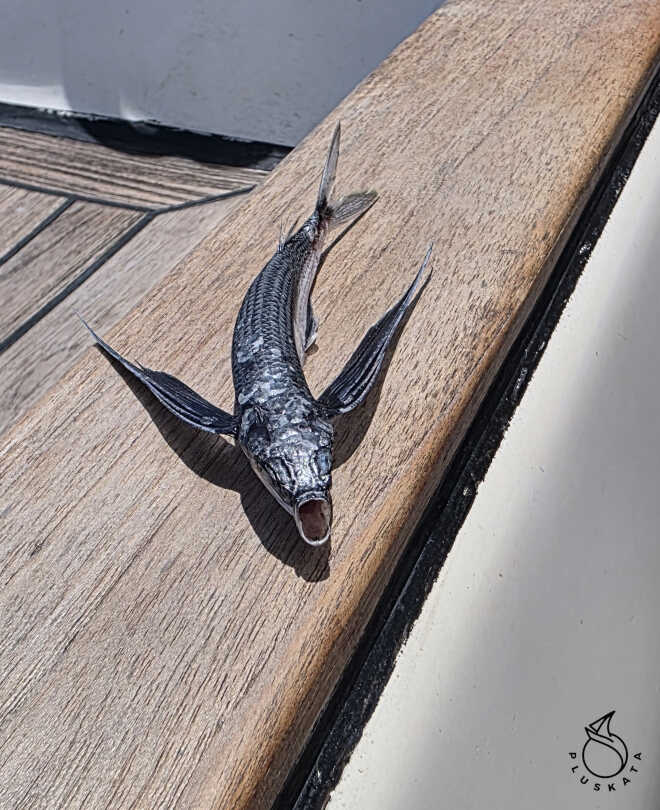
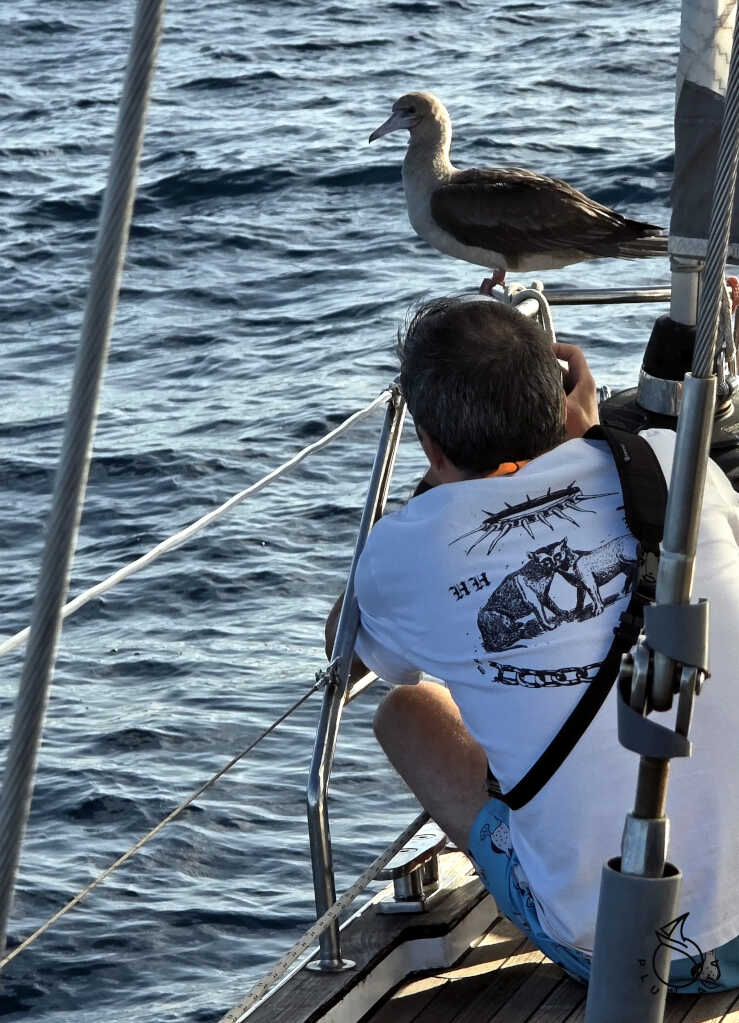
In the morning, we find a flying fish on the deck. It must have been out of water, as its mouth is wide open. We take photos and release it. In the afternoon, the highlight is a pair of gannets that have decided to make their home on our bow pulpit. They’re completely unafraid and have a very friendly look. We take a photo op.
Day Four – Saturday
The wind drops to 3kn, and the current pushes us in the wrong direction, so we turn on the motor. The water is as flat as a mirror, so we can clearly see the flying fish getting in the way. fins.
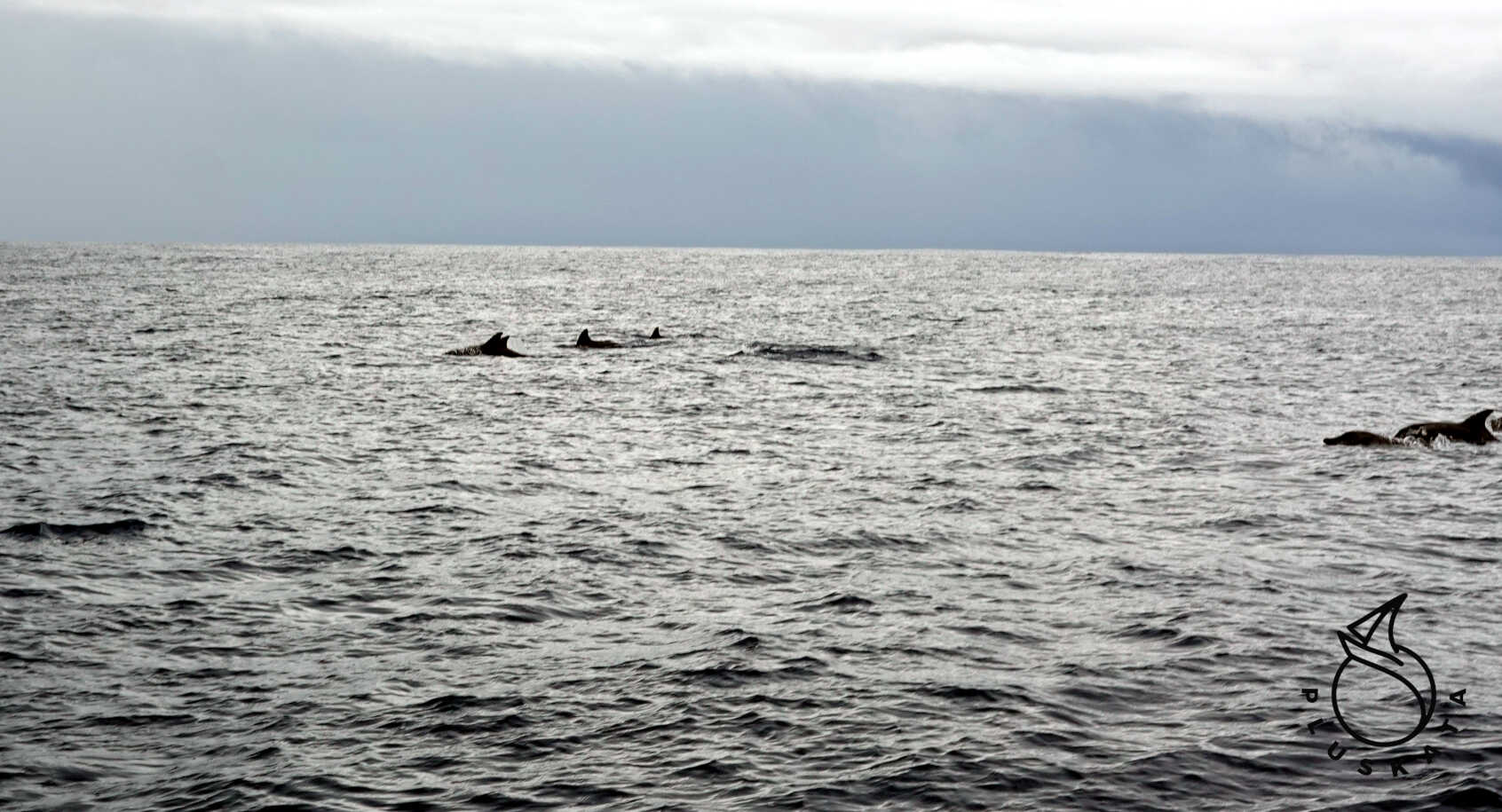
After breakfast, we’re greeted by a pod of dolphins; some are sleeping, but a few are jumping high out of the water.
The bananas we bought in Puerto Ayora are turning yellow, so we eat a few for lunch. After breakfast, Szymon reads us aloud a story by Lem.
In the evening, it turns out that the autopilot motor brushes are worn out. Fortunately, we have a spare, and after two hours, the autopilot is working again.
Day Five – Sunday
We finally enter the trade winds – the wind is 15-20 knots, and we’re sailing with a full gale-force wind of about 5 knots in the right direction. The waves are also increasing, and it rains occasionally. In the evening, a monster eats our bait with the entire line – we have no chance of pulling it out – it simply swallowed the bait – our beloved “Rapalka,” broke the line, and swam in the opposite direction.
Day Six – Monday
From the morning, we’ve been doing laundry, and Tomek He’s trying to repair the windlass remote control. After disassembling the steering column, it turns out the cause lies elsewhere – the windlass manual control plug, which was supposed to be waterproof – wasn’t, had taken on saltwater and shorted out. Tomek cut it off and insulated the wire with silver tape.
After “repairing” the windlass, it was time for the fishing rod. We unwind the remaining thin line and wind in a new, thicker one.
We try to locate a small leak in the steering column by spraying it vigorously with water. This leads us to the leak at the rocker switches.
Day Seven – Tuesday
During the night, it turns out that the switch that was flooded yesterday has a short circuit, and the front LED lamp is on even though the switch is off – Tomek has a job to do. After drying, lubricating, and sealing, everything is working properly again.
Day Eight – Wednesday
The weather is sunny, so we’ve been doing laundry since morning. There’s little sway and no splashing, so Tomek reinstalls the manual windlass switch. I replace the staples with stainless steel ones on the Velcro fasteners in the backrests by the navigation settee.
Day Nine – Thursday
In the morning, I find four flying fish (quite large) on the deck, unfortunately already dead, and not enough even for soup. We encounter a large dolphin (perhaps a killer whale?), so Tomek hurriedly reels in his fishing rod. The large animal swims majestically past us.
Day Ten – Friday
Friday the 13th starts unluckily – first, Tomek has some stomach problems and a high fever – he’s off working on the yacht. Then the bird falls into the wind gauge. The attachment breaks off, and then it turns out that the snap shackle for the genoa’s waves is broken, and until we fix it, we can’t put the genoa up.
Day Eleven – Saturday
In the morning, we check the jars – some of them are canned for the third time. We try to catch some fish – so far without success. Unfortunately, two jars break in a swell :-(.
Day Twelve – Sunday
In the morning, we find only one flying fish on board, but a pretty big one – it lands overboard. In the afternoon, something catches our bait again, but this time it tears not only the line but also the top guide off the fishing rod. Tomek is already trying to figure out what to replace it with. Szymon reads us another story from Lem’s star diaries.
Day Fourteen – Tuesday
The swell is light, so Tomek climbs the mast. He replaces the broken snap shackle on the genoa wave with a regular shackle, removes the anemometer and speaker (its mount is broken).
A bird flew into the anemometer and broke the mount. Fortunately, the anemometer works, but we need to make a new mount – it’s broken right next to the transmitter.
Day Fifteen – Wednesday
The weather is sunny, so we do laundry and put the dryer on the bow, hoping it won’t rain. Splashing.
Day Sixteen – Thursday
The wind died down by noon, so we started the engine. There would be warm water for washing in the evening.
As recommended, I reported my arrival at Easter Island in two days (they wanted 48 hours in advance) – I did so using WhatsApp to +56 9 8823 0089. I found the number on Noonsite and it worked.
Day Seventeen – Friday
Since morning, I’ve been receiving WhatsApp messages from various officers on Rapa Nui. One of them writes in English, but the rest in Spanish. They want various data, especially the current position and speed, every three hours.
In the afternoon, I fill out the FUI (RAPA NUI ENTRY FORM) at https://ingresorapanui.interior.gob.cl/
Day Eighteen – Saturday
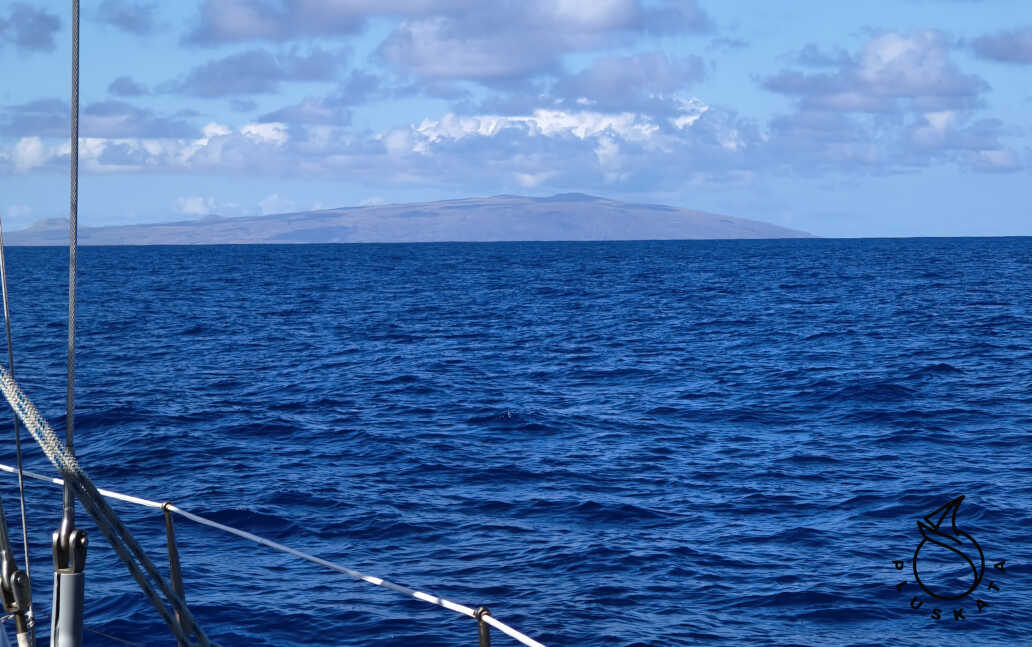
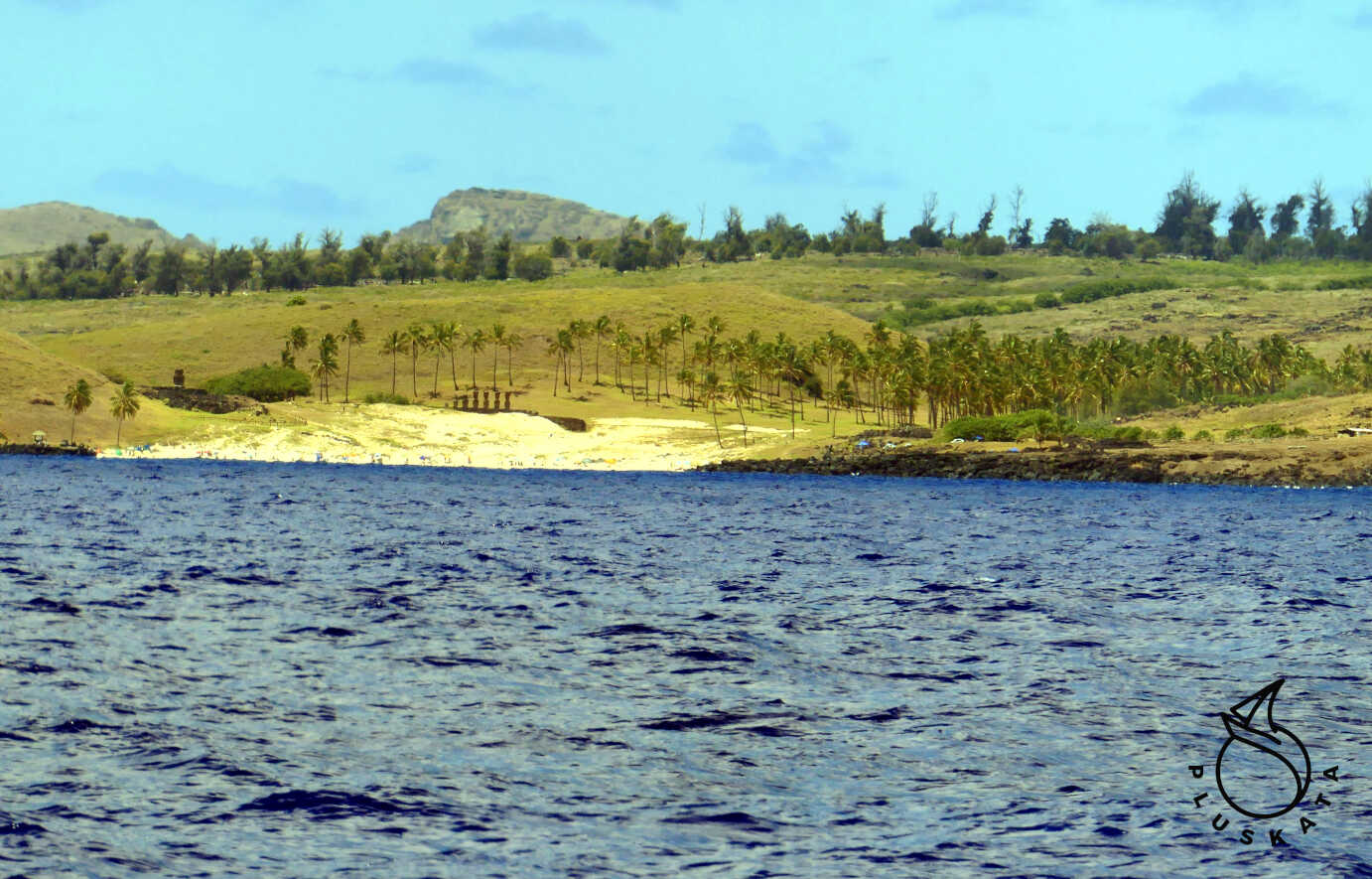
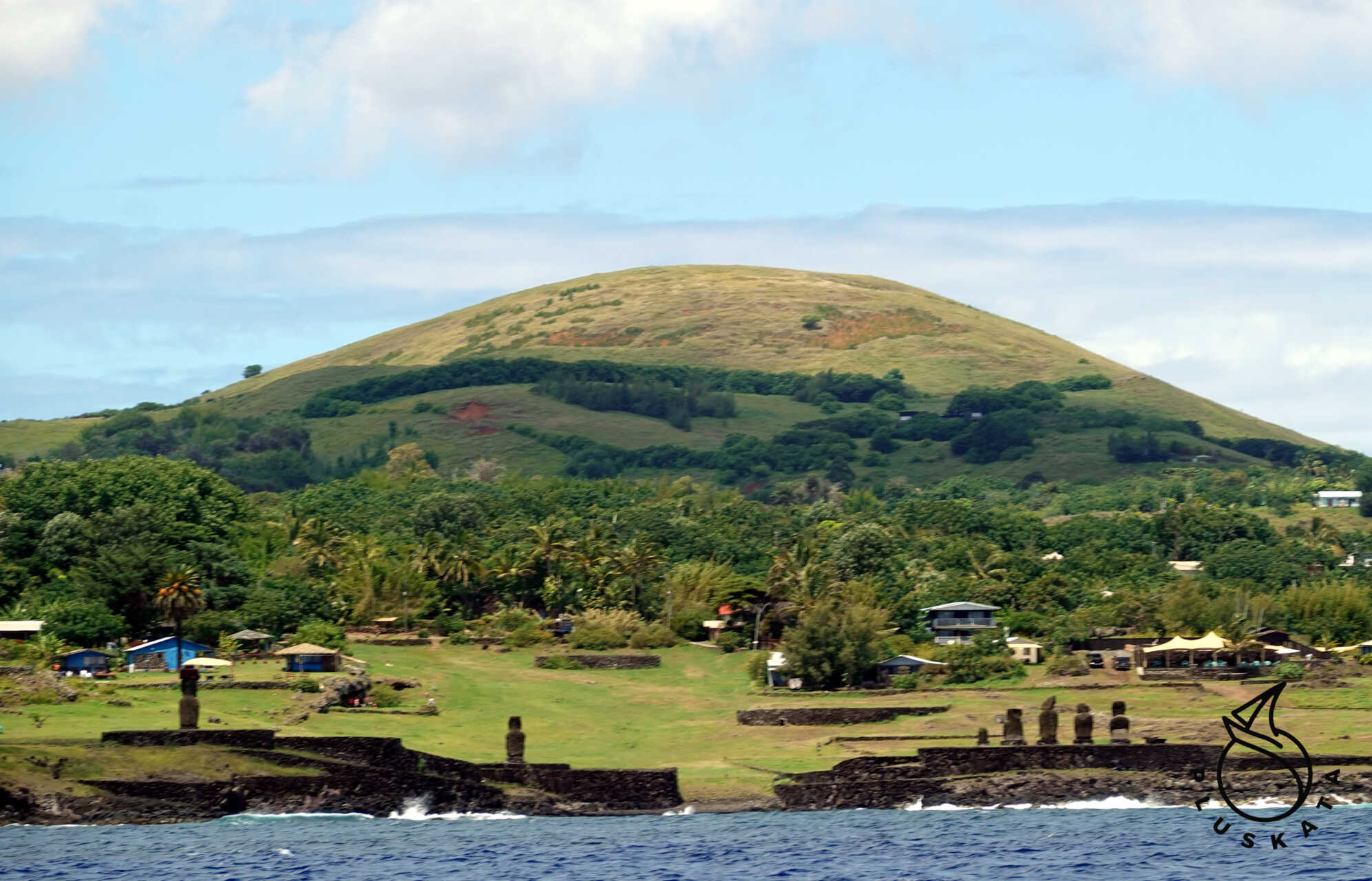
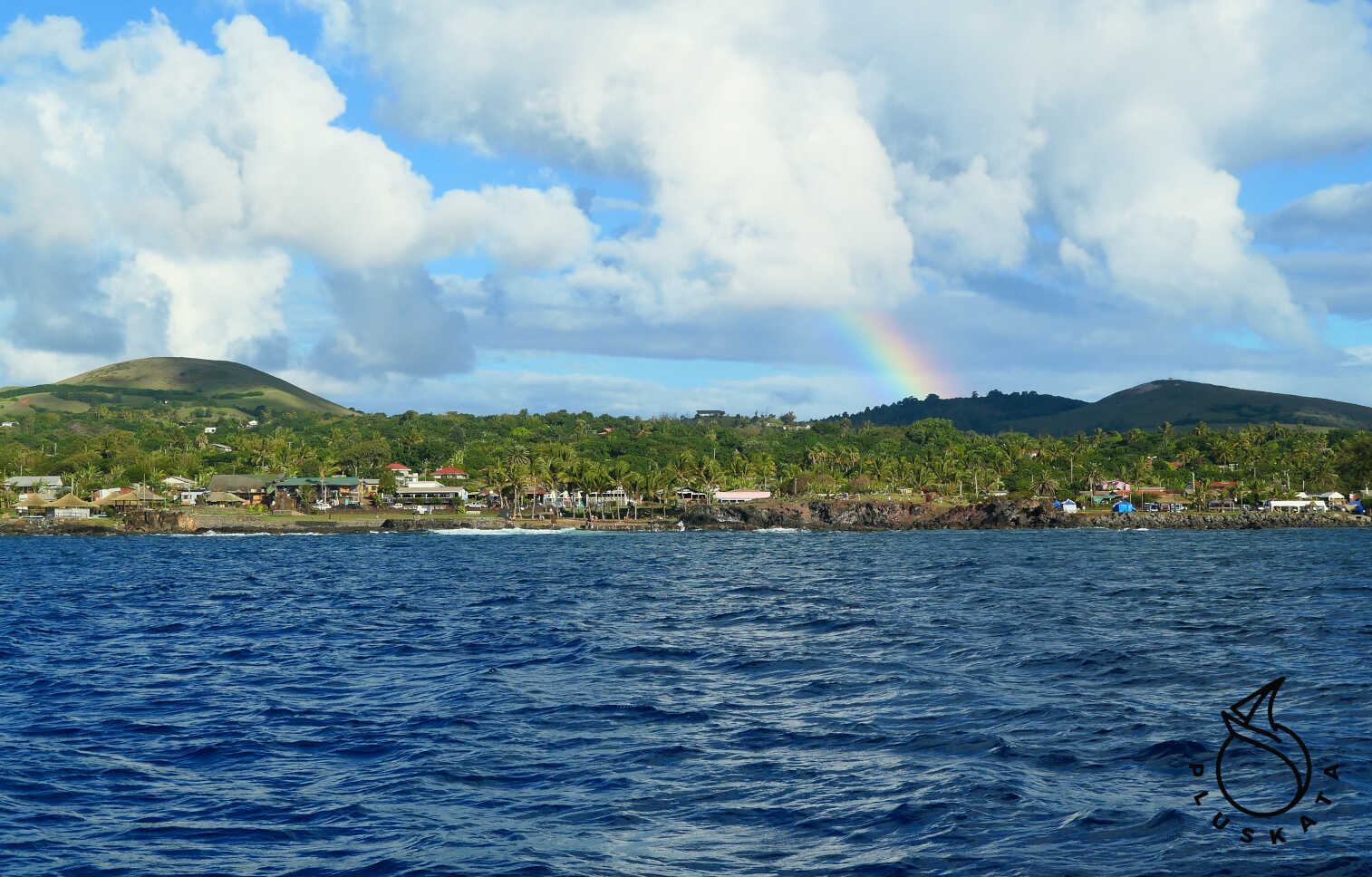
In the morning, we see land. We aim for the center of the island, as we want to sail along the coast, but they radio us and ask us to sail straight into the bay. We continue our exploration of the statues on Anakena Beach from the water and sail to Hanga Roa Bay. They receive the anchorage coordinates via WhatsApp, which I mark on the map. At 3:30 PM, we drop anchor, but it turns out the yacht is over a reef, so we have to reposition. We drop anchor about 300 meters away.
Easter Island
Check-in
You need to check-in about 48 hours before your planned arrival, preferably via WhatsApp. There are many numbers to choose from online. I dialed +56 9 8823 0089, which I think was the right choice, because the next day I receive messages from three other people from Rapa Nui. They all ask for our position and speed, and finally I receive the anchorage coordinates. And information that check-in is scheduled for 5:30 PM.
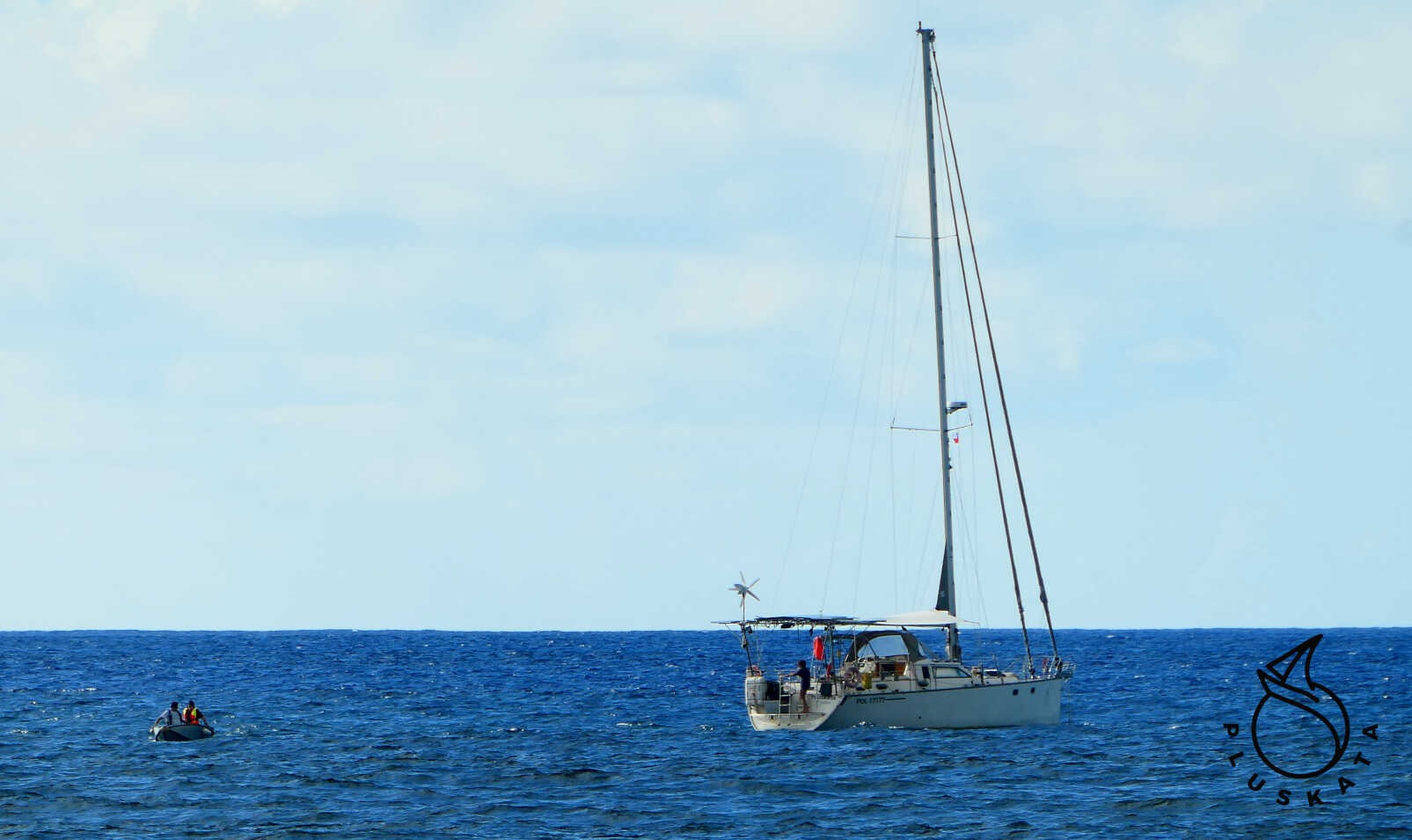
After anchoring, a dinghy arrives with a dog and four people (including the driver) – they ask if we have any drugs, and then The dog sniffs the yacht – of course, he finds nothing. The officer wanted to see the engine room, but when I opened the door and a hot breeze blew in (the engine had just been running), the dog bolted.
At 5:30 PM, I get a message over the VHF that officials are on their way to us. There are five of them in total, plus the dinghy driver. Two people from Armada (the navy), the harbormaster (who spoke English), a woman from Immigration, and another woman from the harbormaster’s office. Everyone has their own forms to fill out, but they do it very efficiently, and after half an hour, we’re cleared.
Hanga Roa Anchorage
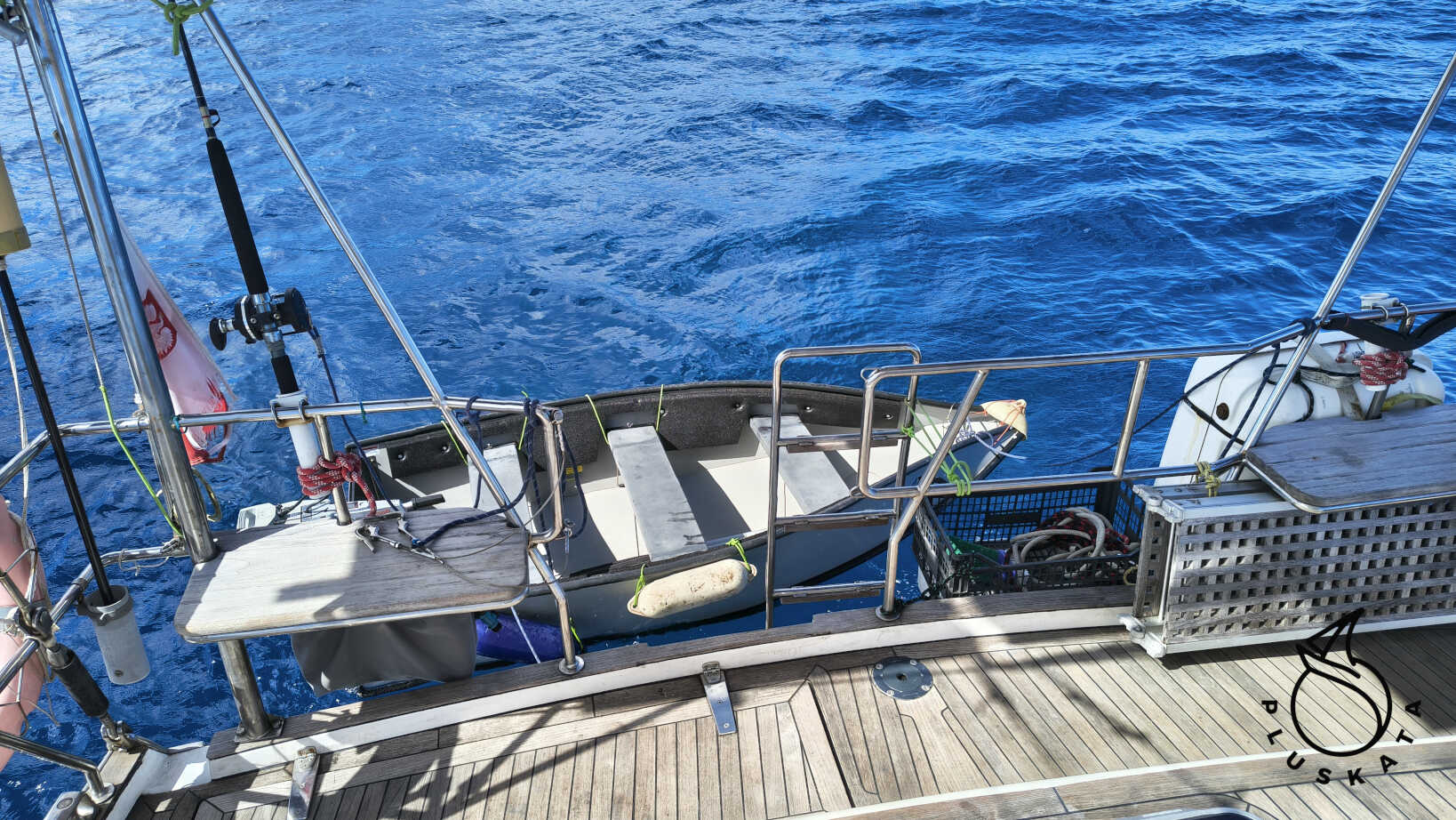
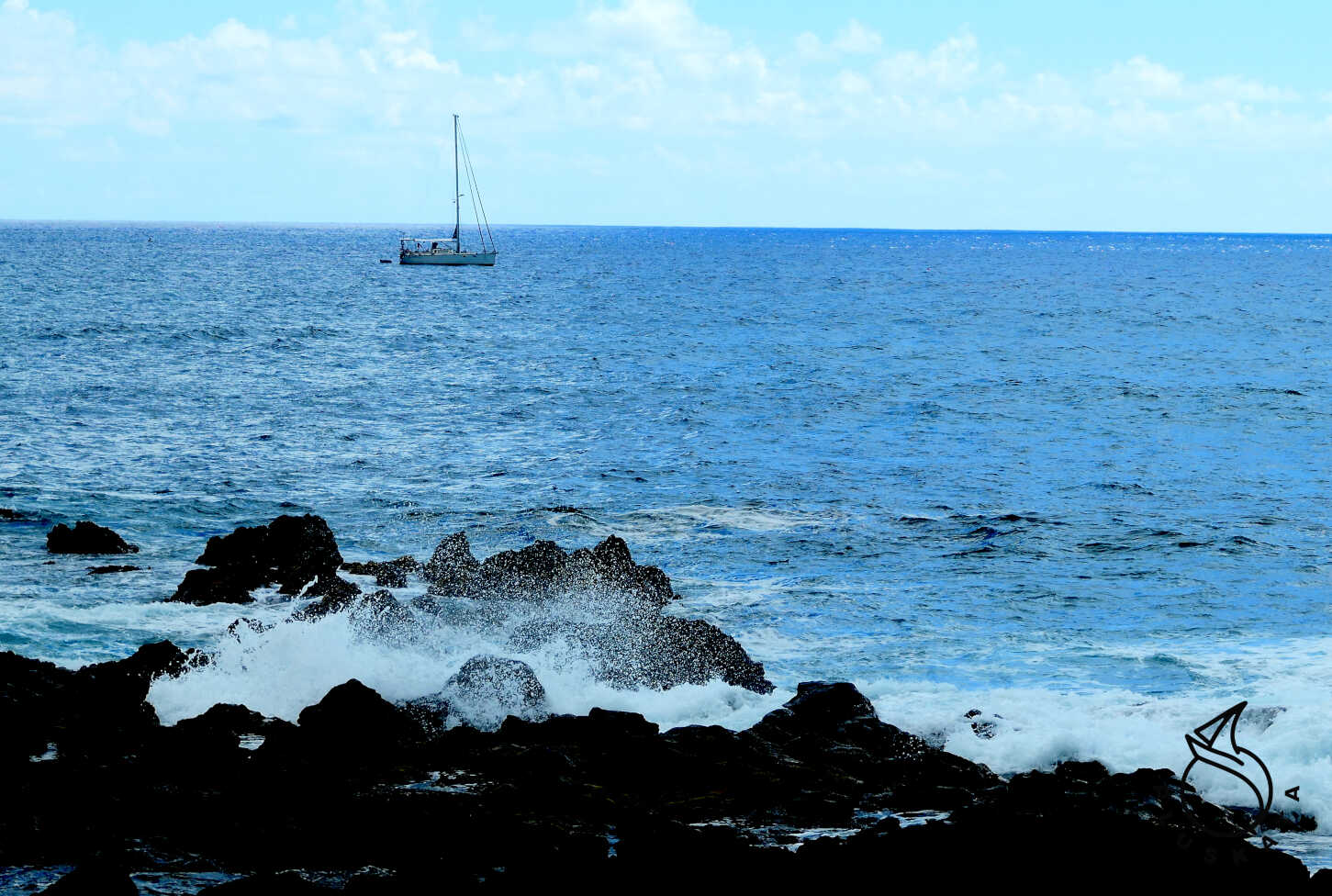
We anchor at 18 meters on the sand (be careful: if you get too close to the shore, they’ll tell you to move to avoid damaging the reef). For safety reasons, at least one person must stay on the boat, so we split into teams of two or three. In calm water, it’s possible to row our boat to shore.
Hanga Roa
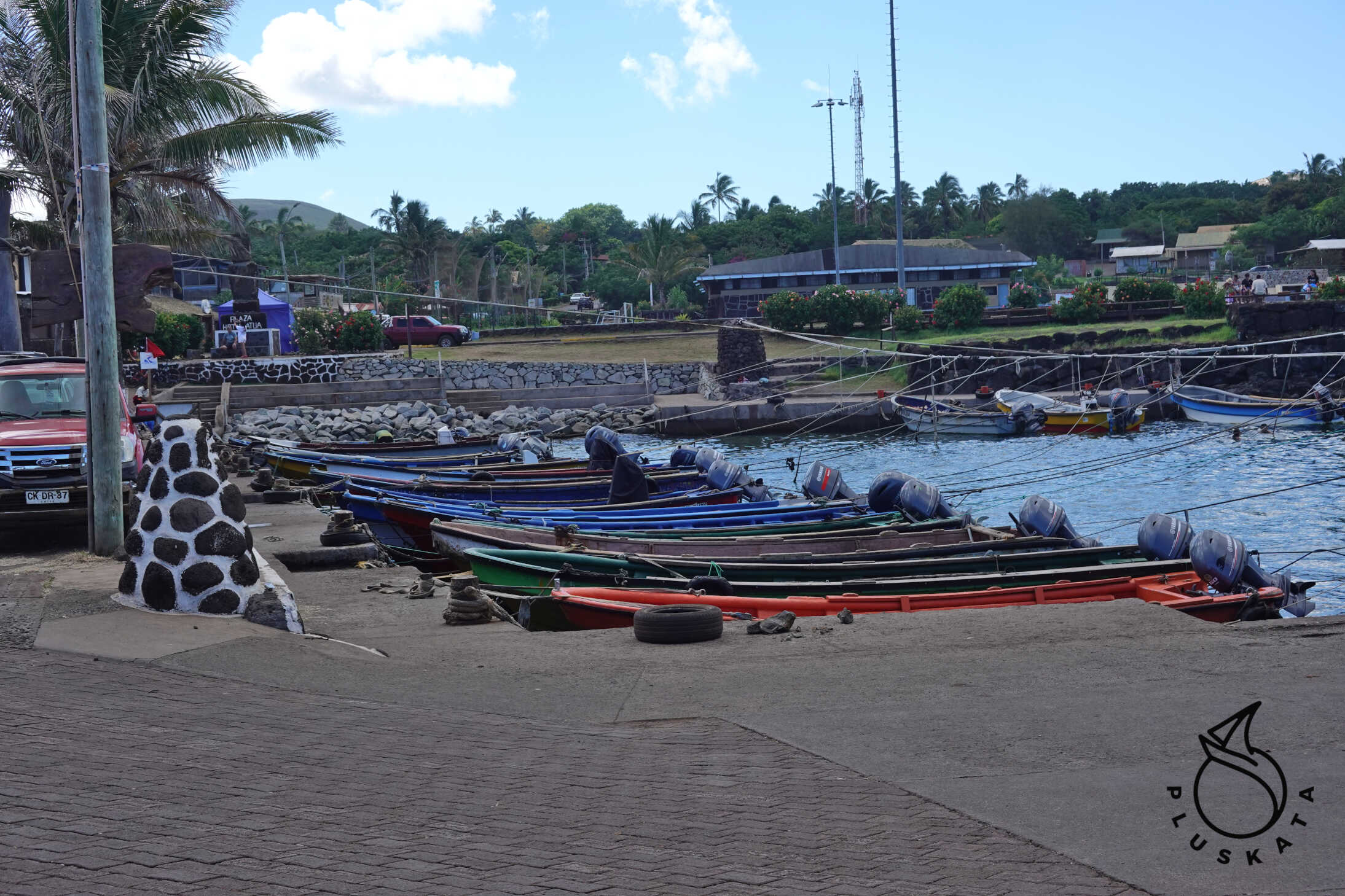
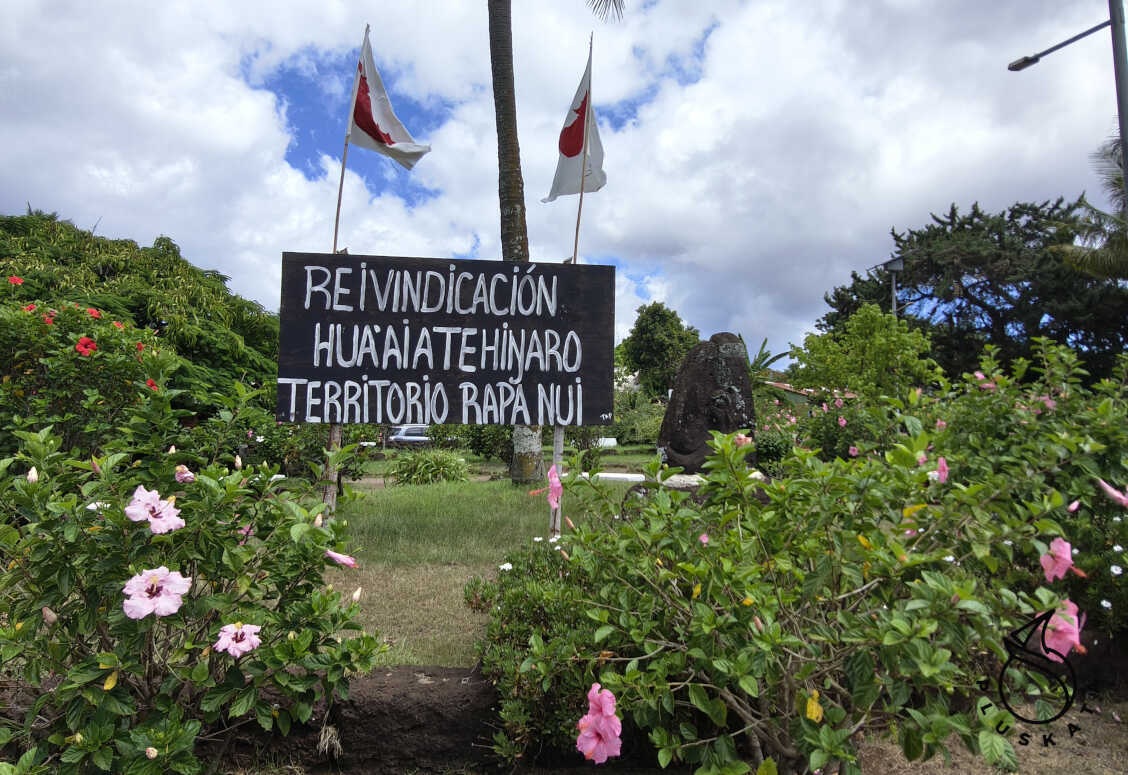
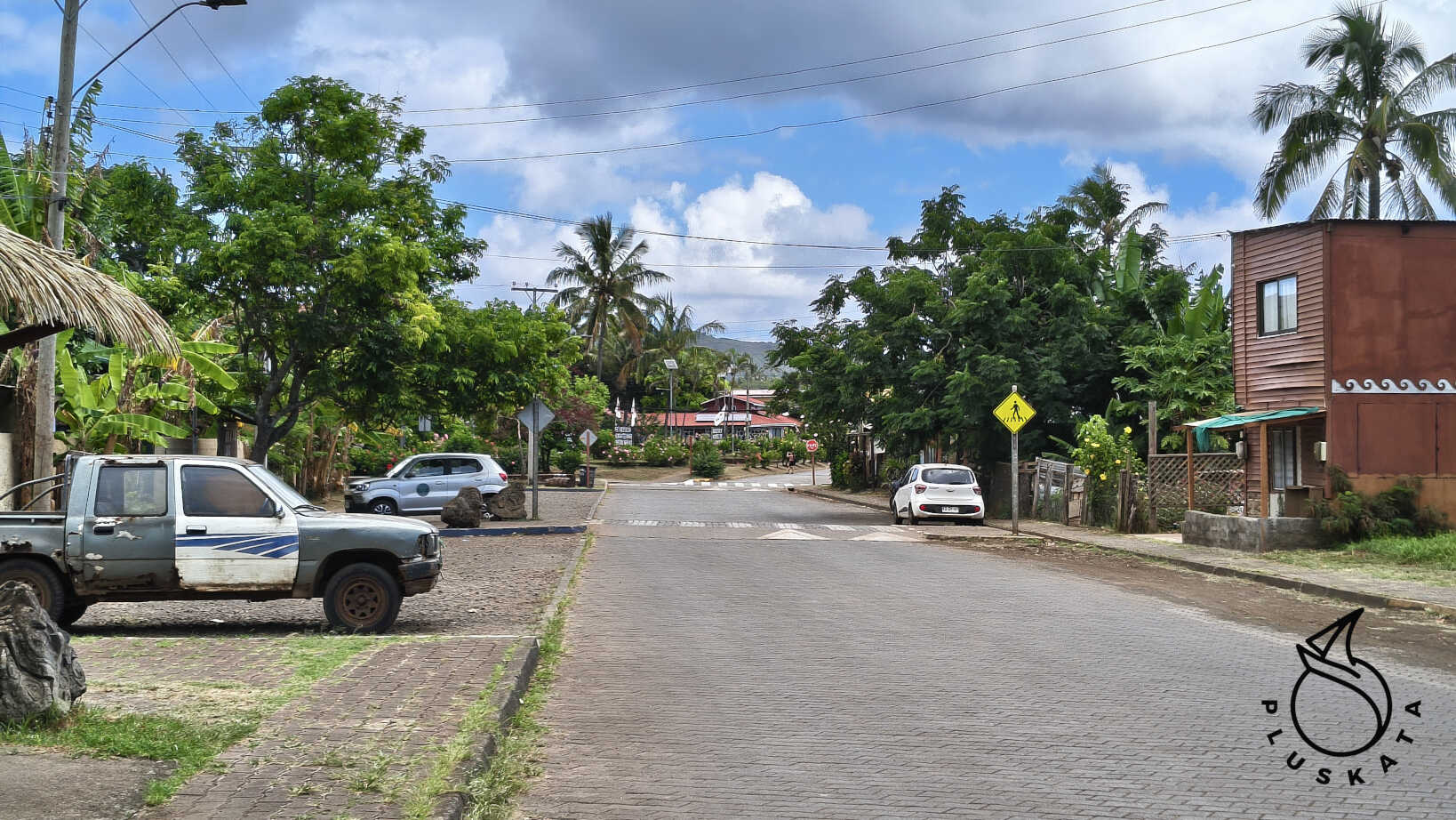
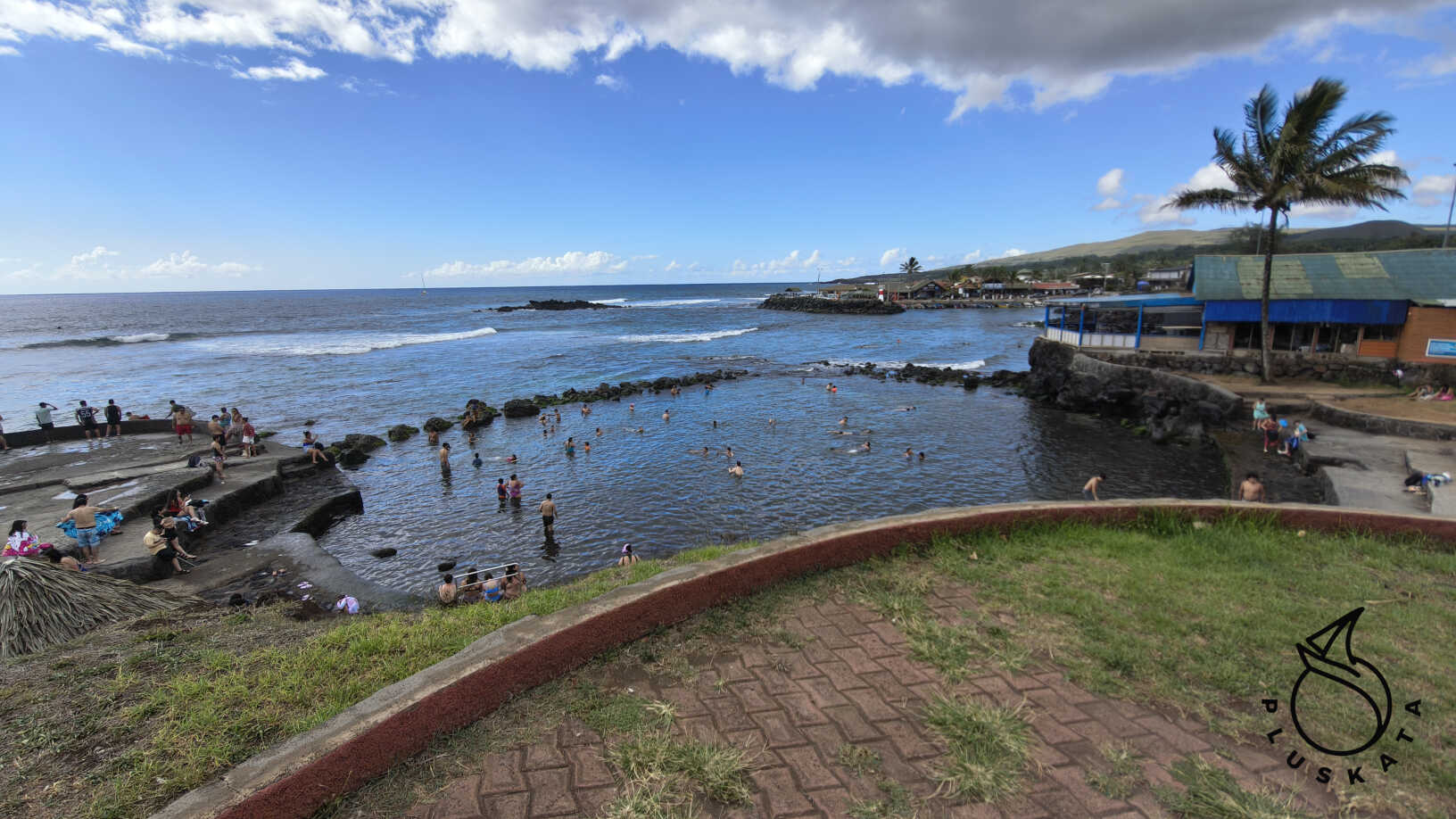
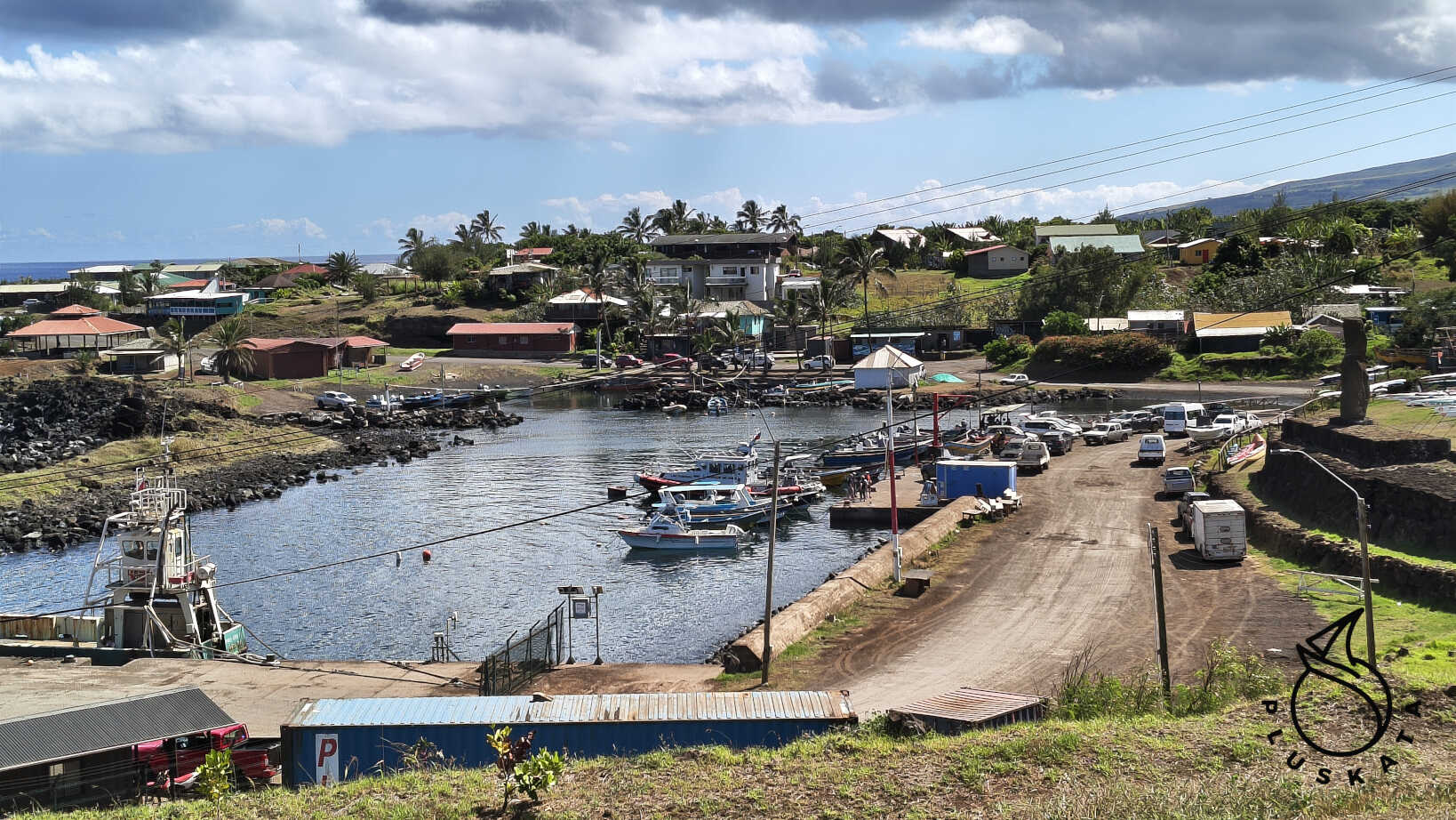
Main and the only town on Easter Island. This is where the government offices, airport, travel agencies, shops, and diving offices are located. We go to exchange US dollars for Chilean pesos (CLP) at the shop by the Puna Vai gas station – the exchange rate is 810 pesos for 1 dollar and 925 pesos for 1 euro, probably a bit worse than at a bank, but they’re open on Sundays until 2 p.m. We stop at a few more shops open on Sundays, go for lunch and coffee, buy souvenirs, and hail our boat. The second crew brings back the trash, and we return to the yacht.
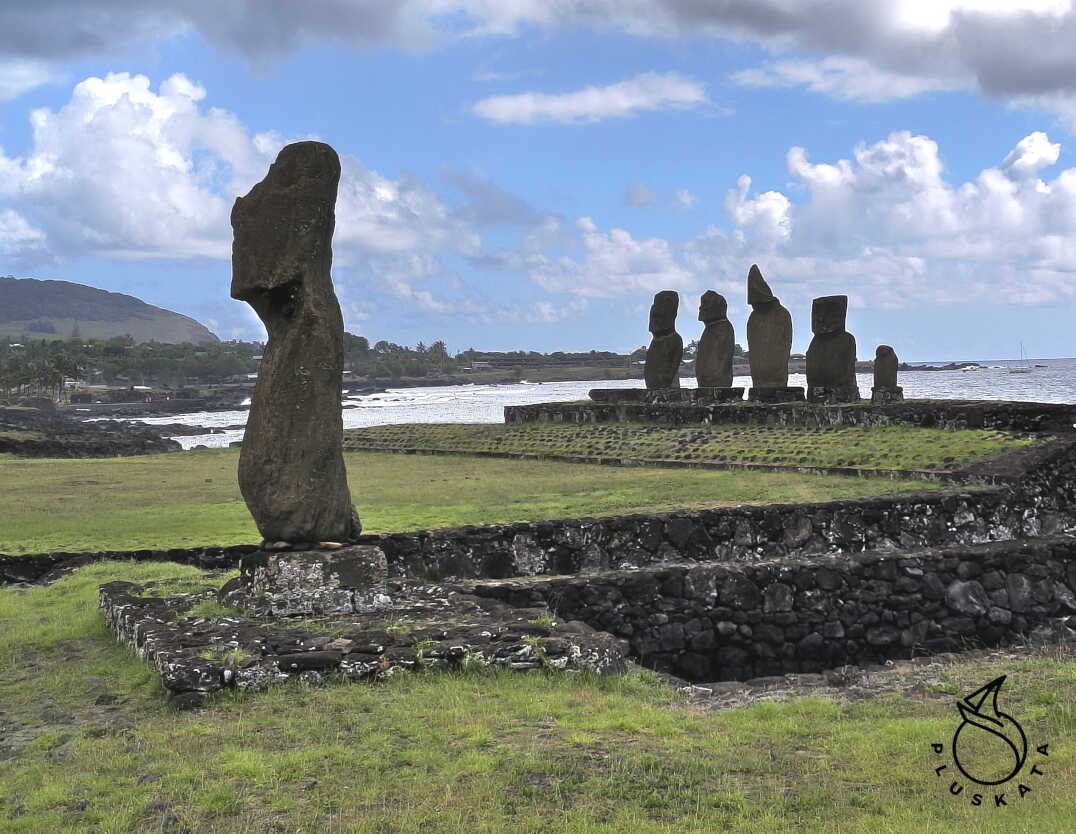
There are a few moai in Hanga Roa, but I don’t think they’re original – they’re exhibited for tourists.